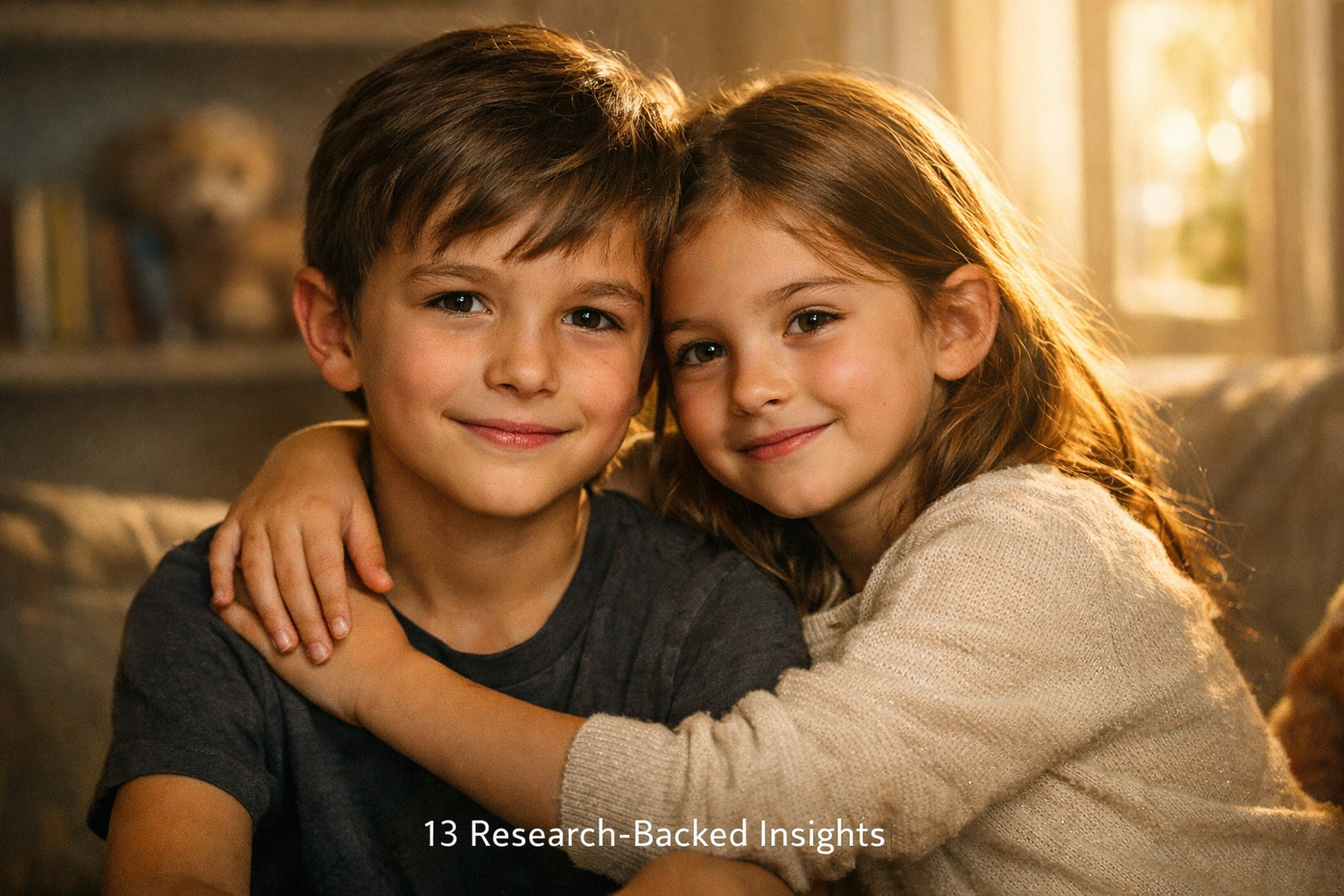
Growing up with siblings is one of the most influential experiences in a child’s life. Whether siblings are best friends, occasional rivals, or a little of both, the relationships formed in childhood often leave a lasting impact that extends well into adulthood.
Researchers have spent decades studying how sibling relationships shape emotional development, social skills, personality traits, and even future success. While every family dynamic is unique, studies consistently show that having siblings can influence children in surprising and meaningful ways.
Of course, growing up with brothers or sisters does not guarantee a particular outcome. Parenting style, family environment, age differences, and individual personalities all play important roles. Still, research reveals several common patterns among children who grow up alongside siblings.
Here are 13 fascinating things studies suggest about children raised with siblings.
1. They Often Develop Stronger Social Skills
One of the most widely recognized benefits of growing up with siblings is the constant opportunity to practice social interaction.
From an early age, children learn how to share toys, take turns, cooperate, and resolve disagreements. Daily interactions with brothers and sisters create a natural environment where communication skills are tested and refined.
Unlike friendships that may come and go, sibling relationships require ongoing interaction. This continuous social practice helps many children become more comfortable navigating relationships outside the home.
As a result, children with siblings often gain valuable experience in teamwork, negotiation, and empathy.
2. They Learn Conflict Resolution Earlier
Anyone who has grown up with siblings knows that disagreements are inevitable.
Arguments over toys, space, attention, or household responsibilities can create tension. However, research suggests these conflicts may actually provide important learning opportunities.
Children who regularly experience disagreements with siblings often become familiar with compromise, problem-solving, and emotional regulation. They learn that conflicts can be resolved rather than avoided.
These early lessons can prove useful later in life when dealing with classmates, coworkers, friends, and romantic partners.
3. They Tend to Develop Greater Empathy
Living closely with siblings exposes children to different emotions, perspectives, and experiences on a daily basis.
They witness moments of happiness, disappointment, frustration, excitement, and sadness within their own household. Over time, this exposure may help them become more sensitive to how others feel.
Researchers have found that positive sibling relationships often contribute to the development of empathy and emotional understanding. Children learn to recognize emotional cues and respond appropriately to the needs of others.
These skills can strengthen both personal and professional relationships throughout life.
4. Siblings Can Improve Emotional Resilience
Life comes with challenges, and siblings often play an important role in helping children navigate them.
Whether dealing with school difficulties, family changes, or personal setbacks, children frequently turn to their siblings for support. Even when relationships are not perfect, knowing there is someone who shares similar experiences can provide comfort and reassurance.
Studies suggest that supportive sibling relationships can contribute to emotional resilience, helping children recover more effectively from stressful situations.
This sense of connection may become especially valuable during major life transitions.
5. They Learn the Importance of Sharing
Sharing is not always easy for young children. However, growing up with siblings often requires it.
Children must frequently share toys, bedrooms, attention from parents, and family resources. While these situations may occasionally lead to conflict, they also teach valuable lessons about cooperation and fairness.
Research suggests that repeated experiences with sharing can help children develop stronger interpersonal skills and a better understanding of collective responsibility.
These habits often carry over into school, work, and community settings.
6. Birth Order May Influence Personality
One of the most debated topics in family psychology is birth order.
Some studies suggest that firstborn children may be more likely to display leadership qualities and responsibility. Middle children are sometimes described as adaptable and diplomatic, while younger siblings are often viewed as creative or socially outgoing.
Although researchers disagree about the extent of these effects, there is evidence that birth order can influence certain personality traits and family roles.
It’s important to remember, however, that personality is shaped by many factors beyond sibling position alone.
7. Sibling Relationships Can Affect Academic Performance
Research has found interesting connections between sibling dynamics and educational outcomes.
Older siblings often serve as role models, influencing younger children’s attitudes toward learning, school behavior, and academic achievement. In some cases, younger siblings benefit from guidance, tutoring, and encouragement provided by older brothers or sisters.
At the same time, healthy competition among siblings can motivate children to work harder and pursue their goals.
Positive family environments tend to maximize these educational benefits.
8. They Often Become Better Negotiators
Growing up with siblings means constantly navigating shared spaces and competing interests.
Children regularly negotiate everything from television choices to game rules and household responsibilities. These everyday interactions provide practical lessons in persuasion, compromise, and cooperation.
Researchers suggest that these experiences may help children become more effective communicators and negotiators later in life.
The ability to find common ground is a valuable skill in nearly every area of adulthood.
9. Siblings Can Help Reduce Feelings of Loneliness
While siblings may not always get along, they often provide built-in companionship.
Having someone to play with, talk to, and share experiences with can help children feel connected and supported. This companionship may be especially beneficial during periods of social isolation or major family changes.
Studies indicate that close sibling bonds can contribute positively to emotional well-being and provide an important source of social support.
Many adults continue to rely on their siblings as trusted confidants long after childhood ends.
10. Competition Can Encourage Personal Growth
Sibling rivalry often receives negative attention, but research suggests it can have positive effects when managed appropriately.
Healthy competition can motivate children to improve their skills, pursue achievements, and develop confidence in their abilities.
For example, a younger sibling may strive to match an older sibling’s accomplishments, while an older sibling may feel encouraged to maintain high standards.
The key is ensuring competition remains supportive rather than destructive.
When guided by parents, rivalry can become a source of growth rather than conflict.
11. Children With Siblings Often Learn Responsibility Earlier
Older siblings frequently take on caregiving roles within the family.
Helping younger brothers or sisters with homework, supervising activities, or assisting with daily routines can encourage responsibility and maturity.
Even younger siblings benefit from observing responsibilities modeled by older children.
Research suggests these experiences can strengthen leadership skills, accountability, and confidence in handling responsibilities.
These qualities often prove valuable in educational and professional settings later in life.
12. Strong Sibling Bonds Can Last a Lifetime
Few relationships last as long as sibling relationships.
Parents, teachers, classmates, and friends may come and go throughout life, but siblings often remain connected for decades. Shared childhood memories create a unique bond that few other relationships can replicate.
Research shows that positive sibling relationships can continue providing emotional support, companionship, and practical assistance throughout adulthood.
For many people, siblings become some of their most trusted allies during major life events.
13. Siblings Help Shape Identity
Perhaps one of the most significant findings from research is that siblings play a major role in identity formation.
Children often define themselves partly through their relationships with brothers and sisters. They may develop unique interests, strengths, and characteristics that distinguish them within the family.
For example, one child may become known as the athlete, another as the artist, and another as the academic achiever.
These family roles can influence self-esteem, personal goals, and long-term development.
Although identities evolve over time, sibling interactions often contribute significantly to how children see themselves and their place in the world.
The Importance of Relationship Quality
While having siblings offers many potential benefits, experts emphasize that the quality of the relationship matters more than simply having brothers or sisters.
Supportive, respectful sibling relationships tend to produce the most positive outcomes. In contrast, persistent conflict, aggression, or unhealthy competition can negatively affect emotional development.
Parents play a crucial role in shaping sibling dynamics by encouraging cooperation, teaching conflict-resolution skills, and ensuring that each child feels valued and respected.
Creating a positive family environment helps children build strong sibling bonds that can benefit them for years to come.
Not Every Sibling Experience Is the Same
It’s important to recognize that research identifies trends rather than guarantees.
Some children with siblings enjoy close relationships, while others experience frequent disagreements. Likewise, only children can develop excellent social skills, empathy, and emotional resilience through friendships, extended family relationships, and other social experiences.
Every family is different, and there is no single path to healthy development.
What matters most is the presence of supportive relationships, positive role models, and opportunities for meaningful social interaction.
Final Thoughts
Growing up with siblings can be one of childhood’s most powerful influences. From learning how to share and resolve conflicts to developing empathy, resilience, and communication skills, sibling relationships provide countless opportunities for growth.
Research continues to show that brothers and sisters play an important role in shaping emotional, social, and personal development. While sibling relationships are rarely perfect, they often offer lessons and experiences that last a lifetime.
Whether they are childhood playmates, occasional rivals, or lifelong friends, siblings help shape who we become. Their influence reaches far beyond the family home, affecting how we build relationships, handle challenges, and navigate the world throughout our lives.







