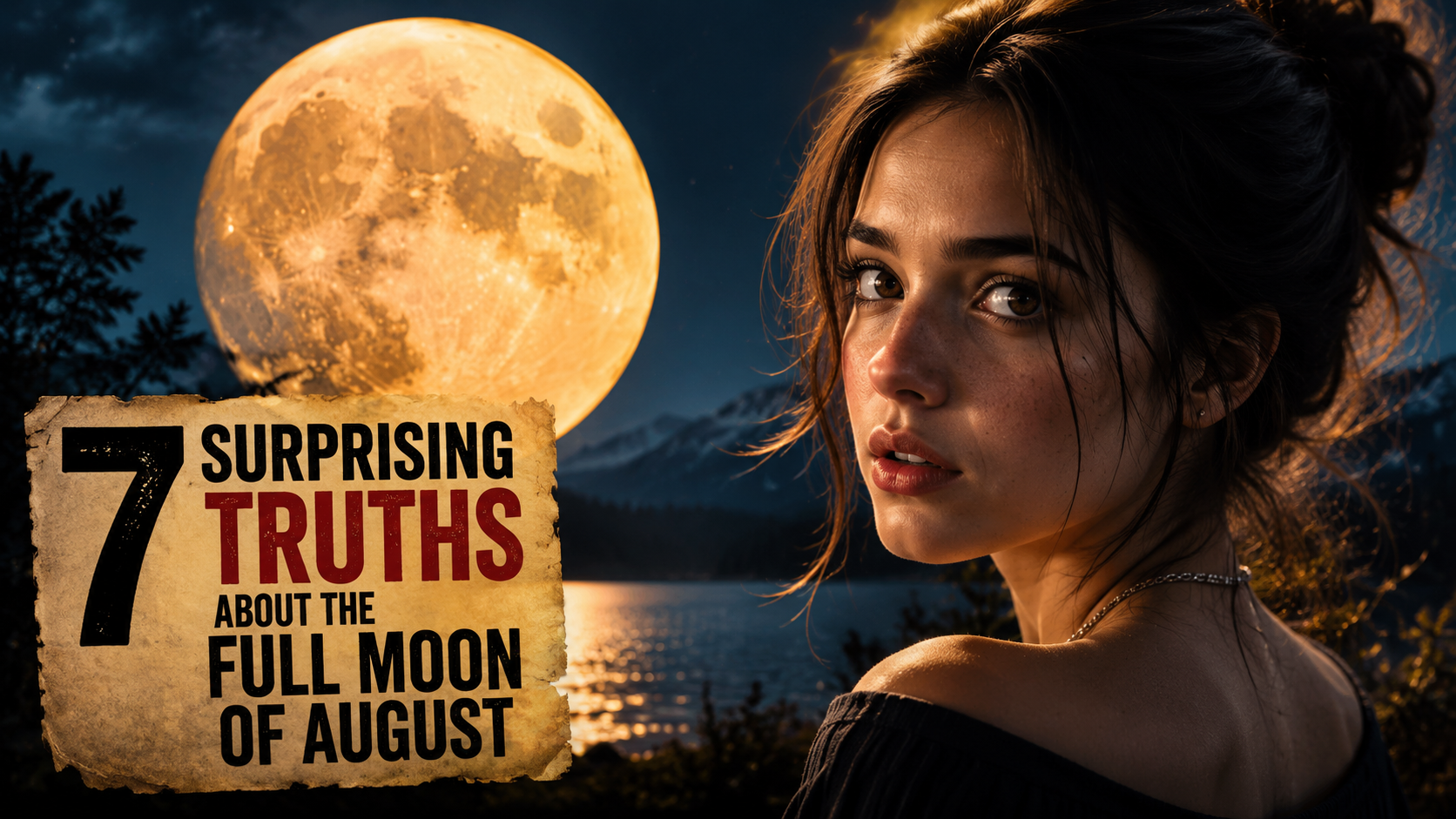
The Full Moon of August is one of the most anticipated lunar events of the year. Appearing during the height of summer in the Northern Hemisphere, it often rises against warm evening skies, creating a stunning celestial display that attracts skywatchers, photographers, and nature enthusiasts alike. While many people admire its beauty, few realize that this particular Full Moon carries a rich history, fascinating scientific characteristics, and cultural significance that stretches back centuries.
From its famous nickname to its influence on wildlife and its unique position in the seasonal calendar, the August Full Moon offers much more than a bright light in the night sky. Understanding the stories and science behind it can make your next moonlit evening even more meaningful.
Here are seven surprising truths about the Full Moon of August that may change the way you look at our closest celestial neighbor.
1. It Is Commonly Known as the Sturgeon Moon
One of the most interesting facts about the August Full Moon is its traditional name: the Sturgeon Moon.
This nickname originates from Native American and early colonial traditions in North America. The name refers to the abundance of sturgeon fish that were historically easier to catch during late summer in large lakes and rivers, particularly around the Great Lakes region.
Before modern calendars became widespread, communities often used the Moon’s phases to track seasonal changes. Assigning names to each Full Moon helped people identify important periods for fishing, planting, harvesting, and hunting.
Although many people know it simply as the August Full Moon today, the name Sturgeon Moon remains one of the most widely recognized traditional lunar titles.
2. It Often Appears Larger Near the Horizon
Many observers report that the August Full Moon looks enormous when it first rises.
Interestingly, this apparent increase in size is mostly an optical illusion known as the Moon Illusion. When the Moon is close to the horizon, our brains compare it with trees, buildings, mountains, and other familiar objects. This comparison makes it seem much larger than when it is high overhead.
In reality, the Moon’s physical size remains unchanged throughout the night.
Despite being a visual trick, the effect can be dramatic and is one of the reasons moonrise is such a popular time for photography and observation.
3. It Has Deep Agricultural Connections
Long before modern technology, people relied heavily on natural cycles to guide farming activities.
The August Full Moon often arrived during an important period in the agricultural calendar, marking the transition between midsummer growth and the approaching harvest season. Farmers paid close attention to lunar phases because moonlight provided additional illumination for evening work and nighttime travel.
Many traditional cultures associated the August Moon with abundance, preparation, and the gathering of resources before autumn arrived.
Even today, these agricultural roots remain embedded in many of the Moon’s historical names and folklore traditions.
4. Wildlife Responds to Its Brightness
The August Full Moon doesn’t just affect human observers—it can influence animal behavior as well.
Many species use moonlight as a natural environmental cue. Nocturnal animals may adjust their feeding habits, movement patterns, and communication activities depending on lunar brightness.
Predators often benefit from increased visibility, while prey species may become more cautious during brightly lit nights.
Marine life can also respond to lunar cycles, with certain species timing migrations, spawning events, or feeding behaviors around the phases of the Moon.
Although the effects vary between species, the Full Moon remains an important part of many ecosystems around the world.
5. It Can Coincide with Spectacular Meteor Activity
One reason the August Full Moon attracts extra attention from skywatchers is its proximity to one of the year’s most famous meteor showers: the Perseids.
The Perseid meteor shower typically peaks in August and is known for producing bright, fast-moving meteors across the night sky.
When the Full Moon occurs near the shower’s peak, its bright light can reduce the visibility of fainter meteors. However, the brightest fireballs often remain visible despite the lunar glare.
The overlap between these two celestial events creates a unique opportunity to observe multiple astronomical phenomena during the same period.
For astronomy enthusiasts, August is often one of the most exciting months of the year.
6. Its Color Can Appear Dramatically Different
The August Full Moon doesn’t always look the same.
When rising or setting, it may appear orange, golden, yellow, or even reddish. These colors result from Earth’s atmosphere filtering and scattering sunlight reflected from the lunar surface.
As moonlight passes through a greater thickness of atmosphere near the horizon, shorter blue wavelengths scatter more effectively, allowing warmer colors to dominate.
The result can be a breathtaking display that makes the Moon appear almost fiery against the evening sky.
Photographers frequently seek these moments because they create some of the most striking lunar images of the year.
7. Every August Full Moon Is Slightly Different
Although the Moon completes a familiar cycle every month, no two August Full Moons are exactly alike.
Its exact position in the sky, distance from Earth, timing, brightness, and surrounding celestial conditions vary from year to year.
Sometimes the Full Moon occurs near perigee, the point where the Moon is closest to Earth, making it appear slightly larger and brighter. In other years, it may occur closer to apogee, when the Moon is farther away.
Weather conditions, atmospheric clarity, and local geography also influence the viewing experience.
As a result, every August Full Moon offers a unique opportunity for observation and appreciation.
The Science Behind a Full Moon
A Full Moon occurs when Earth is positioned roughly between the Sun and the Moon. During this alignment, the side of the Moon facing Earth becomes fully illuminated by sunlight.
Contrary to popular belief, the Moon does not generate its own light. Instead, it acts like a giant mirror, reflecting sunlight back toward our planet.
Because the lunar cycle lasts approximately 29.5 days, a Full Moon appears about once each month, though the exact date varies.
This predictable cycle has served as a natural timekeeping system for countless civilizations throughout history.
Cultural Importance Around the World
The August Full Moon holds significance in many cultures beyond North America.
Throughout history, lunar events have inspired festivals, religious observances, folklore, and artistic traditions. Various societies associated the August Moon with harvests, seasonal transitions, prosperity, and community gatherings.
In some regions, Full Moons were seen as symbols of abundance and gratitude, while others viewed them as times for reflection and celebration.
These traditions demonstrate the enduring connection between humanity and the night sky.
Tips for Observing the August Full Moon
If you’d like to make the most of the next August Full Moon, consider the following tips:
Choose the Right Time
Moonrise often provides the most dramatic views. Check local moonrise times and plan to observe shortly before the Moon appears above the horizon.
Find an Open Viewing Area
Fields, beaches, hilltops, and locations with unobstructed eastern horizons usually provide the best opportunities for viewing.
Bring Binoculars
Even simple binoculars can reveal craters, mountain ranges, and dark volcanic plains on the lunar surface.
Photograph the Event
Using a tripod and a zoom lens can help capture detailed images of the Moon, especially during moonrise.
Watch Throughout the Night
The Moon’s appearance changes as it climbs higher into the sky, offering different perspectives and photographic opportunities.
Why the August Full Moon Continues to Fascinate Us
The Full Moon of August combines beauty, science, history, and cultural tradition in a way few celestial events can match. It serves as a reminder of humanity’s long-standing relationship with the natural world and our enduring curiosity about the cosmos.
Whether you’re admiring its golden glow from a backyard, photographing it above a city skyline, or learning about the traditions associated with its name, the August Full Moon offers an experience that connects people across generations and cultures.
Conclusion
The August Full Moon is much more than a bright object in the sky. Known as the Sturgeon Moon, it carries centuries of history, influences wildlife behavior, inspires cultural traditions, and often coincides with some of the year’s most exciting astronomical events.
From its seemingly giant appearance at moonrise to its changing colors and seasonal significance, this lunar event continues to capture the imagination of skywatchers around the world. The next time the August Full Moon rises above the horizon, take a moment to appreciate not only its beauty but also the fascinating stories and science that make it truly special.







