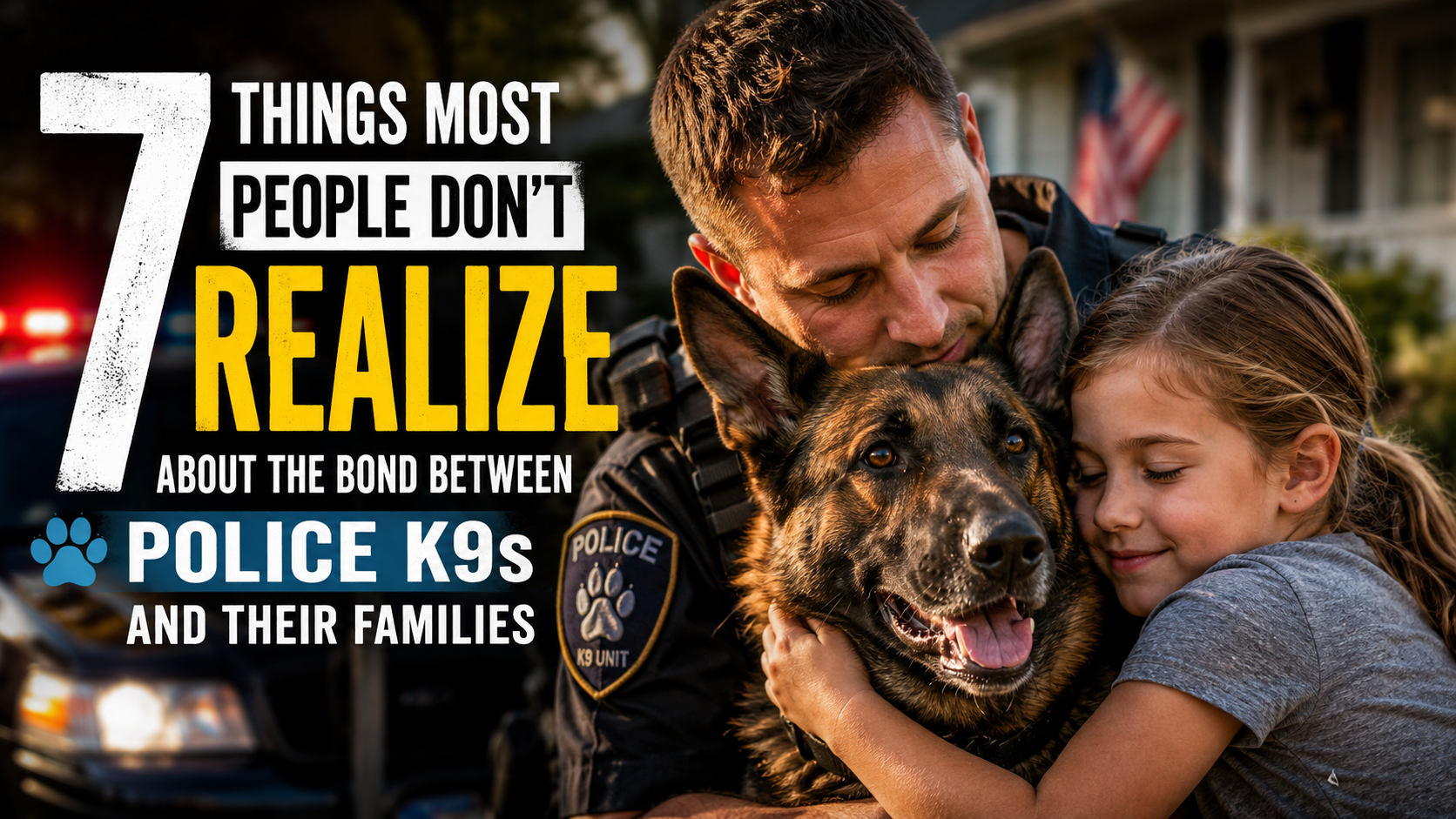
When people see a police K9 in action, they often focus on the dog’s impressive skills. Whether tracking a suspect, locating missing persons, detecting narcotics, or assisting during public safety operations, these highly trained animals are often viewed as working partners first and pets second. What many people don’t realize, however, is that most police K9s spend much of their lives away from the spotlight—as beloved members of a family.
Behind every successful K9 team is a relationship built on trust, consistency, and daily companionship. These dogs don’t simply report for duty and return to a kennel at the end of a shift. In many cases, they live with their handlers and become deeply integrated into family life. The result is a unique bond that combines professional teamwork with genuine affection.
Here are seven things most people don’t realize about the connection between police K9s and the families who share their lives.
1. They Usually Live at Home, Not at the Police Station
One of the biggest misconceptions about police dogs is that they spend most of their time at law enforcement facilities.
In reality, many police K9s live at home with their handlers. After a shift ends, the dog often rides home in the patrol vehicle and becomes part of the household routine.
They may relax in the yard, spend time with family members, and enjoy many of the same comforts as other dogs.
This home environment helps strengthen the relationship that is essential for effective teamwork on the job.
2. The Handler Becomes More Than a Coworker
The bond between a K9 and its handler goes far beyond a typical working relationship.
Handlers spend countless hours training, exercising, traveling, and working alongside their dogs. Over time, they learn to interpret subtle body language, behavioral cues, and changes in mood that might go unnoticed by others.
This constant interaction creates a level of trust that is difficult to replicate.
In many ways, the partnership resembles both a professional collaboration and a close friendship.
3. Family Members Often Become Part of the Team
Although the handler serves as the dog’s primary partner, family members frequently play important supporting roles.
Spouses, children, and other household members interact with the dog daily, helping provide socialization, affection, and routine.
Many retired handlers describe their K9s as full-fledged family members rather than working animals.
Children who grow up with police dogs often develop particularly strong attachments to them.
4. Training Never Really Stops
Even after completing formal certification, police K9s continue training throughout their careers.
Handlers dedicate significant time to maintaining skills, reinforcing commands, and practicing operational scenarios. Much of this work occurs outside regular duty hours.
Because the dog lives with the handler, training often becomes part of everyday life.
This ongoing commitment further deepens the bond between the K9 and the family.
5. They Have Distinct Personalities at Home
Many people imagine police dogs as serious, disciplined animals around the clock.
While they are highly focused during work, most display entirely different personalities when off duty. They may enjoy playing fetch, chasing toys, seeking attention, or relaxing with family members.
Handlers frequently describe their dogs as affectionate, playful, and even humorous at home.
Seeing this contrast reminds people that behind the uniformed image is a dog with individual quirks and preferences.
6. Retirement Can Be an Emotional Transition
When a police K9 retires, the event often carries significant emotional weight.
After years of working together, the dog transitions from active service to full-time family life. Many retired K9s remain with their handlers, who continue caring for them throughout their senior years.
For handlers and family members, retirement can bring both pride and sadness.
The transition highlights just how strong the relationship has become over the course of the dog’s career.
7. Their Loyalty Extends Beyond the Job
Perhaps the most remarkable aspect of the K9-family bond is the depth of loyalty involved.
Police dogs rely on their handlers for guidance, safety, and companionship. In return, handlers devote enormous time and energy to their dogs’ training, health, and well-being.
This loyalty does not disappear when the shift ends.
Whether on duty, at home, or in retirement, the relationship remains rooted in trust and mutual dependence.
It is this enduring connection that makes police K9 partnerships so special.
What Makes Police K9s Different From Typical Pets?
Police K9s undergo extensive training designed to prepare them for highly specialized tasks.
Depending on their role, they may be trained in:
- Tracking and trailing.
- Detection work.
- Search and rescue.
- Patrol operations.
- Evidence recovery.
- Public safety support.
Despite these advanced skills, many of their daily needs remain the same as those of any family dog. They require exercise, social interaction, mental stimulation, and affection.
Balancing professional responsibilities with family life is part of what makes the K9 experience unique.
Why Trust Is So Important
Trust is the foundation of every successful K9 partnership.
During operations, handlers often depend on their dogs to locate individuals, identify threats, or search unfamiliar environments. The dog, in turn, depends on the handler’s guidance and leadership.
This mutual trust is developed through years of shared experiences.
The close home environment helps reinforce that connection in ways that would be difficult to achieve through work alone.
The Role of Families in K9 Success
Families often contribute more to a police dog’s success than many people realize.
A stable and supportive home environment helps ensure that the dog remains healthy, confident, and well-adjusted. Family members provide companionship and social interaction that enrich the dog’s life outside of work.
Their involvement helps create the balance necessary for a demanding career.
In many cases, the entire household becomes invested in the dog’s well-being and accomplishments.
Life After Service
Retirement marks a new chapter for police K9s.
Many continue enjoying active lives with their families, participating in walks, playtime, and everyday activities. Without the demands of operational work, retired K9s often settle into a more relaxed routine while remaining deeply connected to their handlers.
For many families, retirement simply means having more time to enjoy the companionship they have cherished for years.
Conclusion
Most people see police K9s as skilled working dogs, but their lives extend far beyond law enforcement duties. Behind the scenes, these remarkable animals often become cherished members of a family, sharing daily routines, building lasting relationships, and forming bonds that grow stronger over time.
From living at home with their handlers to enjoying retirement surrounded by loved ones, police K9s demonstrate that loyalty, trust, and companionship are at the heart of every successful partnership. Their stories remind us that while they may serve as professionals on the job, they are also beloved family members whose impact reaches far beyond their official duties.







