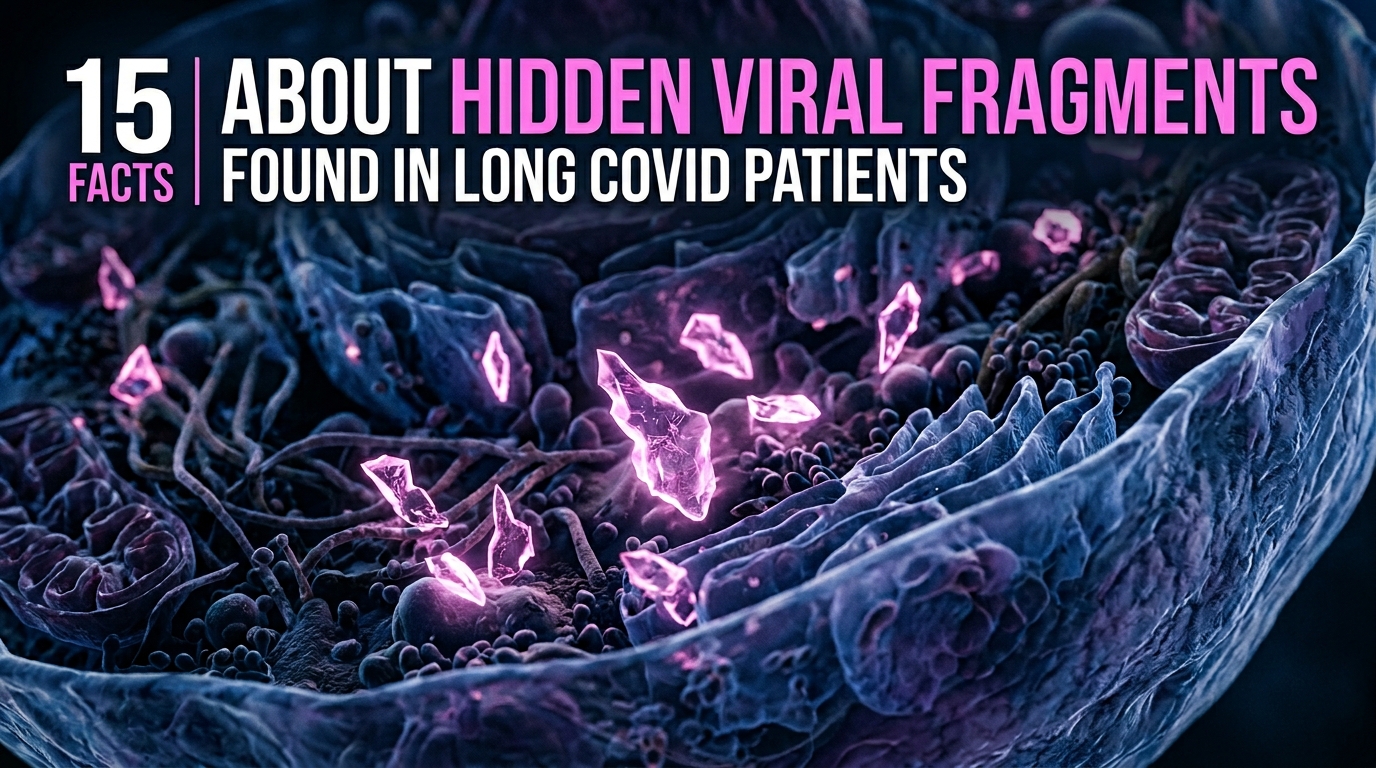
Long COVID remains one of the most puzzling medical conditions to emerge from the COVID-19 pandemic. While many people recover fully from acute infection with SARS-CoV-2, a significant number continue to experience lingering symptoms such as fatigue, brain fog, shortness of breath, and cardiovascular irregularities for months or even years.
One of the leading areas of scientific investigation is the possibility that fragments of viral material—or persistent traces of the virus—may remain in the body long after the initial infection has cleared. Researchers are still working to understand what these “hidden viral fragments” are, where they persist, and how they may contribute to ongoing symptoms.
It’s important to emphasize that this is an active and evolving field of research. Scientists do not yet agree on a single explanation for Long COVID, and multiple mechanisms are likely involved. However, several intriguing findings have emerged.
Here are 15 key facts about hidden viral fragments and what researchers are discovering about their potential role in Long COVID.
1. Viral fragments are not the same as active infection
One of the most important distinctions in this research is that viral fragments are not necessarily infectious virus particles.
Instead, they may include pieces of viral RNA or proteins that remain in tissues after the immune system has cleared the active infection. These remnants cannot reproduce or spread, but they may still interact with the immune system in complex ways.
2. Evidence suggests fragments can persist in certain tissues
Multiple studies have detected SARS-CoV-2 genetic material in various parts of the body weeks or months after acute infection.
These include tissues such as:
- The gastrointestinal tract
- The lungs
- Blood vessel linings
- The nervous system
Researchers believe some tissues may act as reservoirs where viral remnants persist longer than in circulating blood.
3. The gut is one of the most studied viral reservoirs
The digestive system has emerged as a particularly important area of investigation.
Some studies have found viral RNA in intestinal tissue long after respiratory symptoms resolve. Because the gut plays a central role in immune regulation, persistent viral material here may influence systemic inflammation and immune signaling.
4. The immune system may react to lingering viral debris
Even without active infection, viral fragments may continue to stimulate the immune system.
This ongoing immune activation is one hypothesis for why some people experience chronic inflammation-like symptoms, including fatigue and body aches.
Researchers are exploring whether the immune system remains in a “low-level alert” state in response to residual viral material.
5. Spike protein fragments have been detected in some patients
Beyond full viral RNA, some studies have identified spike protein components circulating in the blood of individuals long after infection.
The significance of this finding is still under investigation, but it raises questions about how long viral proteins can persist and whether they contribute to ongoing symptoms.
6. The brain may also be indirectly affected
While evidence of viral fragments in brain tissue is limited, neurological symptoms in Long COVID are well documented.
Researchers believe that persistent immune activation, blood vessel inflammation, or indirect effects of viral remnants elsewhere in the body may contribute to symptoms such as:
- Brain fog
- Memory issues
- Difficulty concentrating
The exact mechanisms remain unclear.
7. Blood vessel inflammation is a key research focus
SARS-CoV-2 is known to affect the vascular system.
Some studies suggest that lingering viral fragments may contribute to endothelial dysfunction—the impaired functioning of blood vessel linings.
This could potentially help explain symptoms like:
- Reduced exercise tolerance
- Chest discomfort
- Circulatory irregularities
8. Viral persistence does not occur in all patients
Not everyone with Long COVID shows evidence of persistent viral material.
This suggests that Long COVID is likely a heterogeneous condition with multiple underlying pathways, including:
- Immune dysregulation
- Autonomic nervous system disruption
- Tissue damage from acute infection
- Viral persistence in a subset of cases
9. The body may struggle to fully clear viral remnants
Researchers are investigating why some individuals may retain viral fragments longer than others.
Possible factors include:
- Differences in immune response
- Severity of initial infection
- Genetic predisposition
- Pre-existing health conditions
Understanding these differences is a major focus of ongoing research.
10. Viral fragments may trigger cytokine imbalance
Cytokines are signaling proteins that regulate immune activity.
Some studies suggest that lingering viral material may contribute to abnormal cytokine patterns, potentially leading to chronic low-grade inflammation.
This imbalance has been linked to many Long COVID symptoms, particularly fatigue and malaise.
11. Imaging studies are revealing subtle organ changes
Advanced imaging techniques have shown changes in organ function in some Long COVID patients even when standard tests appear normal.
While not always directly linked to viral fragments, these findings support the idea that persistent biological effects may remain after infection.
12. Antiviral treatments are being explored in trials
Because viral persistence is one possible mechanism, some clinical trials are testing whether antiviral medications can reduce Long COVID symptoms.
The results so far are mixed, and researchers emphasize that antivirals are not a universal solution, but they may help in specific subgroups of patients.
13. The concept of “viral reservoirs” is still being studied
A viral reservoir refers to a location in the body where viruses can persist in a dormant or low-activity state.
While this phenomenon is well known in other infections, scientists are still determining whether SARS-CoV-2 establishes true long-term reservoirs in humans.
Current evidence suggests possible persistence in certain tissues, but not in a fully established latent form like some other viruses.
14. Animal studies support the possibility of persistence
Research in animal models has shown that viral material can remain in tissues for extended periods after infection.
These findings support the biological plausibility of persistence in humans, though direct translation to human Long COVID is still under investigation.
15. Long COVID likely involves multiple overlapping mechanisms
Perhaps the most important conclusion from current research is that no single explanation fully accounts for Long COVID.
Instead, it appears to be a complex condition involving:
- Possible viral persistence
- Immune system dysregulation
- Microvascular changes
- Autonomic nervous system imbalance
- Tissue-level injury
Hidden viral fragments may be one piece of a much larger biological puzzle.
Why this research matters
Understanding whether viral fragments contribute to Long COVID is important because it could help guide future treatments.
If persistence plays a significant role in some patients, targeted therapies could include antivirals, immune-modulating treatments, or strategies aimed at clearing residual viral material.
At the same time, recognizing the complexity of Long COVID ensures that research remains broad and inclusive of multiple possible mechanisms.
The bottom line
The discovery of potential hidden viral fragments in Long COVID patients has opened a new and important area of medical research. While the evidence is still evolving, it suggests that the aftermath of SARS-CoV-2 infection may be more biologically complex than previously understood.
Scientists are still working to determine how often viral remnants persist, what effects they have on the body, and how they interact with other biological systems. What is clear, however, is that Long COVID is a real and multifaceted condition that continues to challenge researchers worldwide—and is driving rapid progress in virology, immunology, and post-viral medicine.