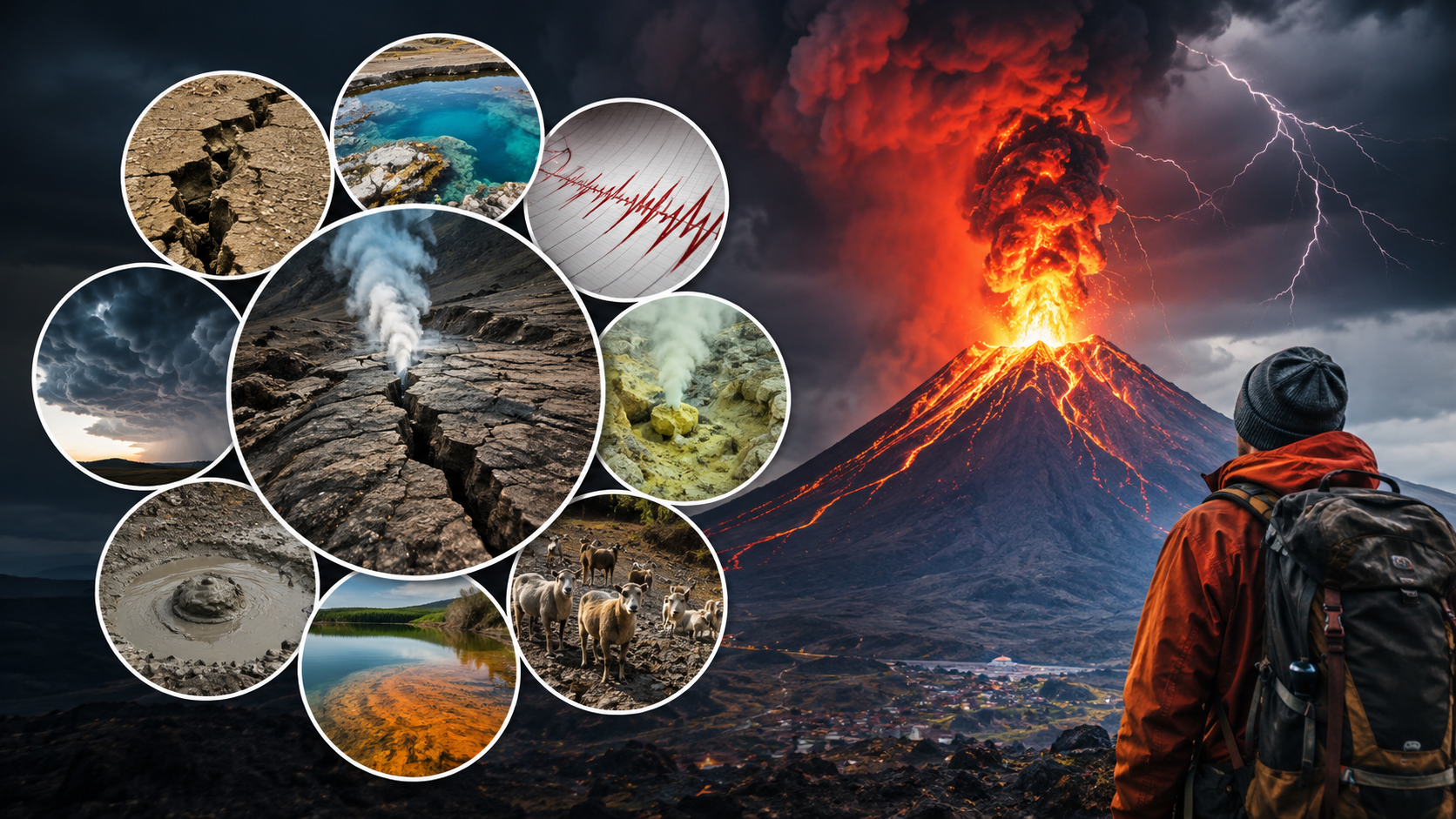
Volcanoes are among the most powerful forces on Earth. While an eruption may seem sudden to people living nearby, volcanoes usually provide warning signs long before lava, ash, and gases burst from the surface. Scientists carefully monitor these signals to help predict eruptions and protect communities from potential danger.
Volcanic systems are constantly changing beneath the ground. As magma rises toward the surface, it affects the surrounding rock, groundwater, atmosphere, and even the shape of the volcano itself. These changes can create noticeable natural events that serve as important clues that an eruption may be approaching.
Although no two volcanoes behave exactly alike, many eruptions are preceded by similar warning signs. Here are 11 natural events that often occur before volcanic eruptions.
1. Increased Earthquake Activity
One of the earliest and most common warning signs of an impending eruption is a surge in earthquakes.
As magma moves upward through the Earth’s crust, it forces its way through cracks and weak points in the surrounding rock. This movement creates seismic activity, resulting in frequent small earthquakes beneath the volcano.
Scientists often observe earthquake swarms—groups of many small tremors occurring over a short period. A sudden increase in seismic activity can indicate that magma is rising and pressurizing the volcanic system.
2. Ground Swelling and Deformation
Volcanoes often change shape before they erupt.
As magma accumulates beneath the surface, it pushes upward against the surrounding rock, causing the volcano to expand or bulge. This process, known as ground deformation, may occur gradually over weeks, months, or even years.
Modern monitoring equipment can detect tiny changes in elevation and slope that are invisible to the naked eye. Significant swelling is often a strong indication that pressure is building beneath the volcano.
3. Increased Gas Emissions
Volcanic gases provide valuable insight into what is happening underground.
As magma approaches the surface, it releases gases such as carbon dioxide, sulfur dioxide, and water vapor. Rising gas levels often signal increased volcanic activity.
Scientists regularly measure gas emissions around active volcanoes because sudden spikes can indicate that magma is moving closer to eruption. Changes in the composition of emitted gases can also reveal important details about conditions within the volcano.
4. Steam Explosions and Fumarole Activity
Many volcanoes develop increased steam activity before an eruption.
Hot magma heats underground water, producing steam that escapes through cracks and vents. Existing fumaroles—openings that release steam and volcanic gases—may become more active, while new vents can suddenly appear.
These steam emissions often create dramatic plumes visible from miles away. In some cases, pressure buildup can trigger small steam-driven explosions before any magma reaches the surface.
5. Rising Ground Temperatures
Changes in surface temperature frequently occur before volcanic eruptions.
As magma rises closer to the surface, it transfers heat to surrounding rocks and soil. Areas near volcanic vents, crater lakes, or geothermal features may become noticeably warmer.
Scientists use thermal cameras and satellite technology to monitor temperature changes around active volcanoes. Unusual heating patterns can serve as an early warning sign of increased volcanic unrest.
6. Changes in Hot Springs and Geysers
Volcanic activity can significantly alter nearby geothermal systems.
Hot springs may suddenly become hotter, cooler, more acidic, or change color. Water levels can rise or fall unexpectedly, while geysers may erupt more frequently or stop altogether.
Because geothermal systems are connected to underground heat sources, unusual changes often indicate that magma movement is affecting the region beneath the surface.
7. Cracks Appearing in the Ground
As pressure builds underground, the Earth’s surface can begin to fracture.
New cracks may form on the volcano’s slopes, near the summit, or in surrounding areas. These fractures develop when rising magma stresses the overlying rock and causes it to break.
In some cases, large fissures open shortly before an eruption, providing pathways through which lava or volcanic gases can eventually escape.
8. Changes in Crater Lakes
Volcanoes with crater lakes often show noticeable changes before erupting.
The water may become warmer, change color, or develop increased bubbling. Gas emissions entering the lake can alter its chemical composition, making it more acidic.
Scientists closely monitor crater lakes because sudden shifts in temperature or chemistry often indicate increased activity beneath the volcano.
9. Unusual Sounds and Rumbling
Volcanoes sometimes produce strange noises before an eruption.
Residents living near active volcanoes have reported hearing deep rumbling, booming, or roaring sounds. These noises can result from moving magma, escaping gases, or small underground explosions.
Although not always present, persistent volcanic sounds may signal that pressure is increasing within the volcanic system.
10. Increased Rockfalls and Landslides
As a volcano becomes unstable, portions of its slopes may begin to collapse.
Rising magma can weaken surrounding rock, making landslides and rockfalls more common. These events may occur around craters, lava domes, or steep volcanic flanks.
In some cases, major slope failures have occurred shortly before large eruptions, making increased instability an important warning sign.
11. Changes in Vegetation and Wildlife Behavior
Volcanic activity can affect both plants and animals.
Elevated gas emissions may damage vegetation, causing plants to wilt, discolor, or die. Animals may also react to subtle environmental changes, moving away from areas experiencing increased heat, gas emissions, or seismic activity.
While wildlife behavior alone is not considered a reliable predictor, unusual ecological changes sometimes accompany periods of volcanic unrest.
How Scientists Predict Eruptions
Modern volcano monitoring combines multiple techniques to track potential eruption activity. Researchers use seismometers to detect earthquakes, GPS instruments to measure ground deformation, satellites to monitor temperature changes, and gas sensors to analyze emissions.
No single warning sign guarantees that an eruption will occur. Instead, scientists look for patterns involving several indicators occurring simultaneously. The more warning signs that appear together, the greater the likelihood that volcanic activity is intensifying.
Predicting the exact timing and size of an eruption remains challenging, but advances in technology have greatly improved scientists’ ability to issue early warnings and reduce risks to nearby communities.
Final Thoughts
Volcanoes rarely erupt without providing clues. From earthquake swarms and ground swelling to gas emissions and changes in hot springs, these natural events offer valuable insight into the powerful forces operating beneath the Earth’s surface.
Understanding these warning signs helps scientists monitor volcanic activity and gives communities more time to prepare for potential eruptions. While volcanoes remain unpredictable, studying their behavior continues to improve our ability to anticipate some of nature’s most dramatic and awe-inspiring events.







