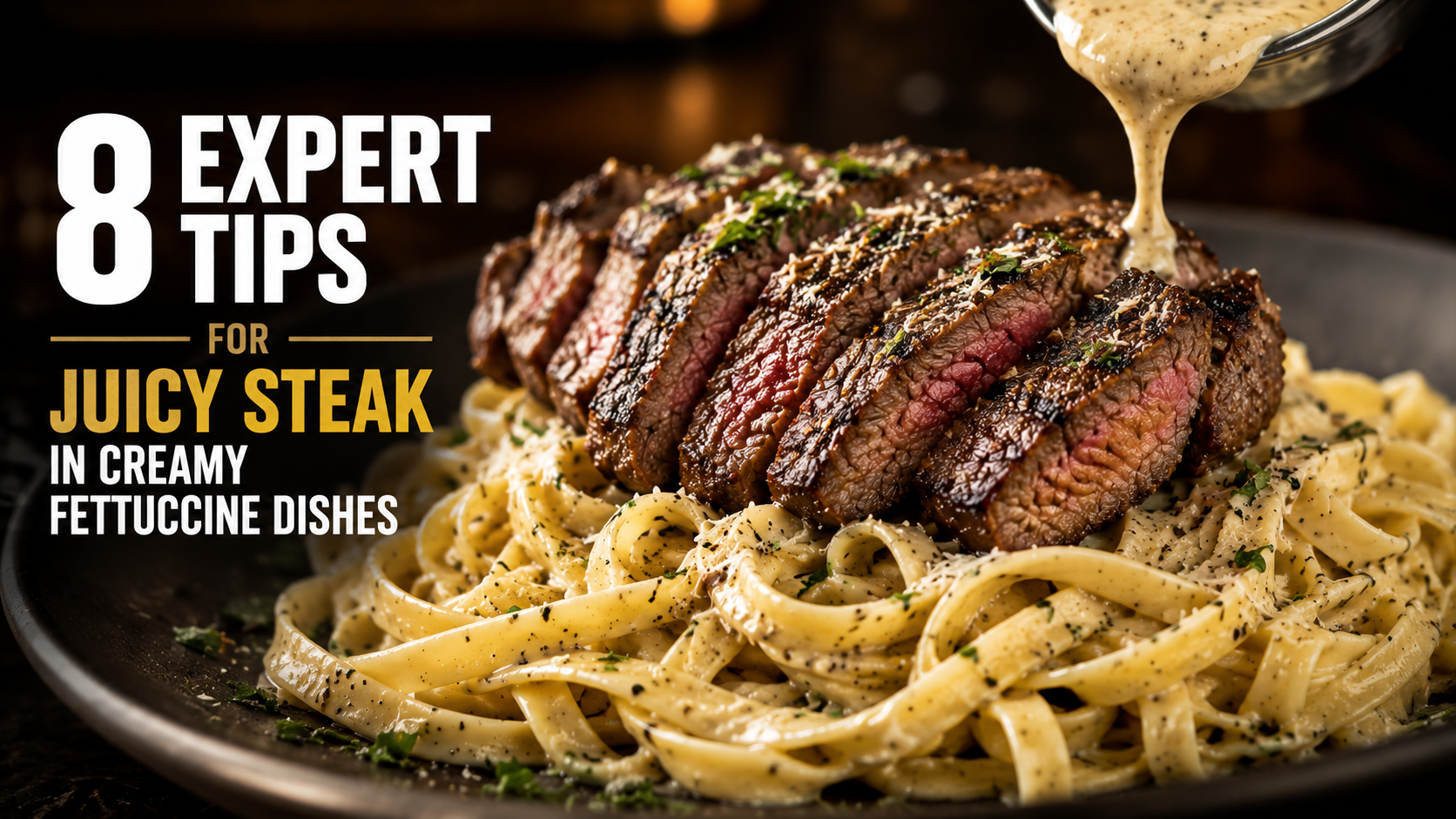
There’s something undeniably satisfying about a plate of creamy fettuccine topped with perfectly cooked steak. The combination of tender beef, rich sauce, and silky pasta creates a restaurant-quality meal that feels both comforting and indulgent.
Yet while the recipe sounds simple, many home cooks struggle with one key element: keeping the steak juicy. A creamy fettuccine sauce can be flawless, and the pasta can be cooked perfectly, but if the steak is dry, tough, or overcooked, the entire dish loses its appeal.
The good news is that achieving tender, flavorful steak isn’t difficult once you understand a few essential techniques. Professional chefs rely on a handful of proven methods that help lock in moisture and maximize flavor, regardless of the specific cut of beef being used.
Whether you’re preparing a weeknight dinner or hosting guests, these expert tips will help you create steak fettuccine that’s rich, satisfying, and packed with restaurant-worthy flavor.
Why Steak and Creamy Fettuccine Work So Well Together
Before diving into the techniques, it’s worth understanding why this pairing is so popular.
Cream-based pasta sauces are naturally rich and smooth. Ingredients such as cream, butter, garlic, and Parmesan cheese create a luxurious texture that coats every strand of fettuccine.
Steak adds contrast.
Its savory flavor and hearty texture balance the richness of the sauce while providing a satisfying bite. When cooked correctly, juicy slices of beef elevate the dish from a simple pasta dinner to something memorable.
The challenge is ensuring the steak remains tender without overpowering the delicate cream sauce.
That’s where proper technique becomes essential.
1. Choose the Right Cut of Steak
Juicy steak begins long before cooking starts.
The cut you select plays a major role in the final result. Some cuts naturally retain moisture better than others because of their marbling—the small streaks of fat distributed throughout the meat.
For creamy fettuccine dishes, several cuts work especially well:
- Ribeye
- New York strip
- Sirloin
- Flat iron steak
- Tenderloin
Ribeye is often considered the most flavorful option due to its generous marbling. Tenderloin offers exceptional tenderness, while sirloin provides an excellent balance between flavor and affordability.
If possible, avoid extremely lean cuts, as they tend to dry out more easily during cooking.
A well-marbled steak gives you a significant advantage before the pan is even heated.
2. Bring the Steak to Room Temperature
One of the most overlooked cooking tips involves timing.
Many people place cold steak directly from the refrigerator into a hot pan. While this may seem harmless, it often leads to uneven cooking.
Cold meat takes longer to cook internally, increasing the risk of overcooking the exterior.
Instead, allow the steak to rest at room temperature for about 30 minutes before cooking.
This helps the meat cook more evenly from edge to center.
The result is better texture, improved moisture retention, and a more consistent level of doneness.
It’s a simple step, but it can make a noticeable difference.
3. Season Generously and Simply
When preparing steak for creamy fettuccine, simplicity is often best.
The sauce already contributes plenty of flavor through ingredients such as garlic, Parmesan, cream, and butter. Overcomplicating the seasoning can create unnecessary competition between components.
A generous coating of salt and freshly ground black pepper is usually enough.
Salt enhances natural beef flavor while helping create a beautiful crust during cooking.
For additional depth, some cooks add:
- Garlic powder
- Onion powder
- Smoked paprika
- Fresh herbs
However, moderation is key.
The steak should complement the pasta, not overpower it.
A balanced approach allows both elements to shine.
4. Use High Heat for a Proper Sear
One of the secrets to juicy steak is achieving a flavorful crust quickly.
High heat creates the Maillard reaction—the process responsible for the deep brown exterior and rich flavor associated with perfectly cooked beef.
To achieve this:
- Heat your skillet thoroughly before adding the steak.
- Use an oil with a high smoke point.
- Avoid overcrowding the pan.
When the steak hits the hot surface, leave it undisturbed for several minutes.
Constant flipping prevents proper browning.
A good sear creates texture, locks in flavor, and enhances the overall dining experience.
The goal is a caramelized exterior paired with a tender interior.
5. Don’t Overcook the Meat
This may be the most important rule of all.
Overcooking is the fastest way to ruin an otherwise excellent steak.
For creamy pasta dishes, medium-rare to medium is often ideal because the steak remains tender and juicy.
General temperature guidelines include:
- Rare: 120–125°F
- Medium-rare: 130–135°F
- Medium: 140–145°F
- Medium-well: 150–155°F
Using a meat thermometer removes guesswork and helps ensure consistent results.
Remember that steak continues cooking slightly after being removed from heat.
Taking it off the pan a few degrees early prevents accidental overcooking.
Precision pays off.
6. Let the Steak Rest Before Slicing
Many cooks make the mistake of cutting into steak immediately after cooking.
The aroma is tempting, but patience is essential.
As steak cooks, its juices move toward the center of the meat. Resting allows those juices to redistribute throughout the steak.
Without a resting period, much of the moisture escapes onto the cutting board.
Allow the steak to rest for approximately five to ten minutes before slicing.
The difference can be dramatic.
Rested steak remains noticeably juicier and more flavorful.
It’s one of the easiest ways to improve the final dish without any additional ingredients.
7. Slice Against the Grain
Even perfectly cooked steak can seem tough if sliced incorrectly.
Every piece of beef contains muscle fibers running in a particular direction, commonly known as the grain.
Cutting with the grain leaves long muscle fibers intact, making each bite chewier.
Instead, slice across the grain.
This shortens the fibers and creates a more tender texture.
The improvement is immediate and noticeable.
Thin slices also integrate more naturally with fettuccine, allowing each forkful to contain both steak and pasta.
Presentation improves as well.
Neatly sliced steak creates a more polished and professional appearance.
8. Finish the Steak With the Sauce, Not In It
One common mistake involves simmering steak in the cream sauce for too long.
While it may seem logical to combine everything immediately, prolonged cooking can dry out the meat.
Instead, prepare the sauce separately.
Once the fettuccine is coated and ready, arrange the sliced steak on top or gently fold it in during the final moments of cooking.
This preserves texture and prevents the beef from becoming overcooked.
The steak remains juicy while still absorbing some of the sauce’s flavor.
It’s a technique frequently used in restaurants because it protects the quality of both components.
Building the Perfect Creamy Fettuccine Sauce
A great steak deserves an equally impressive sauce.
While recipes vary, most successful creamy fettuccine dishes rely on a few foundational ingredients:
- Heavy cream
- Butter
- Fresh garlic
- Parmesan cheese
- Black pepper
- Pasta water
The pasta water is particularly important.
Because it contains starch released during cooking, it helps bind the sauce and creates a silky texture.
Adding small amounts gradually allows the sauce to cling beautifully to the pasta.
Avoid overly thick sauces.
The goal is smooth and luxurious, not heavy or glue-like.
Balance is key.
Common Mistakes That Lead to Dry Steak
Understanding what not to do is often just as valuable as knowing what works.
Some of the most common errors include:
Cooking Straight From the Refrigerator
Cold meat cooks unevenly and increases the likelihood of overcooking.
Using Low Heat
Without sufficient heat, steak struggles to develop a flavorful crust.
Skipping the Resting Period
This causes valuable juices to escape.
Overcrowding the Pan
Too much meat lowers the pan temperature and encourages steaming instead of searing.
Leaving Steak in the Sauce Too Long
Extended simmering often results in dry, overcooked beef.
Avoiding these mistakes instantly improves results.
Serving Suggestions for Steak Fettuccine
The richness of steak fettuccine pairs beautifully with lighter side dishes.
Popular options include:
- Caesar salad
- Roasted asparagus
- Garlic green beans
- Lemon-dressed arugula
- Steamed broccoli
Fresh herbs such as parsley or basil can brighten the final presentation.
A sprinkle of freshly grated Parmesan adds extra flavor and visual appeal.
For special occasions, a warm loaf of crusty bread is perfect for soaking up any remaining sauce.
Why Texture Matters as Much as Flavor
One reason restaurant versions often taste better is their attention to texture.
The contrast between tender steak, creamy sauce, and perfectly cooked pasta creates a more satisfying eating experience.
Each component serves a purpose.
The pasta provides structure.
The sauce contributes richness.
The steak delivers flavor and substance.
When any one element is compromised, the dish feels incomplete.
Mastering steak preparation ensures the balance remains intact.
Final Thoughts
A delicious steak fettuccine dish depends on more than a great sauce. The quality of the steak often determines whether the meal feels ordinary or exceptional.
By following these eight expert tips, you can consistently achieve tender, juicy steak that enhances every bite of creamy fettuccine:
- Choose a well-marbled cut.
- Bring the meat to room temperature.
- Season simply but generously.
- Use high heat for a proper sear.
- Avoid overcooking.
- Allow the steak to rest.
- Slice against the grain.
- Add the steak at the end rather than simmering it in the sauce.
These techniques require little extra effort but deliver significant improvements in flavor, texture, and presentation.
The next time you’re craving creamy steak fettuccine, apply these professional methods and you’ll be rewarded with a dish that tastes like it came straight from a high-end Italian restaurant—without ever leaving your kitchen.







