Few celestial events capture human attention quite like a blood moon. When the Moon takes on a deep red or copper-colored glow during a total lunar eclipse, people across the world stop to watch. While modern science explains exactly why this phenomenon occurs, blood moons continue to inspire fascination, mystery, and even fear.
Long before telescopes and astronomy textbooks existed, ancient civilizations looked to the skies for meaning. Unusual events like eclipses were often interpreted as messages from the gods, warnings of disaster, or signs that major changes were approaching. These beliefs became deeply woven into cultural traditions, religious practices, and folklore.
Interestingly, many of these ancient ideas have survived in one form or another. Even in today’s technology-driven world, blood moons still spark conversations about prophecy, luck, spiritual transformation, and cosmic influence.
Here are eight ancient beliefs about blood moons that continue to shape how people think about these remarkable lunar events.
1. Blood Moons Were Seen as Warnings from the Gods
One of the most widespread ancient beliefs was that a blood moon signaled divine displeasure. Civilizations throughout history viewed the sky as a communication channel between gods and humans. Any unusual celestial event was considered important.
In ancient Mesopotamia, eclipses often caused fear among rulers. Priests closely monitored the heavens and interpreted lunar events as omens that could affect kingdoms, harvests, and political stability. A blood-red moon was frequently seen as a warning that difficult times were ahead.
Although most people today understand the scientific explanation behind lunar eclipses, the idea that a blood moon signals significant change remains surprisingly common. Social media often fills with predictions, spiritual interpretations, and discussions about major world events whenever a blood moon appears.
The ancient instinct to search for meaning in the sky is still very much alive.
2. Blood Moons Were Linked to War and Conflict
Throughout history, many cultures associated red celestial objects with bloodshed and battle. Since the moon appeared crimson during an eclipse, it naturally became connected with warfare.
Ancient societies often believed that a blood moon foretold military conflicts, political upheaval, or violence. Leaders sometimes delayed important decisions or prepared for potential threats after witnessing an eclipse.
The symbolism is easy to understand. Red has long been associated with blood, danger, and aggression. Seeing the moon transformed into a giant red orb in the night sky could be deeply unsettling for people who lacked scientific explanations.
Even today, news headlines occasionally link blood moons to global unrest or dramatic events. While there is no evidence connecting lunar eclipses to conflict, the ancient association between red moons and turbulent times continues to influence public imagination.
3. Some Cultures Believed a Creature Was Devouring the Moon
One of the most fascinating blood moon legends comes from cultures that believed a supernatural being was attacking or consuming the moon.
In various parts of Asia, myths described dragons swallowing the moon during an eclipse. Similar stories appeared in other regions, where wolves, jaguars, serpents, or giant beasts were blamed for the moon’s disappearance and red coloration.
When an eclipse occurred, communities often made loud noises by banging drums, shouting, or clashing objects together. The goal was to scare away the creature and restore the moon to its normal state.
While few people literally believe these stories today, the concept survives in folklore, festivals, and cultural storytelling. These myths continue to be shared with younger generations and remain an important part of cultural heritage around the world.
4. Blood Moons Were Considered Signs of Major Transformation
Many ancient spiritual traditions viewed lunar eclipses as periods of powerful change. Since the moon temporarily disappeared and then reemerged, it became a symbol of death, rebirth, and renewal.
For some cultures, the blood moon represented the ending of one phase of life and the beginning of another. People believed it was a time to reflect, release old habits, and prepare for new opportunities.
Modern spiritual communities often hold similar views. Blood moons are frequently associated with personal growth, emotional healing, and life transitions. Many people use lunar eclipses as moments for meditation, goal-setting, or self-reflection.
Although the language has evolved, the underlying belief remains remarkably similar to ancient traditions: a blood moon marks a significant turning point.
5. Lunar Eclipses Were Viewed as Messages About Human Destiny
Ancient astrologers paid close attention to blood moons because they believed celestial events influenced human lives.
In many early societies, the movement of the Sun, Moon, and planets was thought to affect everything from royal success to individual fortunes. A blood moon was often interpreted as a powerful signal regarding future events.
Kings and rulers frequently consulted astrologers before making major decisions. An eclipse could influence military campaigns, political alliances, or religious ceremonies.
Today, astrology remains popular worldwide. Many modern astrologers still analyze blood moons and lunar eclipses, interpreting them as periods of heightened energy, emotional intensity, or important life lessons.
Whether viewed scientifically or spiritually, the fascination with connecting celestial events to human destiny has endured for thousands of years.
6. Blood Moons Were Associated with Fertility and Agriculture
Agricultural societies depended heavily on natural cycles, making the moon an important symbol of growth and fertility.
Some ancient communities believed blood moons affected crops, livestock, and seasonal patterns. Farmers carefully observed lunar events and sometimes adjusted planting or harvesting activities based on celestial signs.
The moon’s connection to fertility also extended to human life. In certain traditions, eclipses were thought to influence pregnancy, childbirth, and reproductive health.
Although modern agriculture relies on science and technology, lunar-based farming traditions still exist in some regions. Certain gardeners and farmers continue to plant according to moon phases, reflecting a belief system that stretches back centuries.
The blood moon’s connection to nature’s cycles remains a powerful symbol for many people who seek a deeper connection with the natural world.
7. Blood Moons Inspired Fear of the End Times
Perhaps no ancient belief has had a longer-lasting impact than the association between blood moons and apocalyptic predictions.
Various religious traditions have linked unusual celestial events to prophecies about the end of an age or the arrival of major world-changing events. References to moons turning red appear in several ancient texts and sacred writings.
Throughout history, blood moons have often triggered speculation about impending disasters, divine judgment, or global transformation. Whenever a total lunar eclipse occurs, predictions about world-ending scenarios frequently reappear.
Despite repeated scientific explanations and the regular occurrence of lunar eclipses, these fears continue to capture public attention. Books, documentaries, websites, and social media discussions often revisit end-times theories whenever a blood moon is visible.
This enduring fascination demonstrates how deeply ancient beliefs can persist, even in modern societies.
8. Blood Moons Were Seen as Powerful Spiritual Events
For many ancient cultures, a blood moon was more than an astronomical occurrence—it was a sacred moment.
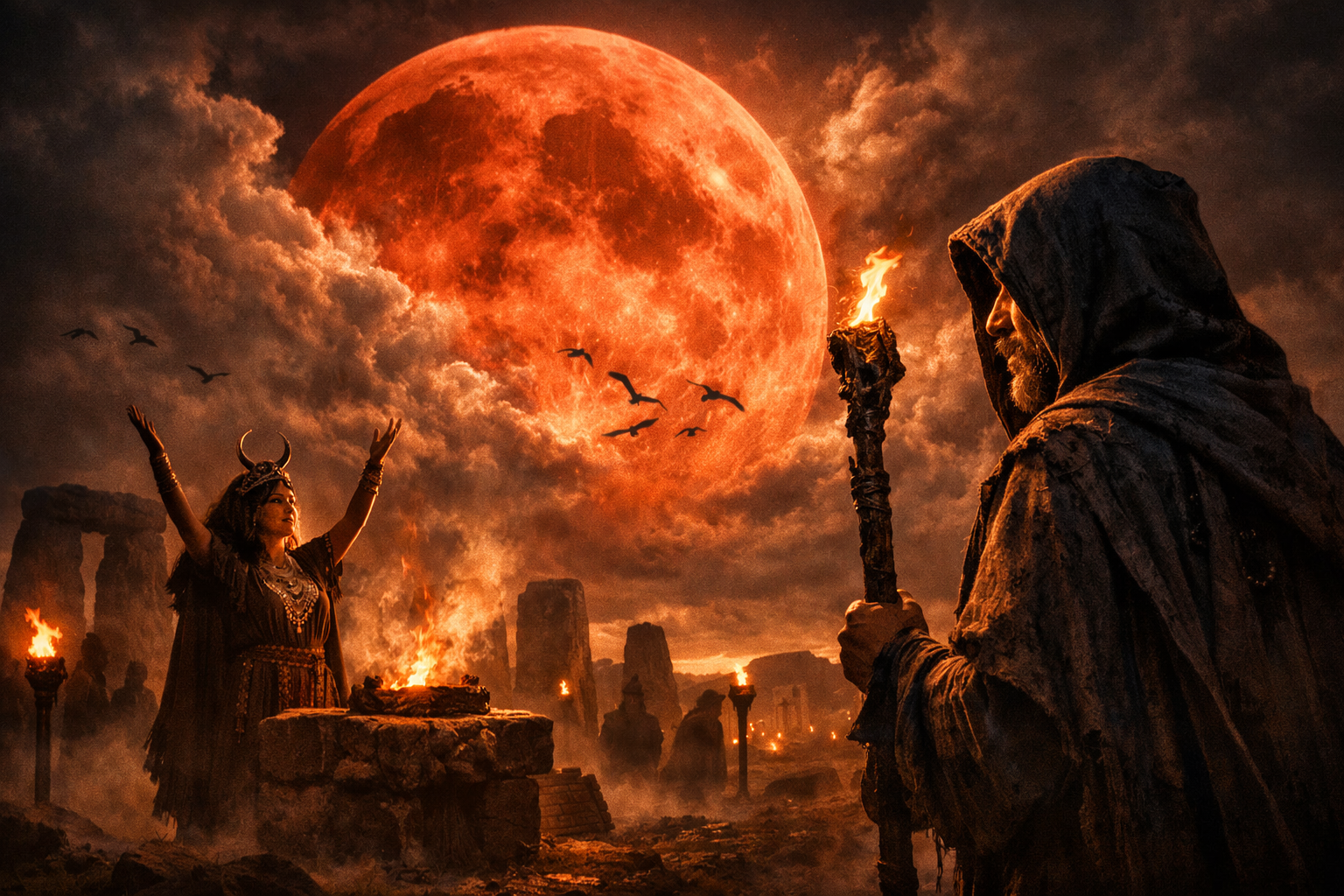
Shamans, priests, and spiritual leaders often performed rituals during eclipses. Some believed the barrier between the physical and spiritual worlds became thinner, making it easier to communicate with ancestors, spirits, or divine forces.
Ceremonies might involve prayer, meditation, offerings, or purification rituals intended to harness the energy of the event.
Modern spiritual practices often echo these traditions. Many people participate in moon ceremonies, mindfulness exercises, or personal rituals during blood moons. While the specific beliefs vary, the idea that lunar eclipses carry special spiritual significance remains widespread.
This continuing interest highlights humanity’s enduring desire to find meaning in the cosmos.
Why Blood Moons Continue to Fascinate Us
The scientific explanation for a blood moon is straightforward. During a total lunar eclipse, Earth moves directly between the Sun and the Moon. Sunlight passing through Earth’s atmosphere is filtered, allowing red wavelengths to reach the lunar surface and giving the Moon its distinctive reddish appearance.
Yet understanding the science has not diminished the mystery.
Blood moons occupy a unique place where science and symbolism meet. They are rare enough to feel special, dramatic enough to inspire awe, and visually striking enough to spark imagination. The sight of a glowing red moon hanging in the night sky naturally encourages people to wonder whether it carries a deeper meaning.
Psychologists suggest that humans are wired to search for patterns and significance in unusual events. Ancient cultures expressed this tendency through myths, legends, and religious interpretations. Modern society often expresses it through spiritual reflection, astrology, or online discussions.
In both cases, the motivation is similar: people want to understand their place in a vast and mysterious universe.
Final Thoughts
Blood moons have captivated humanity for thousands of years. Ancient civilizations interpreted them as divine warnings, signs of war, symbols of transformation, messages about destiny, and powerful spiritual events. While scientific knowledge has revealed the true cause of lunar eclipses, many of these beliefs continue to influence modern thinking.
Whether viewed through the lens of astronomy, mythology, religion, or personal spirituality, blood moons remain among the most compelling sights in the night sky. They remind us that even in an age of scientific discovery, humanity’s sense of wonder has never disappeared.
The next time a blood moon rises overhead, remember that you are witnessing the same extraordinary event that inspired awe, fear, and fascination in countless generations before you. That shared experience connects us to a long human history of looking upward and searching for meaning among the stars.