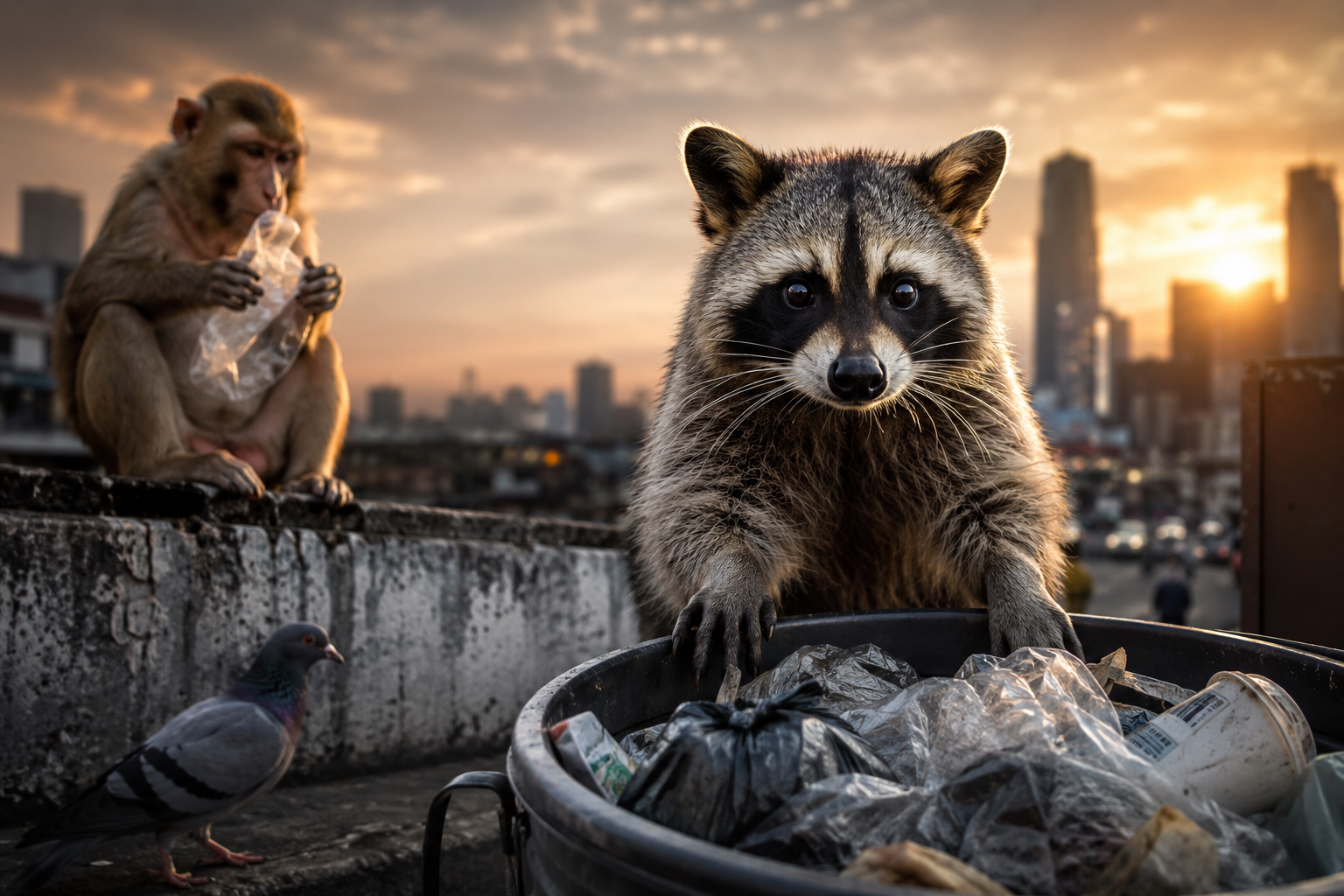
As cities expand and human development reaches deeper into natural habitats, wildlife is facing unprecedented challenges. Roads, buildings, traffic, noise, and pollution have transformed landscapes that once belonged primarily to animals. Yet despite these obstacles, many species have demonstrated an extraordinary ability to adapt.
Far from disappearing entirely, some animals have learned to navigate urban environments, exploit new food sources, and even modify their behavior to coexist alongside people. In some cases, these adaptations are so remarkable that researchers are rethinking long-held assumptions about animal intelligence, flexibility, and resilience.
From birds that alter their songs to mammals that learn traffic patterns, wildlife continues to find innovative ways to survive in human-dominated environments. Here are 15 surprising examples of animals adapting to life in and around human communities.
1. Coyotes Thriving in Major Cities
Coyotes were once associated primarily with open grasslands and rural landscapes. Today, they can be found in many large cities across North America.
Researchers have documented coyotes living in urban parks, golf courses, industrial zones, and suburban neighborhoods. They often become more nocturnal in populated areas, reducing encounters with people while taking advantage of food opportunities.
Their success demonstrates an impressive ability to adjust behavior in response to human activity.
2. Peregrine Falcons Nesting on Skyscrapers
Tall buildings have unexpectedly become substitutes for natural cliff habitats.
Peregrine falcons, among the fastest animals on Earth, increasingly nest on skyscrapers, bridges, and other man-made structures. These elevated locations provide excellent vantage points and protection from many ground-based threats.
Urban areas also offer abundant prey, particularly pigeons, making cities surprisingly attractive environments for these powerful birds of prey.
3. Raccoons Mastering Urban Problem-Solving
Raccoons are famous for their intelligence and adaptability.
In cities and suburbs, they have learned how to open containers, access food storage areas, navigate fences, and exploit a wide variety of human-created resources. Some studies suggest raccoons can remember solutions to problems for extended periods.
Their success highlights the advantages of curiosity and cognitive flexibility in changing environments.
4. Birds Changing Their Songs to Overcome Traffic Noise
Urban noise presents a major communication challenge for birds.
Researchers have found that some species modify the pitch, volume, or timing of their songs to ensure they remain audible above traffic and city sounds. In particularly noisy areas, birds may sing earlier in the morning when ambient noise levels are lower.
This behavioral adjustment demonstrates how wildlife can respond to entirely new environmental pressures.
5. Foxes Becoming Urban Residents
In several parts of the world, foxes have become common city dwellers.
Urban foxes often take advantage of gardens, parks, and food sources associated with human activity. Studies have shown that city foxes may behave differently from their rural counterparts, displaying altered movement patterns and greater tolerance of human presence.
Their ability to thrive in densely populated environments continues to interest wildlife researchers.
6. Monkeys Learning to Navigate Human Spaces
In some regions, monkeys have become highly skilled at living near people.
They may use buildings, roads, and public spaces as part of their daily routines. Certain populations have even learned to recognize food packaging, identify opportunities for obtaining food, and adjust their behavior based on human schedules.
These adaptations illustrate the impressive learning abilities of many primate species.
7. Bears Exploring Human Food Sources
Although encounters can create challenges, some bear populations have learned to exploit food opportunities associated with human communities.
Garbage containers, fruit trees, bird feeders, and agricultural areas can attract bears seeking calorie-rich resources. Wildlife managers often work to reduce these attractants because they can increase conflicts.
The behavior nonetheless demonstrates bears’ remarkable capacity to identify and utilize new food sources.
8. Geckos Taking Advantage of Artificial Lighting
Artificial lights attract insects, creating feeding opportunities for insect-eating reptiles.
Many gecko species have adapted by hunting near streetlights, illuminated signs, and building exteriors. Rather than searching widely for prey, they position themselves where insects naturally congregate.
This simple but effective strategy illustrates how wildlife can benefit from human-created environmental changes.
9. Pigeons Becoming Experts in Urban Navigation
Pigeons are among the most recognizable urban animals.
These birds have adapted exceptionally well to city life, using buildings as nesting sites and taking advantage of diverse food sources. Their navigation abilities remain impressive even within complex urban landscapes.
Researchers continue studying pigeons to better understand orientation, memory, and movement behavior.
10. Leopards Living Near Human Settlements
In some regions, large predators have demonstrated surprising adaptability.
Certain leopard populations live in landscapes heavily influenced by human activity while avoiding direct contact with people. They may alter movement patterns, become more active at night, and use natural cover to navigate developed areas.
Their ability to remain elusive despite proximity to humans reflects extraordinary behavioral flexibility.
11. Squirrels Learning Human Routines
Squirrels are skilled observers of their environment.
In parks and residential neighborhoods, they often learn when and where food is likely to become available. Some populations appear to recognize patterns associated with human activity and adjust their behavior accordingly.
Their success demonstrates how quickly adaptable animals can exploit predictable opportunities.
12. Seagulls Modifying Feeding Strategies
Seagulls have become highly successful urban opportunists.
Researchers have observed gulls targeting areas where people commonly eat, gathering near parking lots, outdoor dining areas, and waste disposal sites. Some studies suggest they pay close attention to human behavior when identifying potential food sources.
This adaptability has helped many gull populations flourish in coastal cities.
13. Wild Boars Expanding Into Urban Areas
Wild boars are increasingly appearing near towns and cities in some regions.
These intelligent mammals take advantage of green spaces, parks, and available food resources. Their adaptability allows them to thrive in environments that differ significantly from traditional forest habitats.
Managing human-boar interactions has become an important issue in several countries.
14. Bats Using Buildings as Roosting Sites
Many bat species have successfully incorporated human structures into their lifestyles.
Attics, bridges, tunnels, and other man-made spaces can provide shelter similar to natural caves or tree cavities. Urban environments may also offer abundant insect prey, particularly around lights.
These adaptations help explain why bats remain common in many developed landscapes.
15. Mountain Lions Adjusting Their Schedules Around People
Some large predators survive near human communities by altering when they are active.
Research has shown that mountain lions in developed areas often become more nocturnal, reducing the likelihood of encounters with people. This shift allows them to move through shared landscapes while minimizing risk.
Such behavioral flexibility illustrates how wildlife can respond to the challenges of living near humans.
Why Wildlife Adaptation Matters
The ability of animals to adapt to human environments is both fascinating and important.
Adaptation helps species survive changing conditions, maintain populations, and continue fulfilling ecological roles. At the same time, not all species possess the same level of flexibility. Some adapt readily, while others struggle when habitats are altered or fragmented.
Understanding these differences helps conservationists identify which species may need additional protection.
It also provides valuable insights into animal behavior and evolution.
The Benefits and Challenges of Urban Adaptation
Living near humans can offer wildlife certain advantages, including:
- Reliable food sources
- Reduced numbers of natural predators
- New nesting or shelter opportunities
- Access to water in developed landscapes
However, urban life also presents challenges:
- Vehicle collisions
- Pollution
- Human-wildlife conflicts
- Habitat fragmentation
- Exposure to hazards and toxins
Successful urban animals must navigate both opportunities and risks.
What Scientists Are Learning
Researchers studying urban wildlife have discovered that adaptation often involves more than simple survival.
Animals may change:
- Activity patterns
- Communication methods
- Feeding behavior
- Movement strategies
- Social interactions
- Reproductive habits
These adjustments demonstrate a level of behavioral flexibility that continues to surprise scientists.
Urban environments have effectively become living laboratories for studying adaptation in real time.
How Communities Can Support Wildlife
As wildlife and people increasingly share space, coexistence becomes more important.
Communities can help by:
- Protecting green spaces
- Securing waste containers
- Planting native vegetation
- Reducing unnecessary disturbance
- Supporting wildlife-friendly planning initiatives
- Learning about local species
Small actions can make a significant difference in promoting healthier ecosystems.
Final Thoughts
The natural world is remarkably resilient, and the 15 examples explored here highlight the extraordinary ways animals adapt to human communities. From falcons nesting on skyscrapers and birds changing their songs to coyotes navigating city streets and geckos hunting beneath artificial lights, wildlife continues to find innovative solutions to modern challenges.
These adaptations reveal not only the intelligence and flexibility of individual species but also the dynamic relationship between humans and the natural world. As cities continue to grow, understanding how animals respond to changing environments will become increasingly important.
The stories of these adaptable creatures remind us that nature is not simply retreating from human development—it is often learning, adjusting, and evolving right alongside us.







