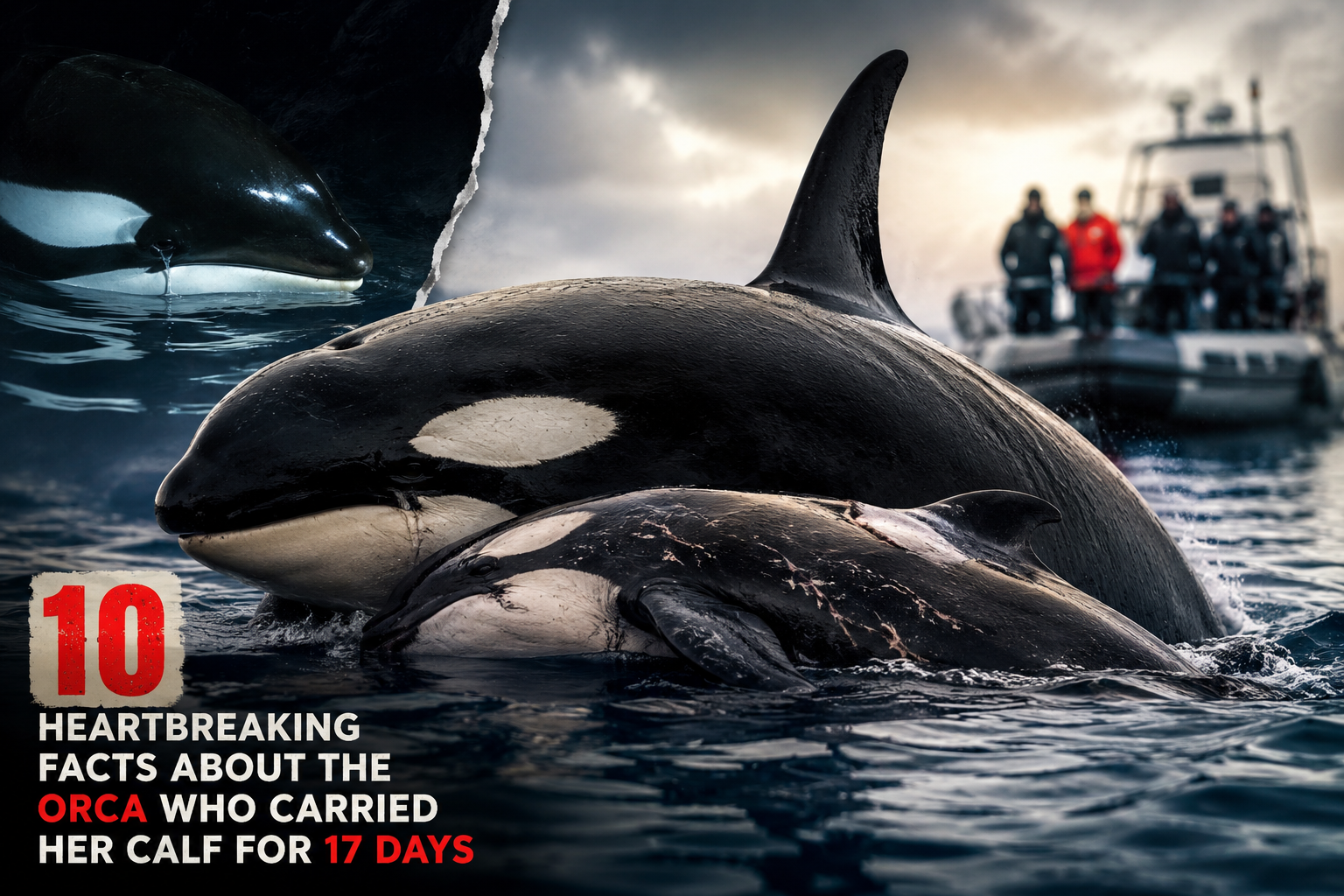
In the summer of 2018, a single orca captured the attention of millions of people around the world. The female killer whale, known as Tahlequah, carried the body of her deceased calf through the waters of the Pacific Northwest for an astonishing 17 days, traveling more than 1,000 miles in the process. The event became one of the most widely discussed wildlife stories of the decade and sparked global conversations about animal emotions, conservation, and the challenges facing endangered orca populations.
Scientists had observed grieving-like behaviors in animals before, but Tahlequah’s prolonged vigil stood out because of its duration and determination. While researchers remain cautious about assigning human emotions directly to animals, the behavior was extraordinary enough to prompt widespread scientific interest.
The story was both heartbreaking and revealing, shedding light on the complex lives of one of the ocean’s most intelligent predators. Here are 10 poignant facts about the orca who carried her calf for 17 days.
1. The Calf Lived for Less Than an Hour
The tragedy began shortly after the calf was born.
Researchers monitoring the population observed that the newborn survived for only a brief period before dying. For a species that invests enormous energy into reproduction and parental care, the loss represented a significant event.
Orcas have long pregnancies, typically lasting around 17 months, making every birth an important investment for both the mother and the population.
The calf’s death marked the beginning of an extraordinary display of maternal behavior.
2. Tahlequah Refused to Leave the Calf Behind
After the calf died, Tahlequah repeatedly balanced the body on her head or carried it in her mouth.
Whenever the calf slipped beneath the surface, she often retrieved it and continued swimming. Observers documented this behavior day after day as she traveled with her family group.
The persistence of her actions captured global attention because it appeared to reflect an unusually strong attachment to her offspring.
Few wildlife observations have resonated so deeply with the public.
3. She Traveled More Than 1,000 Miles
During the 17-day period, Tahlequah covered an estimated distance of more than 1,000 miles.
Maintaining contact with the calf while swimming such distances required continuous effort. Researchers noted that carrying the body likely increased the physical demands of travel.
The extent of the journey highlighted the remarkable endurance of the mother and the unusual nature of the behavior.
It also underscored the importance of social bonds within orca communities.
4. Orcas Have Strong Family Connections
One reason the story struck such a chord is that orcas are known for their close-knit family structures.
Many orca populations live in stable matrilineal groups led by older females. Family members often remain together for life, cooperating in hunting, communication, and social activities.
Mothers invest years in raising their young, and calves depend heavily on family support during early development.
These strong social relationships may help explain why the loss of a calf can be such a significant event.
5. Scientists Have Observed Similar Behaviors in Other Species
While Tahlequah’s vigil was unusual in length, she was not the first animal observed carrying a deceased offspring.
Researchers have documented similar behaviors among dolphins, elephants, primates, and several other highly social species. In many cases, mothers continue to remain close to dead infants for hours, days, or occasionally longer.
These observations have fueled ongoing discussions about animal cognition, attachment, and responses to loss.
Tahlequah’s case became one of the most visible examples ever recorded.
6. The Population She Belongs To Faces Serious Challenges
Tahlequah is part of the endangered Southern Resident killer whale population.
This group inhabits waters near the Pacific Northwest and has experienced decades of decline. Scientists have identified multiple threats affecting the population, including reduced prey availability, environmental contaminants, vessel disturbance, and noise pollution.
The death of a calf within such a vulnerable population carried significance beyond the individual tragedy.
Each lost calf can affect long-term recovery efforts.
7. Orca Mothers Invest Enormous Energy in Raising Young
Reproduction is a demanding process for killer whales.
Pregnancy lasts well over a year, and mothers continue providing care long after birth. Calves rely heavily on their mothers for nourishment, protection, and social learning.
Because of this substantial investment, the loss of a calf represents not only an emotional event but also a significant biological setback.
The depth of maternal care observed in orcas has become a major focus of scientific research.
8. The Story Sparked Conversations About Animal Grief
One of the most important outcomes of the event was renewed public interest in the question of animal grief.
Scientists generally avoid assuming that animals experience emotions exactly as humans do. However, growing evidence suggests that many species form strong social bonds and exhibit behaviors that resemble mourning or responses to loss.
Tahlequah’s actions encouraged broader discussions about the emotional lives of animals and the complexity of social species.
The event reminded many people that human beings are not alone in forming deep familial connections.
9. Tahlequah Later Gave Birth Again
Despite the tragedy, Tahlequah’s story eventually included a hopeful chapter.
In the years following the loss, she successfully gave birth to another calf. The birth was celebrated by researchers, conservationists, and members of the public who had followed her earlier ordeal.
The arrival of a healthy calf represented an encouraging development for both the mother and the endangered population.
It served as a reminder that recovery and resilience can follow even the most difficult circumstances.
10. Her Story Became a Symbol of Conservation Challenges
Beyond its emotional impact, Tahlequah’s journey highlighted broader environmental concerns.
Researchers pointed to the event as a reminder of the pressures facing marine ecosystems and endangered wildlife populations. The story helped draw attention to conservation efforts aimed at protecting prey species, reducing pollution, and improving habitat conditions.
In many ways, Tahlequah became an ambassador for the challenges confronting her entire population.
Her experience transformed a single wildlife observation into a global conservation conversation.
Why the Story Resonated Worldwide
The image of a mother carrying her deceased calf through the ocean touched people across cultures and backgrounds.
Part of the reason lies in the familiarity of parental bonds. While scientists carefully distinguish between human and animal experiences, many observers recognized themes of attachment, persistence, and loss.
The story also challenged outdated perceptions of marine animals as simple or instinct-driven creatures.
Instead, it highlighted the rich social lives that characterize many highly intelligent species.
What Scientists Learned
Tahlequah’s behavior provided researchers with valuable observational data.
The event contributed to ongoing studies examining:
- Orca social behavior
- Maternal investment
- Responses to calf mortality
- Population health
- Animal cognition
- Social bonding in marine mammals
Although many questions remain unanswered, observations like these help scientists better understand the lives of wild animals.
Every unusual event offers an opportunity to expand knowledge.
The Conservation Importance of Southern Resident Orcas
The Southern Resident population remains one of the most closely monitored orca groups in the world.
Conservation efforts focus on several key priorities:
- Protecting salmon populations, particularly Chinook salmon.
- Reducing underwater noise.
- Limiting exposure to pollutants.
- Preserving critical habitat.
- Supporting long-term population recovery.
The future of these whales depends on addressing multiple interconnected environmental challenges.
Stories like Tahlequah’s help keep public attention focused on these important issues.
What Her Journey Taught Us
Perhaps the most lasting lesson from Tahlequah’s 17-day vigil is that animals often display behaviors that challenge our assumptions.
The natural world is filled with complexity, and many species possess social relationships far richer than people once believed. While scientists continue debating how best to interpret such behaviors, there is little doubt that strong bonds play a central role in the lives of orcas.
Tahlequah’s actions served as a powerful reminder that the oceans are inhabited by intelligent, socially sophisticated animals whose experiences deserve careful study and respect.
Final Thoughts
The story of Tahlequah and her calf remains one of the most moving wildlife events ever documented. For 17 days, the orca carried her lost offspring through the waters of the Pacific Northwest, drawing attention from scientists, conservationists, and people around the world.
The 10 facts explored here reveal why the event resonated so deeply. From the strength of orca family bonds to the conservation challenges facing endangered populations, Tahlequah’s journey offered profound insights into both animal behavior and environmental stewardship.
Years later, her story continues to inspire reflection, research, and renewed commitment to protecting the remarkable creatures that share our planet. It stands as a powerful reminder that some of nature’s most important lessons come not from words, but from the actions of the animals themselves.