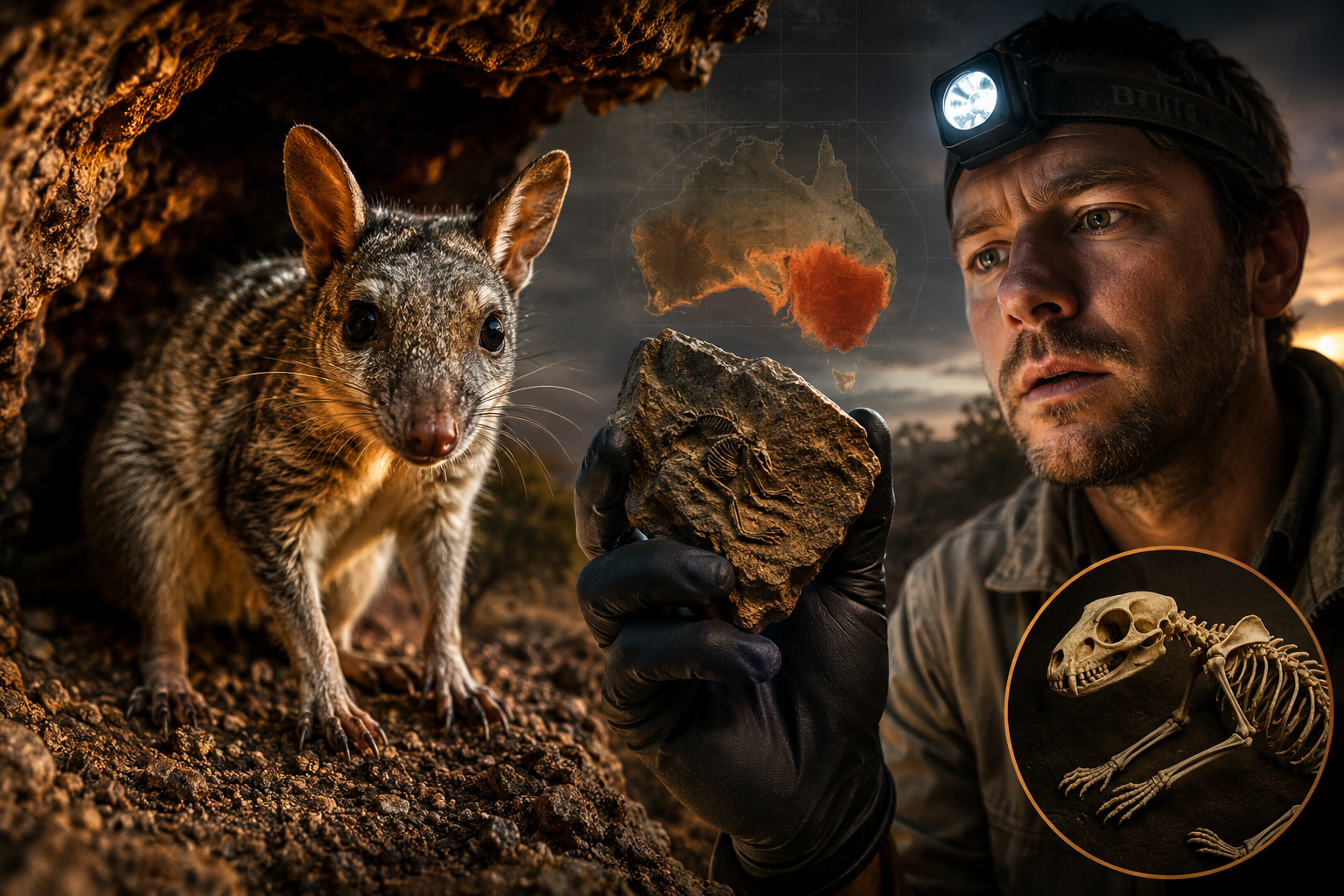
Scientific discoveries involving rare or unusual marsupials often generate excitement among researchers, and for good reason. Marsupials represent one of the most distinctive groups of mammals on Earth, known for their unique reproductive strategies, evolutionary history, and remarkable adaptations. Whether the discovery involves a species thought to be extinct, a newly identified population, unusual behavior, or previously unknown biological traits, such findings can have far-reaching implications for science.
Marsupials are most commonly associated with Australia, but they also inhabit regions of New Guinea and the Americas. Because many species are elusive, nocturnal, or live in remote habitats, researchers are still uncovering important information about their biology and ecology.
When a significant marsupial discovery occurs, it often contributes much more than a single interesting fact. It can reshape scientific understanding, influence conservation strategies, and reveal new insights into evolution. Here are 11 reasons why a major marsupial discovery could be scientifically important.
1. It May Reveal a Species Previously Unknown to Science
One of the most exciting possibilities is the discovery of a species that scientists have never formally documented.
Despite centuries of biological exploration, new mammal species continue to be identified. In remote forests, mountainous regions, and isolated ecosystems, previously unrecognized marsupials occasionally come to light.
A new species can provide valuable information about biodiversity and help scientists better understand how ecosystems function.
Each discovery expands humanity’s knowledge of life on Earth.
2. It Could Improve Understanding of Mammalian Evolution
Marsupials occupy a unique position in the evolutionary history of mammals.
Unlike placental mammals, marsupials give birth to highly underdeveloped young that continue much of their development outside the womb, often within a pouch. Studying newly discovered species or populations can provide clues about how different mammalian groups evolved over millions of years.
These insights help researchers reconstruct ancient evolutionary relationships and understand the origins of modern biodiversity.
3. The Discovery May Challenge Existing Scientific Assumptions
Science advances when new evidence challenges old ideas.
A marsupial discovery may reveal unexpected behaviors, unusual physical traits, or genetic characteristics that do not fit current theories. Such findings encourage researchers to reexamine previous assumptions and develop more accurate explanations.
Many of the most important scientific breakthroughs begin with observations that seem surprising or difficult to explain.
Marsupials have repeatedly contributed to this process.
4. It Could Help Protect Threatened Ecosystems
Many marsupials inhabit ecosystems facing environmental pressures.
When researchers identify a rare or previously overlooked species, conservation attention often follows. Protecting the animal may also help preserve the broader habitat it depends on, benefiting numerous other plants and animals.
In this way, a single discovery can influence environmental management decisions and support biodiversity conservation.
Sometimes a little-known species becomes a powerful symbol for habitat protection.
5. Genetic Research May Unlock New Insights
Modern discoveries often involve advanced genetic analysis.
DNA studies can reveal hidden diversity, uncover relationships between populations, and identify species that appear similar but are genetically distinct. Genetic information also helps scientists understand adaptation, migration, and evolutionary history.
A newly studied marsupial may provide valuable genetic data that contributes to broader biological research.
These findings often extend well beyond a single species.
6. It Could Improve Understanding of Animal Adaptation
Marsupials occupy an impressive variety of environments.
Some live in deserts, others in tropical rainforests, alpine regions, or woodlands. Discoveries involving unusual species can reveal how animals adapt to challenging conditions such as extreme temperatures, limited water, or scarce food resources.
Understanding these adaptations helps scientists learn how wildlife responds to environmental pressures.
Such knowledge is increasingly important in a rapidly changing world.
7. The Discovery May Offer Clues About Extinction Risk
Conservation biology relies heavily on accurate information.
Finding a previously unknown population or rediscovering a species believed to be extinct can dramatically change assessments of extinction risk. Researchers can use this information to improve conservation planning and prioritize protective measures.
In some cases, discoveries provide hope for species that were feared lost forever.
They also highlight the importance of continued field research.
8. Marsupials Have Unique Reproductive Biology
One of the defining features of marsupials is their unusual reproductive system.
Young marsupials are born at an early developmental stage and continue growing after birth, often inside a pouch. Studying newly discovered species may reveal variations in reproductive strategies that scientists have never observed before.
These findings can improve understanding of developmental biology and mammalian reproduction.
Marsupials continue to surprise researchers in this area.
9. It May Reveal Previously Unknown Behaviors
Behavioral discoveries are often just as important as physical ones.
A newly observed marsupial may display unique hunting methods, social interactions, communication systems, or survival strategies. Such observations help scientists build a more complete picture of how species interact with their environments.
Behavioral research can also inform conservation efforts by identifying critical habitat requirements and ecological relationships.
Every new observation adds another piece to the puzzle.
10. The Discovery Can Strengthen Biodiversity Research
Biodiversity research depends on accurate species inventories.
Each newly documented marsupial contributes to a better understanding of regional and global biodiversity patterns. These data help scientists track environmental changes, identify conservation priorities, and study ecosystem health.
In many cases, discoveries reveal that biodiversity is richer and more complex than previously believed.
This knowledge forms the foundation of effective conservation planning.
11. It Reminds Us How Much Nature Remains Unexplored
Perhaps the most important lesson from any major marsupial discovery is that there is still much left to learn.
Even in the 21st century, scientists continue finding new species, uncovering unexpected behaviors, and documenting populations that had gone unnoticed for decades. These discoveries demonstrate that the natural world remains full of mysteries.
They remind us that exploration, observation, and scientific curiosity are still essential tools for understanding life on Earth.
Nature continues to surprise even the most experienced researchers.
Why Marsupials Fascinate Scientists
Marsupials occupy a special place in biological research because they differ so significantly from many other mammals.
Their distinctive reproductive systems, evolutionary history, and ecological diversity make them valuable subjects for studying:
- Evolution
- Genetics
- Developmental biology
- Adaptation
- Conservation science
- Animal behavior
Researchers often view marsupials as natural laboratories for understanding broader biological principles.
This is one reason discoveries involving these animals attract so much scientific attention.
The Conservation Importance of Marsupial Research
Many marsupial species face serious challenges.
Habitat loss, invasive species, climate change, disease, and human activity have placed pressure on numerous populations. Scientific discoveries can provide critical information needed to address these threats.
By understanding where species live, how they behave, and what they require to survive, conservationists can develop more effective protection strategies.
Research often serves as the first step toward long-term preservation.
What Scientists Still Hope to Learn
Even well-known marsupials continue to raise important questions.
Researchers remain interested in:
- Evolutionary relationships among species.
- Genetic diversity within populations.
- Responses to environmental change.
- Reproductive adaptations.
- Behavioral complexity.
- Long-term conservation needs.
Future discoveries are likely to provide answers while generating entirely new questions.
That is part of what makes scientific exploration so exciting.
The Broader Impact of Wildlife Discoveries
A significant marsupial discovery rarely affects only one field of study.
Findings often influence ecology, genetics, conservation biology, zoology, and evolutionary science simultaneously. New information can inspire additional research projects, improve environmental policies, and increase public interest in biodiversity.
In many cases, a single discovery has ripple effects across multiple scientific disciplines.
The value extends far beyond the species itself.
Final Thoughts
Major marsupial discoveries are scientifically important because they expand our understanding of life in countless ways. Whether revealing a new species, uncovering hidden populations, documenting unusual behaviors, or providing valuable genetic insights, these findings help researchers better understand evolution, adaptation, and biodiversity.
The 11 reasons explored here demonstrate why scientists pay close attention whenever a significant marsupial discovery occurs. Such events contribute not only to academic knowledge but also to conservation efforts aimed at protecting some of the world’s most unique mammals.
As exploration and research continue, future discoveries will undoubtedly reveal even more about these fascinating animals. For now, each new finding serves as a reminder that the natural world remains rich with opportunities for learning, discovery, and wonder.







