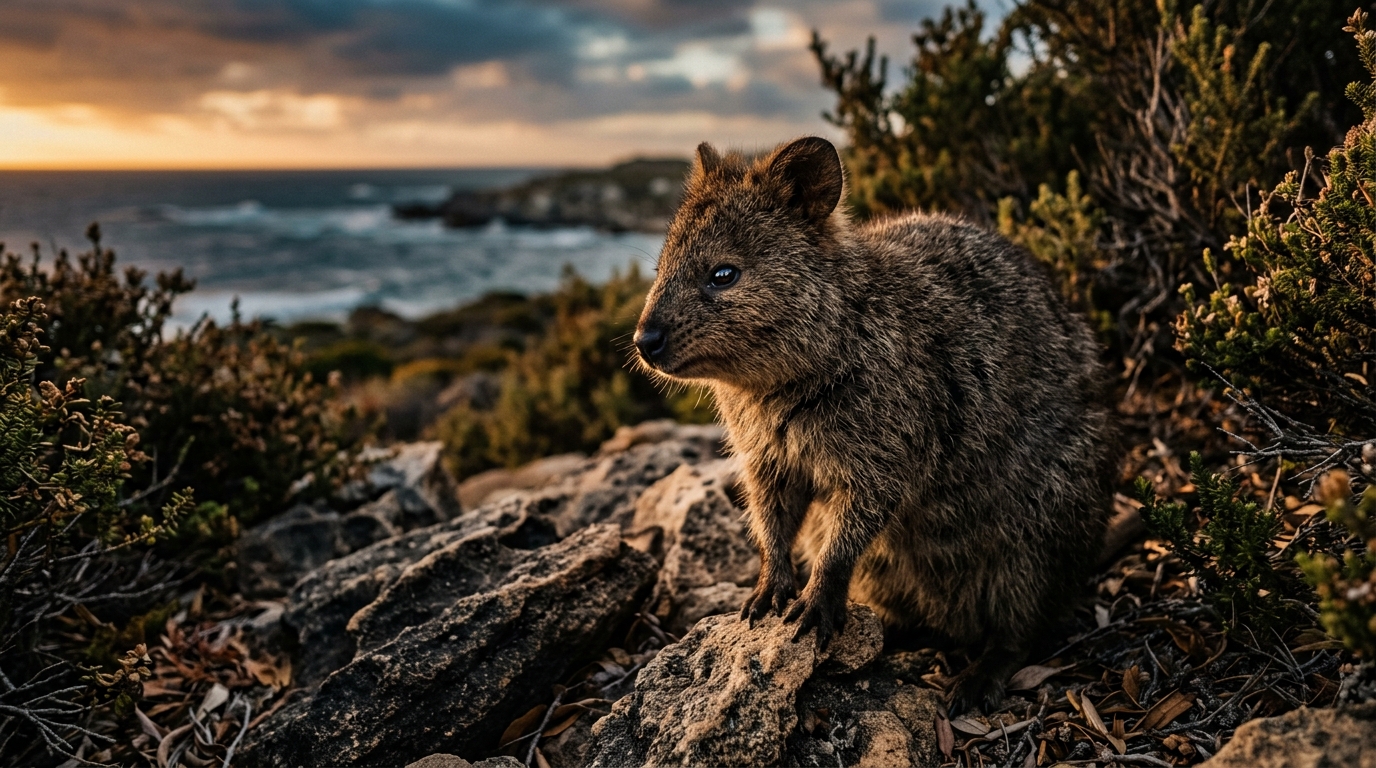
Few animals have achieved internet fame quite like the quokka. With their seemingly permanent smiles, curious personalities, and photogenic faces, these small marsupials have become global celebrities. Images of quokkas posing alongside tourists have spread across social media for years, earning them the nickname “the world’s happiest animal.”
But while their cheerful appearance has made them internet icons, there is much more to quokkas than cute selfies and viral photographs. Beneath their charming reputation lies a fascinating species with unique behaviors, remarkable survival adaptations, and an important ecological role.
Scientists who study quokkas know that these animals are far more complex than many people realize. Their lives are shaped by environmental pressures, evolutionary history, and sophisticated survival strategies that have allowed them to persist despite numerous challenges.
Here are 10 reasons quokkas are far more complex than their adorable reputation suggests.
1. Quokkas Are Marsupials With a Unique Evolutionary History
Quokkas belong to the marsupial family, a group of mammals best known for raising their young in pouches.
Native to Australia, quokkas share ancestry with kangaroos and wallabies. Their evolutionary history stretches back millions of years and reflects the remarkable diversity of Australian wildlife.
Like other marsupials, quokkas give birth to highly undeveloped young that continue growing inside the mother’s pouch. This reproductive strategy differs significantly from that of most mammals found elsewhere in the world.
Understanding quokkas means appreciating their place within a much larger evolutionary story.
2. Their “Smile” Is Not Actually a Smile
One of the biggest misconceptions about quokkas involves their famous expression.
The appearance that many people interpret as a smile is primarily the result of facial structure rather than an emotional display. Their mouth shape and facial features naturally create an expression that appears cheerful to human observers.
While quokkas can certainly experience a range of behavioral states, their famous grin does not necessarily indicate happiness in the human sense.
This distinction reminds us of the importance of interpreting animal behavior carefully.
3. They Have Adapted to Survive in Harsh Environments
Despite their cute appearance, quokkas are highly resilient animals.
They inhabit environments where food availability, water access, and weather conditions can vary considerably. Over time, they have developed behavioral and physiological adaptations that help them cope with these challenges.
Their ability to survive under difficult conditions highlights a level of toughness that often goes unnoticed.
The image of a smiling animal does not fully capture the realities of life in the wild.
4. Quokkas Are Primarily Nocturnal
Many people encounter quokkas during the day, particularly in popular tourist areas.
However, these animals are naturally most active at night. Being nocturnal helps them avoid extreme daytime temperatures and reduces the risk of dehydration.
During cooler evening hours, quokkas typically spend more time foraging and moving through their habitat.
This behavior demonstrates how their daily routines are carefully adapted to environmental conditions.
5. They Play an Important Ecological Role
Quokkas contribute to the health of their ecosystems in several ways.
As herbivores, they consume a variety of plant materials and participate in natural ecological processes. Their feeding habits can influence vegetation patterns, while their movement helps shape interactions within their habitat.
Every species plays a role in maintaining ecological balance, and quokkas are no exception.
Understanding these contributions helps move the conversation beyond their appearance.
6. They Face Real Conservation Challenges
The popularity of quokkas sometimes creates the impression that they are thriving everywhere.
In reality, wild populations face a range of threats, including habitat loss, environmental change, and predation by introduced species. Conservation efforts have been important in helping protect remaining populations.
Scientists and wildlife managers continue monitoring quokka populations to better understand their needs and ensure long-term survival.
Their fame has helped raise awareness, but conservation remains an ongoing priority.
7. Their Reproductive Strategy Is Remarkably Efficient
Like many marsupials, quokkas possess fascinating reproductive adaptations.
Females are capable of producing offspring in ways that maximize reproductive success under changing environmental conditions. These biological strategies have evolved over countless generations and help improve survival in unpredictable habitats.
Researchers continue studying marsupial reproduction because it offers valuable insights into mammalian biology.
Quokkas provide an excellent example of nature’s ability to develop efficient solutions to survival challenges.
8. They Display Sophisticated Behavioral Adaptations
Animal behavior is often more complex than it appears on the surface.
Quokkas must constantly balance the demands of finding food, avoiding predators, conserving energy, and navigating social interactions. Their decisions reflect behavioral strategies refined through evolution.
Scientists studying wildlife behavior recognize that even seemingly simple animals often engage in surprisingly sophisticated responses to environmental conditions.
Quokkas are no exception.
Their daily lives involve far more than posing for photographs.
9. Human Interaction Can Be Both Positive and Problematic
Tourism has played a major role in the quokka’s rise to global fame.
While public interest can support conservation awareness, excessive interaction with humans can also create challenges. Feeding wildlife, approaching too closely, or disrupting natural behaviors may negatively affect animal welfare.
Wildlife experts encourage visitors to observe quokkas responsibly and respect their natural environment.
The goal is to ensure that admiration for these animals contributes to their protection rather than creating additional pressures.
10. They Represent the Importance of Looking Beyond Appearances
Perhaps the most important lesson quokkas teach us is that appearances rarely tell the whole story.
Their cheerful expression has made them famous, but focusing solely on their cuteness overlooks the fascinating biology, ecology, and evolutionary history that make them truly remarkable.
Quokkas are survivors, adapters, and important members of their ecosystems. Their value extends far beyond their ability to generate social media attention.
The more we learn about them, the more impressive they become.
Why Quokkas Became Internet Sensations
The rise of the quokka as a global icon is closely tied to the growth of social media.
Travelers visiting locations where quokkas are commonly found began sharing photographs featuring the animals’ distinctive facial expressions. These images quickly spread online, attracting attention from people who had never heard of the species before.
The combination of rarity, approachability, and apparent friendliness made quokkas ideal viral subjects.
However, internet fame often simplifies complex wildlife stories.
Scientists hope that public curiosity can be used as a gateway to deeper understanding.
Understanding Quokka Habitat
Quokkas are found primarily in parts of Western Australia, including several islands and isolated mainland habitats.
These environments provide the vegetation, shelter, and resources necessary for survival. Habitat quality plays a major role in determining population health and long-term stability.
Conservation efforts frequently focus on protecting these areas from environmental pressures.
Maintaining healthy habitats is essential for ensuring that future generations of quokkas continue to thrive.
What Scientists Are Still Learning
Despite their popularity, many aspects of quokka biology remain active areas of research.
Scientists continue investigating:
- Population dynamics
- Reproductive behavior
- Responses to environmental change
- Habitat requirements
- Ecological interactions
- Long-term conservation strategies
Each new study helps build a more complete picture of this fascinating marsupial.
Research often reveals complexities that are not immediately visible to casual observers.
The Importance of Responsible Wildlife Tourism
The popularity of quokkas highlights broader questions about wildlife tourism.
Responsible tourism can support conservation by generating awareness and funding for habitat protection. At the same time, visitors must recognize that wild animals are not props for photographs.
Respectful observation helps ensure that animals remain healthy and able to behave naturally.
When tourism and conservation work together, both people and wildlife benefit.
Final Thoughts
Quokkas may be famous for their adorable faces, but their true story is far richer than their internet reputation suggests. Behind the iconic “smile” is a resilient marsupial with a fascinating evolutionary history, sophisticated survival strategies, and an important role within its ecosystem.
The 10 reasons explored here reveal why quokkas deserve attention not just as social media stars but as remarkable animals in their own right. From their unique reproductive biology and nocturnal lifestyle to the conservation challenges they face, quokkas offer valuable insights into the complexity of the natural world.
The next time you see a photograph of a smiling quokka, remember that there is much more happening beneath that famous expression. These animals are not simply cute—they are living examples of adaptation, resilience, and the extraordinary diversity of life on Earth.