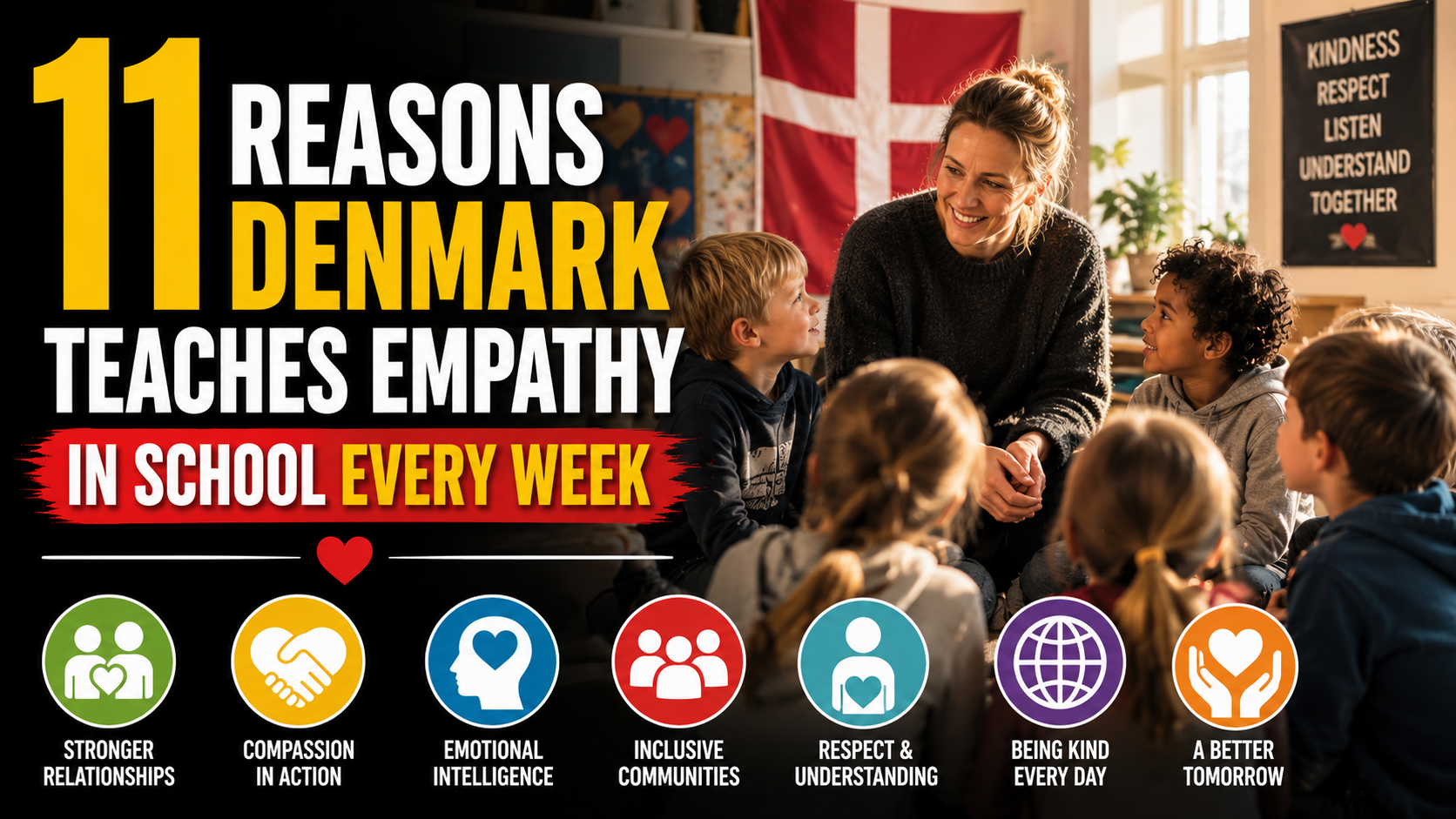
When people talk about the world’s best education systems, the conversation often revolves around test scores, graduation rates, and academic achievement. Yet some countries have taken a broader view of what it means to educate a child. Among them, Denmark stands out for its emphasis on emotional intelligence, social skills, and empathy.
For years, educators around the world have been fascinated by Denmark’s approach to helping children develop not only intellectually but also emotionally. Rather than treating empathy as something students are expected to learn naturally, many Danish schools intentionally create opportunities for children to understand others, manage emotions, resolve conflicts, and build stronger relationships.
The idea is simple but powerful: academic success matters, but so does learning how to be a thoughtful, compassionate human being.
As concerns about bullying, social isolation, mental health, and digital communication continue to grow, Denmark’s approach offers valuable lessons for educators and parents everywhere. Here are 11 reasons empathy plays such an important role in Danish school culture and why many experts believe it contributes to healthier and happier communities.
1. Empathy Helps Create Stronger Social Connections
At its core, empathy is the ability to understand and relate to another person’s feelings and experiences.
Children who develop empathy are generally better equipped to form friendships, cooperate with peers, and navigate social situations. They learn to recognize emotions in others and respond in ways that strengthen relationships rather than damage them.
Danish educators understand that strong social connections contribute significantly to a child’s overall well-being. When students feel understood and accepted, they are more likely to participate confidently in class and develop a sense of belonging.
By encouraging empathy from an early age, schools help students build the interpersonal skills they will rely on throughout their lives.
2. Emotional Intelligence Is Considered as Important as Academic Achievement
Traditional education systems often prioritize subjects such as mathematics, science, and language. While these areas remain essential, Danish schools recognize that emotional intelligence also deserves attention.
Emotional intelligence includes self-awareness, emotional regulation, communication skills, and empathy. These abilities influence how people handle stress, solve problems, and interact with others.
Research consistently shows that emotional intelligence can play a major role in personal and professional success. Individuals who understand their emotions and communicate effectively often perform better in leadership roles, teamwork environments, and personal relationships.
Teaching empathy supports the development of these broader life skills, creating more balanced and emotionally resilient individuals.
3. Empathy Can Reduce Bullying
Bullying remains a serious challenge in schools worldwide. One of the most effective ways to address it is by helping students understand how their actions affect others.
When children learn to recognize the emotional impact of exclusion, teasing, or hurtful behavior, they become less likely to engage in those actions.
Empathy encourages perspective-taking. Students begin asking themselves questions such as, “How would I feel if that happened to me?” or “What might this person be experiencing right now?”
This shift in thinking can significantly reduce aggressive behavior and encourage more supportive interactions among classmates.
Many educators believe that fostering empathy creates a school environment where kindness becomes the norm rather than the exception.
4. It Encourages Better Conflict Resolution
Disagreements are a natural part of life. Whether in school, at work, or within families, conflicts inevitably arise.
The difference lies in how people respond to them.
Empathy helps children move beyond simply defending their own position. Instead, they learn to listen carefully, understand different viewpoints, and search for solutions that benefit everyone involved.
These skills can transform conflicts into opportunities for growth and understanding.
Danish educational practices often emphasize discussion, collaboration, and respectful communication, helping students develop tools for resolving disagreements constructively.
The ability to navigate conflict peacefully is one of the most valuable life skills a child can learn.
5. Students Learn That Everyone Has Unique Experiences
One important aspect of empathy is recognizing that people experience the world differently.
Children come from diverse backgrounds, family situations, cultures, and personal circumstances. Without guidance, students may struggle to understand perspectives that differ from their own.
Empathy-focused activities encourage children to consider how another person’s experiences might shape their thoughts, feelings, and behavior.
This understanding promotes tolerance, inclusivity, and respect.
In an increasingly interconnected world, the ability to appreciate different perspectives is becoming more important than ever.
Teaching empathy helps prepare students to thrive in diverse communities and workplaces.
6. Empathy Supports Mental Well-Being
Mental health has become a growing concern for educators, parents, and policymakers around the world.
Children today face a variety of pressures, including academic expectations, social media influences, and changing social dynamics.
Empathy can play a significant role in supporting emotional well-being.
Students who feel understood are more likely to seek help when needed. Likewise, empathetic classmates often provide valuable emotional support during difficult times.
A school culture that values compassion creates an environment where students feel safer expressing emotions and discussing challenges.
This supportive atmosphere can reduce feelings of isolation and contribute to better mental health outcomes.
7. Collaboration Becomes Easier
Modern workplaces increasingly rely on teamwork. Success often depends not only on technical expertise but also on the ability to collaborate effectively with others.
Empathy strengthens teamwork by helping individuals understand the needs, perspectives, and concerns of their peers.
When students learn to listen actively and respect differing opinions, group projects become more productive and less stressful.
Instead of competing constantly, children learn the value of cooperation and shared success.
These collaborative skills often carry forward into adulthood, benefiting future careers and professional relationships.
8. It Helps Children Develop Stronger Communication Skills
Effective communication involves more than speaking clearly. It also requires listening, understanding, and responding appropriately.
Empathy enhances communication because it encourages people to pay attention to emotional cues as well as words.
Children who practice empathy often become better listeners. They learn to ask thoughtful questions, acknowledge others’ feelings, and engage in meaningful conversations.
These abilities improve classroom interactions and contribute to healthier personal relationships.
Strong communication skills remain valuable throughout life, influencing everything from friendships to leadership opportunities.
9. Empathy Encourages Responsible Citizenship
Communities function best when people care about one another.
Empathy helps children understand that their actions can affect the well-being of others. This awareness fosters a sense of social responsibility and encourages participation in community life.
Students who develop empathy are often more willing to volunteer, support charitable causes, and contribute positively to society.
They recognize that being part of a community involves both rights and responsibilities.
By nurturing empathy, schools help cultivate future citizens who are more likely to engage thoughtfully with social issues and contribute to the common good.
10. It Prepares Students for an Increasingly Connected World
Technology has transformed the way people communicate.
Today, students interact not only with classmates and neighbors but also with people from different countries, cultures, and backgrounds. While digital tools have created incredible opportunities, they have also introduced new challenges.
Online communication can sometimes make it easier to misunderstand others or overlook the emotional impact of our words.
Empathy serves as an important counterbalance.
When children learn to consider how others may feel, they become more thoughtful communicators both online and offline.
These skills are especially important in a world where digital interactions increasingly shape personal and professional relationships.
11. Happiness Often Grows From Meaningful Relationships
Denmark frequently ranks among the world’s happiest countries, leading many researchers to examine the social factors that contribute to overall life satisfaction.
While happiness is influenced by many variables, strong relationships consistently emerge as one of the most important.
Empathy plays a central role in building those relationships.
People who understand, support, and connect with others often experience greater trust, belonging, and emotional fulfillment. These connections contribute significantly to long-term happiness.
By encouraging empathy throughout childhood, schools help lay the foundation for healthier relationships later in life.
The result is not simply better students—it may also contribute to happier adults and stronger communities.
What Other Education Systems Can Learn From Denmark
The growing interest in empathy-based education reflects a broader shift in how many people think about success.
For decades, academic achievement was often viewed as the primary goal of schooling. While educational excellence remains important, there is increasing recognition that emotional and social skills deserve equal attention.
Children must learn how to solve equations and write essays, but they also need to understand emotions, navigate relationships, and work collaboratively with others.
Denmark’s approach highlights the importance of educating the whole person rather than focusing exclusively on academic performance.
Empathy is not a distraction from learning—it supports learning by creating safer, more supportive environments where students can thrive.
The Lasting Value of Teaching Empathy
In a world that often feels divided by differences, empathy remains one of the most powerful tools for building understanding and connection.
Teaching children to recognize and respect the feelings of others does more than improve classroom behavior. It helps create stronger friendships, healthier communities, and more compassionate societies.
The Danish emphasis on empathy reflects a simple yet profound belief: education should prepare students not only for careers but also for life.
When children learn to listen, understand, cooperate, and care about the people around them, they develop skills that extend far beyond the classroom.
Academic knowledge may open doors, but empathy helps people build meaningful relationships, navigate challenges, and contribute positively to the world around them.
That is why Denmark’s focus on empathy continues to attract attention from educators worldwide—and why its lessons may be more relevant today than ever before.







