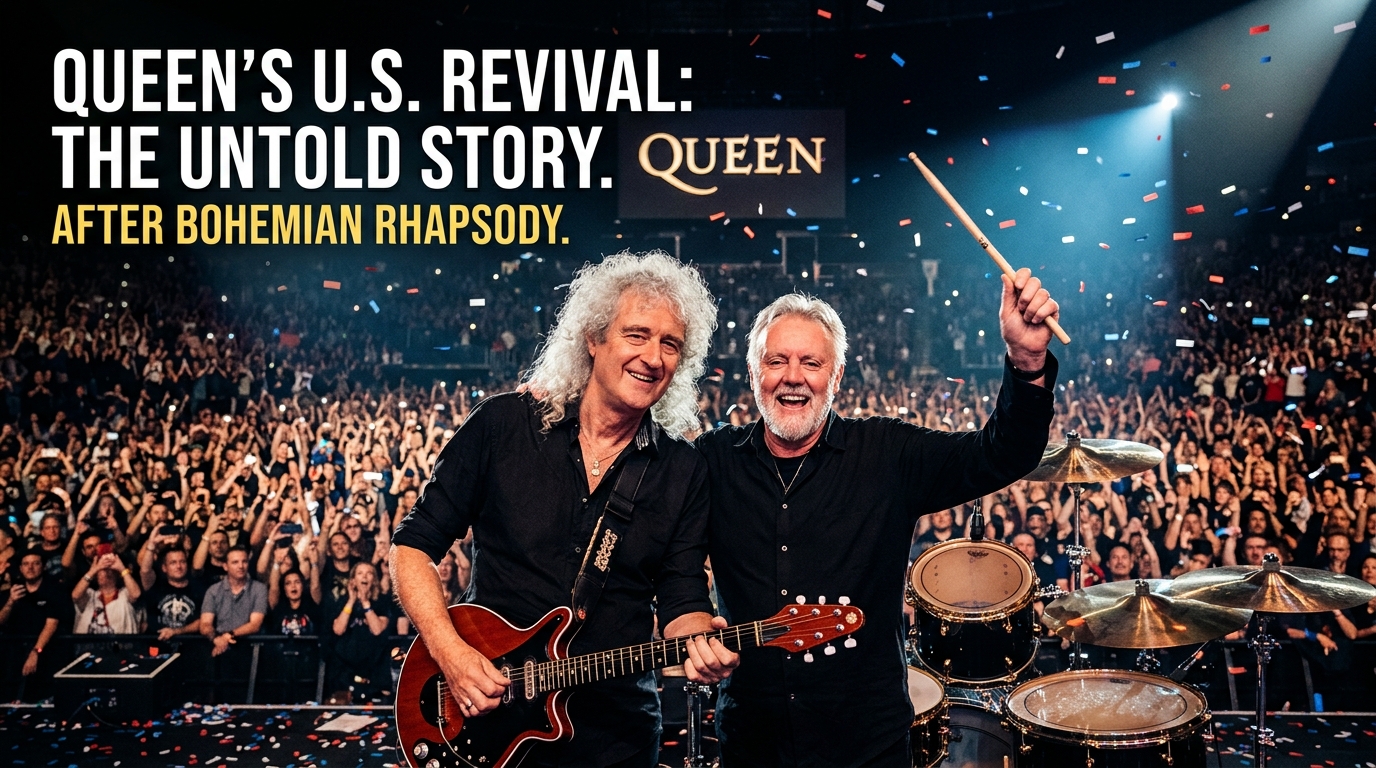
Few bands in rock history have experienced a resurgence quite like Queen. Decades after their peak and long after the tragic loss of Freddie Mercury, the group found themselves back in the global spotlight thanks to the 2018 film Bohemian Rhapsody. What followed was not just nostalgia—it was a full-scale revival of interest, especially in the United States, where Queen’s popularity surged in ways many people did not expect.
While most fans are familiar with the film’s success and the renewed appreciation for Queen’s music, there are deeper layers to their U.S. comeback that often go unnoticed. Behind the sold-out arenas, streaming spikes, and renewed radio play lies a fascinating story of cultural rediscovery, business strategy, and generational connection.
Here are seven things many fans don’t realize about Queen’s unexpected and powerful return to prominence in the United States.
1. The Bohemian Rhapsody Film Reintroduced Queen to an Entire Generation
One of the most significant drivers of Queen’s U.S. comeback was the biographical film Bohemian Rhapsody. While longtime fans already knew the band’s story, the movie introduced Queen to millions of younger viewers who had never experienced their music in real time.
The film didn’t just retell history—it recontextualized it for a modern audience. Freddie Mercury’s journey, Queen’s creative evolution, and their iconic Live Aid performance were presented in a cinematic format that made the band feel fresh and relevant again.
After the movie’s release, streaming platforms saw a dramatic increase in Queen’s catalog plays. Songs like “Bohemian Rhapsody,” “Somebody to Love,” and “Don’t Stop Me Now” reached new peaks in popularity decades after their original release.
This generational crossover helped transform Queen from a legendary rock band into a multi-generational cultural phenomenon.
2. Queen Became a Streaming Powerhouse Years After Their Peak
Before the film, Queen’s presence in the U.S. music market was already strong, but largely rooted in legacy status—classic rock radio, greatest hits albums, and nostalgic playlists.
After Bohemian Rhapsody, that changed dramatically.
Queen’s music surged on streaming platforms such as Spotify, Apple Music, and YouTube. What made this shift remarkable was that it happened more than 30 years after Freddie Mercury’s passing.
Unlike many older rock bands whose audiences remain relatively stable, Queen saw a measurable increase in younger listeners discovering their catalog for the first time. This digital revival placed them alongside contemporary artists in algorithm-driven playlists, introducing their music to millions of new ears.
In many ways, Queen became not just a legacy act, but a streaming-era success story.
3. Adam Lambert’s Role Was More Important Than Many Fans Realize
While Queen’s original lineup will always remain iconic, their modern touring success in the United States owes a great deal to Adam Lambert.
When Lambert began performing with Brian May and Roger Taylor under the name Queen + Adam Lambert, many fans were initially skeptical. Replacing Freddie Mercury was never the intention, but finding a vocalist who could honor the legacy while bringing his own identity was crucial.
Over time, Lambert proved to be a strong fit. His vocal range, stage presence, and respect for the original material helped the band maintain its relevance in live performance.
After the Bohemian Rhapsody revival, Queen + Adam Lambert tours in the U.S. saw increased demand, larger venues, and expanded production scale. Many fans attending concerts were experiencing Queen live for the first time, bridging the gap between generations.
4. The Live Experience Became a Central Part of Their Revival
While streaming numbers tell one part of the story, Queen’s resurgence in the U.S. was equally driven by live performances.
Concert tours became a major cultural event. The combination of classic hits, modern stage production, and emotional tributes to Freddie Mercury created a powerful experience that resonated with audiences of all ages.
Many attendees were not lifelong Queen fans. Instead, they were new listeners drawn in by the film or viral social media moments.
This shift changed the dynamic of Queen’s concerts. Instead of being purely nostalgia-driven events, shows became shared cultural experiences where different generations came together to celebrate the band’s music.
The result was a touring model that blended legacy rock performance with modern entertainment expectations.
5. Queen’s Music Found a New Life in Social Media and Pop Culture
Another major factor in Queen’s U.S. resurgence was the role of social media.
Songs like “Don’t Stop Me Now” and “Another One Bites the Dust” became widely used in short-form videos, memes, and online content. Platforms like TikTok and Instagram helped reintroduce Queen’s music in unexpected ways.
What makes this especially interesting is how naturally their music fits modern digital storytelling. Queen’s songs often feature strong emotional shifts, dramatic builds, and memorable hooks—qualities that align perfectly with viral content formats.
This organic digital exposure helped reinforce their presence among younger audiences who may not have been reached through traditional media.
In essence, Queen became part of internet culture without needing to actively reinvent themselves.
6. The Revival Revitalized Queen’s Commercial Presence in the U.S.
Following the film’s release, Queen’s commercial footprint in the United States expanded significantly.
Album sales increased, streaming royalties grew, and licensing opportunities multiplied. Their music began appearing more frequently in advertisements, television shows, sports events, and film soundtracks.
This renewed commercial interest was not just about nostalgia. It reflected a broader recognition of Queen’s enduring appeal and versatility.
Their songs could be used to evoke excitement, drama, triumph, or emotional depth—making them valuable assets in modern media production.
The result was a financial and cultural resurgence that few classic rock bands have experienced so many years after their peak.
7. The Revival Strengthened Freddie Mercury’s Cultural Legacy
At the heart of Queen’s resurgence is Freddie Mercury, whose legacy has only grown stronger in the United States since the film’s release.
The renewed attention brought a deeper appreciation for his artistry, stage presence, and vocal talent. For many younger fans, Bohemian Rhapsody was their first introduction to Mercury as both a performer and a cultural icon.
His story of creativity, individuality, and fearlessness continues to resonate strongly with modern audiences.
Importantly, the revival did not simply romanticize the past. Instead, it highlighted Mercury’s lasting influence on music, performance style, and artistic expression.
As a result, Freddie Mercury’s legacy is no longer confined to rock history—it continues to shape contemporary music culture.
The Bigger Picture Behind Queen’s U.S. Comeback
Queen’s resurgence in the United States is not the result of a single event. Instead, it is the outcome of multiple converging forces: a successful biopic, digital streaming growth, social media exposure, and ongoing live performances.
Together, these elements created a perfect storm that reintroduced Queen to the world in a modern context.
What makes this comeback especially remarkable is its longevity. Unlike short-term nostalgia spikes, Queen’s renewed popularity has remained strong years after the film’s release.
This suggests something deeper than trend-based interest. It reflects the timeless nature of their music and the emotional connection it continues to build with listeners across generations.
Final Thoughts
Queen’s U.S. revival after Bohemian Rhapsody is more than just a comeback story—it is a case study in how legacy artists can thrive in the modern entertainment landscape.
By bridging the gap between past and present, Queen has managed to remain relevant in an era dominated by streaming, social media, and rapidly changing cultural trends.
Their journey shows that great music does not fade with time. Instead, it finds new ways to reach people, adapt to new platforms, and inspire new generations.
For Queen, the revival was not just about returning to popularity—it was about proving that their legacy was never truly gone in the first place.