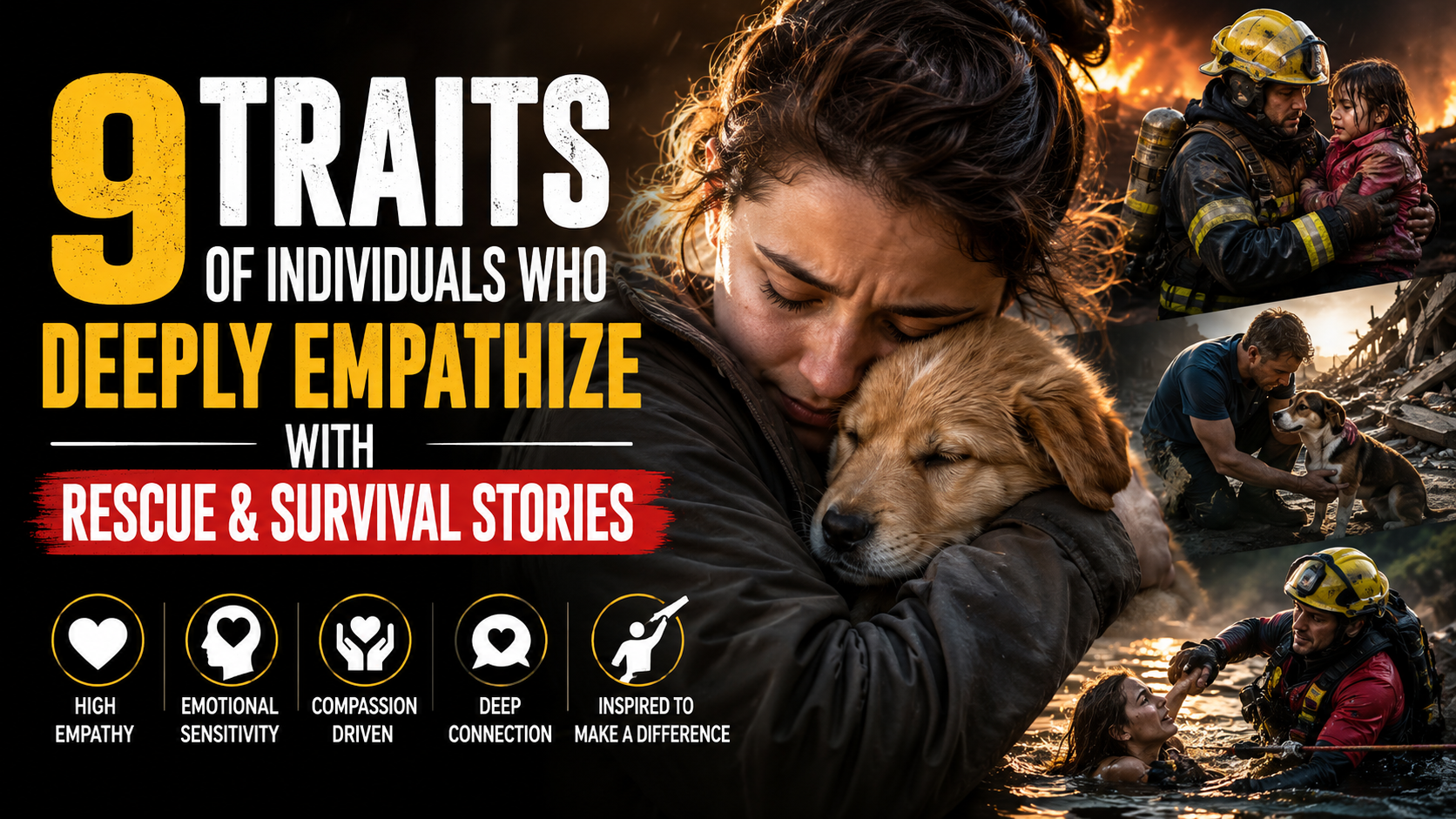
Stories of rescue and survival—whether involving humans, animals, or extraordinary acts of courage—often evoke strong emotional reactions. Some people, however, feel these stories more intensely than others. They don’t just watch or read them; they emotionally experience them.
Psychologists suggest that this heightened emotional response is not random. It is shaped by personality traits, upbringing, cognitive patterns, and emotional sensitivity.
Below are nine key traits commonly found in individuals who deeply empathize with rescue and survival stories, along with insights into why these stories resonate so strongly with them.
1. High Emotional Sensitivity
People who strongly connect with rescue stories often have heightened emotional sensitivity. They pick up on subtle emotional cues in tone, facial expressions, and storytelling.
Because of this, scenes of distress or relief feel more vivid and personally meaningful to them.
2. Strong Sense of Empathy
Empathy is the ability to understand and feel what another being is experiencing. Individuals who deeply empathize with survival stories often place themselves mentally in the situation they are observing.
When they see someone being rescued or an animal being saved, they feel the emotional weight of the situation as if it were happening to them.
3. Active Imagination
A vivid imagination plays a major role in emotional engagement. These individuals tend to mentally reconstruct stories in detail, which intensifies their emotional response.
Instead of passively observing, they visualize the scenario unfolding, which makes the experience more immersive.
4. Strong Moral Awareness
People who are deeply moved by rescue stories often have a strong internal sense of right and wrong. They naturally react to injustice, suffering, or vulnerability.
When they see someone or something being saved, it aligns with their moral values, reinforcing emotional satisfaction and connection.
5. High Sensitivity to Suffering
Another key trait is sensitivity to distress or suffering. These individuals may feel discomfort when witnessing pain, even in fictional or distant situations.
This sensitivity makes rescue and survival stories especially impactful because they often begin with hardship and end with relief.
6. Deep Attachment to Emotional Narratives
Rather than focusing on facts or details, these individuals connect more strongly with emotional storytelling. They remember how a story made them feel rather than specific statistics or technical information.
This emotional memory strengthens long-term engagement with similar stories.
7. Compassion-Driven Decision Making
People who resonate deeply with rescue narratives often make decisions based on compassion. They are more likely to support charitable causes, animal welfare efforts, or humanitarian initiatives.
Their empathy translates into real-world actions, not just emotional reactions.
8. High Responsiveness to Visual Storytelling
Visual content such as photos and videos has a stronger impact on these individuals. They are especially moved by real-life footage of rescue situations or survival moments.
Images of vulnerability followed by recovery tend to leave a lasting emotional impression.
9. Strong Sense of Hope and Optimism
Despite the often intense emotional nature of rescue stories, individuals who deeply empathize with them tend to hold an underlying sense of hope. They are drawn to stories that show recovery, survival, and positive outcomes.
This optimism helps them emotionally process difficult situations while still finding meaning and inspiration in them.
Why Some People Feel Rescue Stories More Deeply
Not everyone reacts to rescue and survival stories in the same way. Research in psychology suggests that differences in emotional processing, life experience, and personality traits all influence how strongly someone responds.
People with higher empathy levels or stronger emotional awareness tend to engage more deeply with these narratives. For them, these stories are not just entertainment—they are emotionally meaningful experiences.
The Psychology Behind Emotional Connection
At a neurological level, empathy and emotional engagement involve brain systems linked to mirror neurons, emotional memory, and social cognition. When individuals observe acts of rescue or survival, these systems activate and simulate the experience internally.
This is why some people feel physically or emotionally affected by stories they only observe.
The Positive Impact of Emotional Engagement
While strong emotional reactions can sometimes feel overwhelming, they also have positive effects. People who empathize deeply with rescue stories are often more likely to:
- Support humanitarian efforts
- Donate to animal rescue organizations
- Volunteer in community programs
- Show kindness in daily life
Their emotional sensitivity often translates into compassionate action.
Final Thoughts
Empathy toward rescue and survival stories is a powerful emotional trait rooted in psychology, personality, and lived experience. The nine traits outlined above help explain why some individuals are more deeply affected by these narratives than others.
Far from being a weakness, this emotional responsiveness often reflects a strong capacity for compassion, awareness, and human connection. In a world filled with challenges and uncertainty, these individuals play an important role in spreading empathy and encouraging acts of kindness.
Ultimately, rescue stories resonate because they reflect something deeply human—the desire to see suffering end and hope restored.







