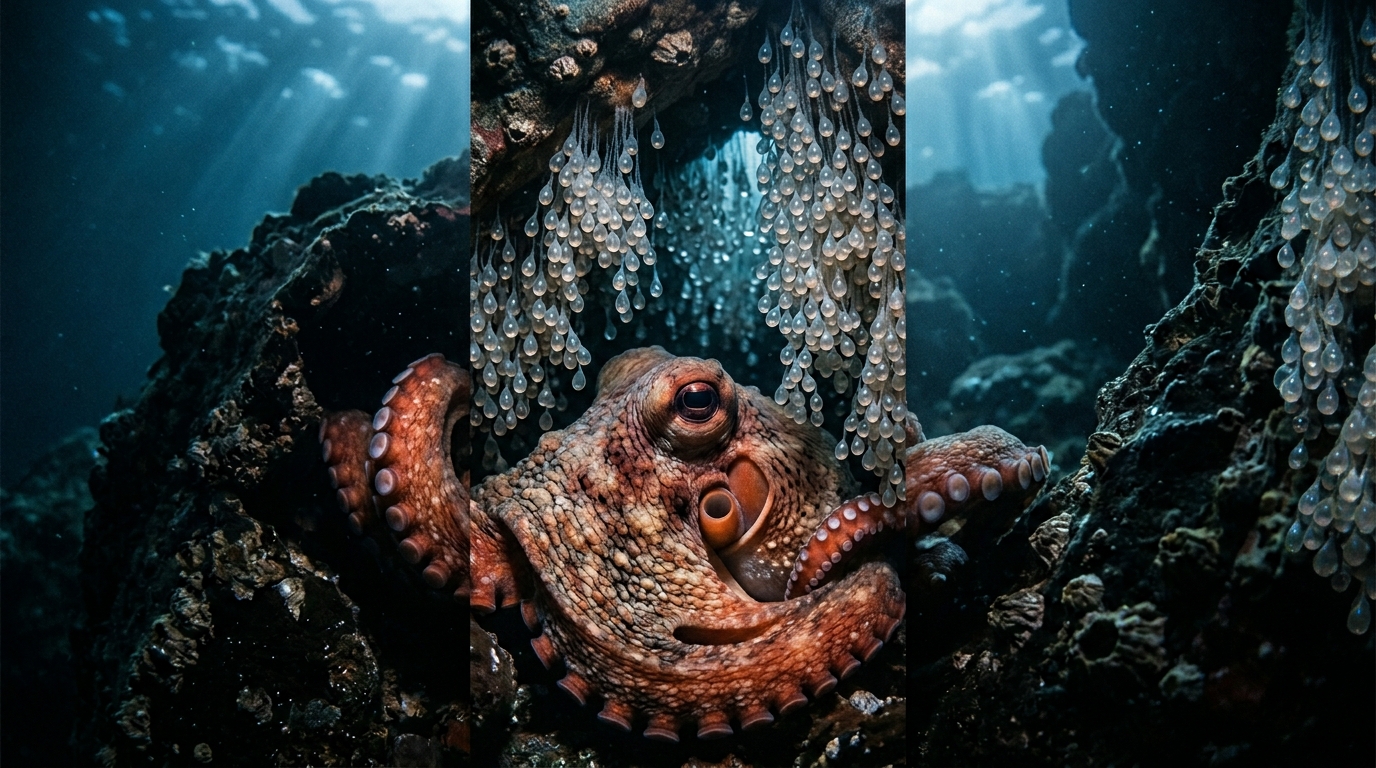
The animal kingdom is filled with remarkable examples of parental care, but few are as extraordinary as the devotion shown by an octopus mother. Hidden beneath the ocean’s surface, these intelligent creatures perform one of nature’s most selfless acts. After laying her eggs, a mother octopus dedicates every remaining moment of her life to protecting her future offspring.
Her story is one of endurance, sacrifice, and unwavering dedication. Scientists have spent years studying this remarkable behavior, uncovering details that continue to amaze marine biologists and ocean enthusiasts alike.
Here are 10 fascinating facts about the octopus mother who gives everything for the next generation.
1. She Guards Thousands of Eggs at Once
Depending on the species, a female octopus can lay anywhere from a few dozen to hundreds of thousands of eggs. These eggs are often attached to rocks, cave ceilings, or other sheltered surfaces beneath the sea.
Once the eggs are laid, the mother remains close by, constantly watching over them. Her mission becomes singular: ensuring her offspring survive until they hatch.
2. She Rarely Leaves the Nest
Unlike many marine animals that abandon their eggs after laying them, an octopus mother stays with her brood continuously.
For months—and in some species, even years—she remains near the eggs, protecting them from predators and environmental dangers. During this period, she leaves only when absolutely necessary, if at all.
3. She Carefully Cleans Every Egg
The survival of octopus eggs depends on keeping them free from harmful bacteria, algae, and debris.
Using her arms and specialized movements, the mother gently cleans and tends the eggs. This constant maintenance helps prevent contamination and improves the chances that healthy young octopuses will emerge.
4. She Creates a Constant Flow of Fresh Water
An octopus mother doesn’t simply guard her eggs; she actively cares for them.
She continuously fans the eggs with water using rhythmic arm movements or by directing water currents over them. This process provides oxygen and removes waste products, creating ideal conditions for development.
5. She Stops Hunting for Food
One of the most astonishing aspects of octopus motherhood is what happens after the eggs are laid.
Many female octopuses stop hunting altogether. Instead of leaving the nest to feed, they devote nearly all their energy to protecting and caring for the eggs. Over time, their bodies become increasingly weakened as their stored energy reserves are depleted.
6. Some Mothers Fast for Months
The brooding period can be incredibly long depending on water temperature and species.
Certain octopus mothers have been observed surviving for months without eating. One deep-sea species stunned researchers when a female guarded her eggs for more than four years, making it one of the longest known brooding periods in the animal kingdom.
7. Her Body Begins to Deteriorate
As the incubation period continues, the mother’s physical condition gradually declines.
Without regular feeding, she loses weight and strength. Her skin may become pale, and her movements slower. Yet despite her deteriorating condition, she continues caring for her eggs until the very end.
8. Powerful Biological Changes Drive Her Behavior
Scientists have discovered that dramatic hormonal changes occur after an octopus lays eggs.
Specialized glands help regulate the transition from active hunter to devoted caretaker. These biological changes appear to play a major role in the mother’s intense focus on protecting her developing offspring, even at the expense of her own survival.
9. She Dies Shortly After the Eggs Hatch
For most octopus species, reproduction happens only once during their lifetime.
After months or years of guarding the eggs, the mother usually dies shortly before or shortly after the young hatch. By that time, she has invested every available resource into giving her offspring the best possible chance at life.
This reproductive strategy is known as semelparity—reproducing only once before death.
10. Her Sacrifice Helps the Next Generation Survive
Although the mother’s fate may seem tragic, her dedication dramatically increases the likelihood that her offspring will survive.
By cleaning, protecting, and oxygenating the eggs around the clock, she shields them during their most vulnerable stage. Without this constant care, many eggs would fall prey to predators, disease, or unfavorable environmental conditions.
Her sacrifice represents one of nature’s most extreme examples of parental investment.
A Remarkable Lesson From the Deep Sea
The story of the octopus mother is a powerful reminder that extraordinary acts of care and devotion exist throughout the natural world. Beneath the waves, far from human observation, these intelligent animals perform a life-defining task that demands total commitment.
Researchers continue to study octopuses because of their remarkable intelligence, problem-solving abilities, and complex behaviors. Yet among all their impressive traits, few are as moving as the dedication shown by a mother protecting her eggs.
Final Thoughts
The octopus mother’s journey is one of nature’s most remarkable sacrifices. She spends the final chapter of her life guarding, cleaning, and nurturing her eggs, often without food and at great personal cost. Her unwavering commitment ensures that the next generation has the best possible start in life.
In the vast oceans of our planet, countless survival stories unfold every day. Few, however, match the extraordinary devotion of the octopus mother—a creature whose final act is one of complete and selfless care for her offspring.







