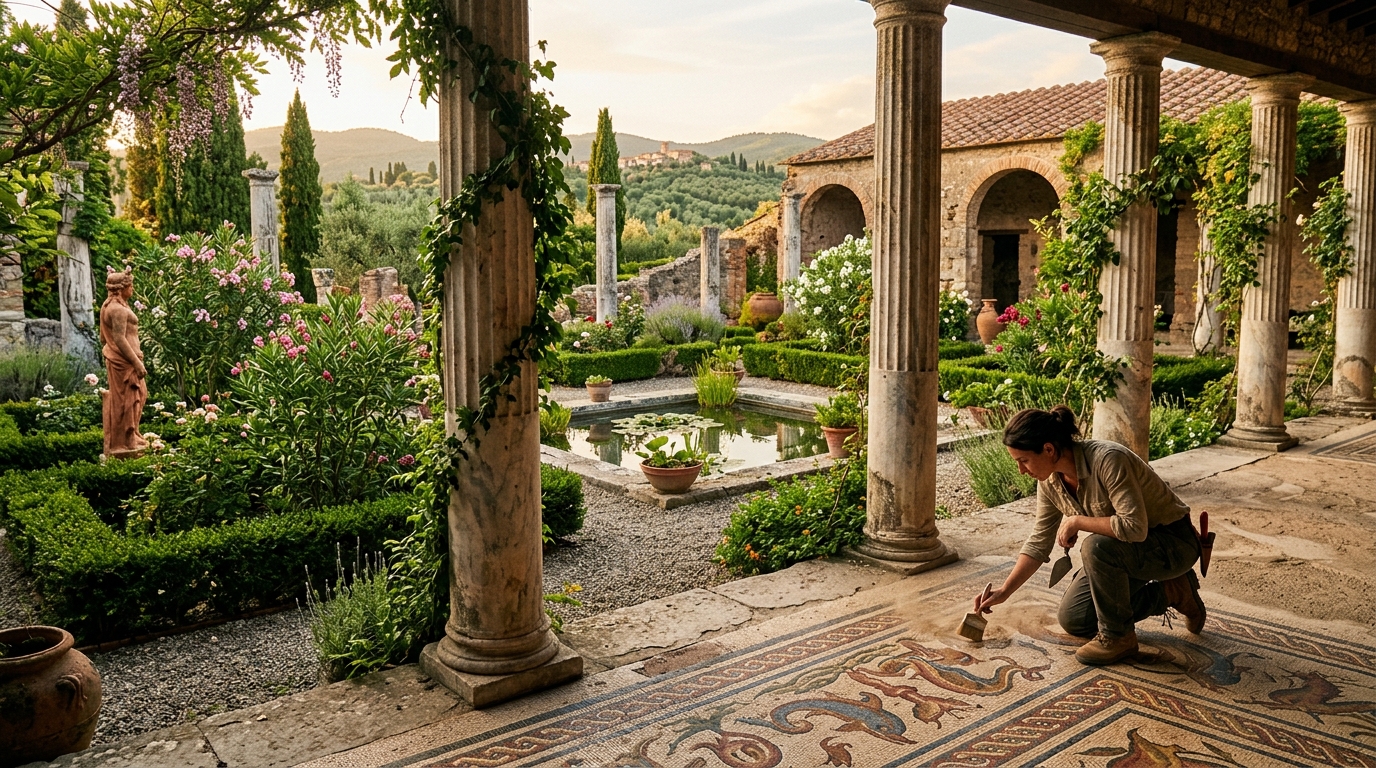
Ancient Rome is famous for its grand architecture, sprawling roads, and powerful empire, but some of its most fascinating discoveries are far more peaceful in nature. Among the ruins of villas, temples, and public buildings, archaeologists have uncovered evidence of Roman gardens that offer a rare glimpse into everyday life nearly 2,000 years ago.
These carefully designed green spaces were much more than decorative landscapes. They reflected Roman culture, social status, artistic tastes, and even spiritual beliefs. Today, the discovery and study of a remarkably preserved Roman garden continue to captivate historians, archaeologists, and visitors alike.
Here are 15 reasons this 2,000-year-old Roman garden has become one of the most intriguing windows into the ancient world.
1. It Offers a Rare Snapshot of Daily Roman Life
Many archaeological discoveries focus on monuments, military sites, or political history. A preserved garden, however, reveals how ordinary people experienced their surroundings.
By studying its layout and features, historians gain valuable insights into how Romans relaxed, entertained guests, and connected with nature.
2. The Garden Was Carefully Planned
Roman gardens were not random collections of plants. They were often designed with remarkable precision.
Paths, flower beds, fountains, statues, and shaded walkways were arranged to create harmony and visual balance. The surviving layout demonstrates the sophisticated landscaping skills practiced by Roman designers.
3. Ancient Plant Remains Have Been Preserved
One of the most exciting aspects of the site is the discovery of preserved plant evidence.
Seeds, pollen, roots, and soil impressions allow researchers to identify species that once grew there. These findings help reconstruct the garden’s appearance with surprising accuracy.
4. It Reveals Roman Gardening Techniques
The garden provides clues about irrigation systems, planting methods, and landscape maintenance.
Archaeologists have identified evidence of carefully managed growing areas, demonstrating that Roman gardeners possessed extensive knowledge of horticulture and environmental management.
5. The Site Reflects Roman Wealth and Status
In ancient Rome, elaborate gardens often served as symbols of prosperity.
Large estates used landscaped grounds to showcase the owner’s social standing and refined taste. The scale and design of this garden suggest it was intended to impress visitors as much as provide enjoyment.
6. Decorative Features Showcase Artistic Excellence
Roman gardens frequently included sculptures, fountains, painted walls, and ornamental structures.
Fragments discovered at the site reveal the close relationship between art and landscape design, illustrating how Romans transformed outdoor spaces into living works of art.
7. It Demonstrates a Love of Nature
Although Rome was a bustling urban civilization, many Romans deeply appreciated natural beauty.
Gardens offered a peaceful retreat from crowded city streets, allowing people to enjoy flowers, trees, birds, and flowing water. This site highlights the important role nature played in Roman life.
8. Ancient Irrigation Systems Were Surprisingly Advanced
Water management was one of Rome’s greatest engineering achievements.
Evidence found within the garden indicates the use of sophisticated irrigation methods designed to keep plants healthy even during dry conditions. These systems reflect the technological ingenuity for which Roman engineers were famous.
9. It Helps Historians Understand Ancient Climate Conditions
Plants are valuable indicators of environmental conditions.
By analyzing botanical remains, researchers can estimate temperatures, rainfall patterns, and growing conditions that existed centuries ago. The garden therefore provides important information about the region’s ancient climate.
10. The Discovery Required Modern Scientific Techniques
Uncovering the garden’s secrets has involved far more than traditional excavation.
Researchers have used soil analysis, pollen studies, digital mapping, and advanced imaging technologies to reconstruct details that would otherwise remain hidden beneath the ground.
11. It Reveals Trade Connections Across the Empire
Some plants discovered in Roman gardens originated far from where they were grown.
Imported species demonstrate the vast trade networks that connected different parts of the Roman Empire. The presence of non-native plants reflects Rome’s ability to transport goods, ideas, and agricultural knowledge across great distances.
12. The Garden Had Social and Cultural Importance
Gardens often served as gathering places where families and guests spent time together.
Meals, conversations, celebrations, and philosophical discussions frequently took place in these carefully designed outdoor environments. The site helps historians understand the social role gardens played in Roman society.
13. Religious Symbolism May Have Been Present
Many Roman gardens incorporated shrines, statues, or symbolic plant species associated with religious beliefs.
Archaeologists continue to examine whether certain features of the site held spiritual significance, offering insights into the connection between nature and religion in the ancient world.
14. The Preservation Is Remarkable
Most gardens disappear over time as plants decay and landscapes change.
The exceptional preservation of this site allows researchers to reconstruct details that are rarely available from ancient gardens. Every surviving feature adds another piece to the historical puzzle.
15. It Brings the Ancient World to Life
Perhaps the most captivating aspect of the garden is its ability to make history feel personal.
Visitors can imagine walking along the same paths, viewing the same flowers, and hearing the same fountains that Romans enjoyed nearly two millennia ago. Few archaeological discoveries create such a vivid connection to the past.
Why Roman Gardens Matter
Roman gardens were much more than beautiful landscapes. They reflected the values, technologies, artistic achievements, and daily routines of one of history’s most influential civilizations.
Studying these spaces helps historians move beyond major political events and military campaigns to better understand how ordinary people lived. Gardens reveal personal preferences, cultural traditions, and environmental knowledge that written records often overlook.
As a result, they provide a richer and more complete picture of ancient society.
What Archaeologists Continue to Learn
Research at Roman garden sites continues to uncover new information about agriculture, architecture, climate, and social customs.
Advances in scientific analysis allow experts to identify plant species, reconstruct layouts, and even determine how specific areas were used. Each new discovery expands our understanding of Roman life and highlights the sophistication of ancient landscape design.
The combination of archaeology and modern science has transformed these gardens into valuable historical archives hidden beneath the soil for centuries.
Final Thoughts
This 2,000-year-old Roman garden is captivating historians because it offers a rare and intimate look into the lives of people who lived long ago. Through preserved plants, artistic features, irrigation systems, and carefully planned landscapes, the site reveals a civilization that valued beauty, innovation, and a close relationship with nature.
Far more than a collection of ancient ruins, the garden serves as a living connection to the past. It reminds us that even in one of history’s greatest empires, people sought peaceful places to relax, reflect, and enjoy the natural world around them.
As archaeologists continue their work, this remarkable garden will undoubtedly provide even more insights into the daily lives and enduring legacy of ancient Rome.