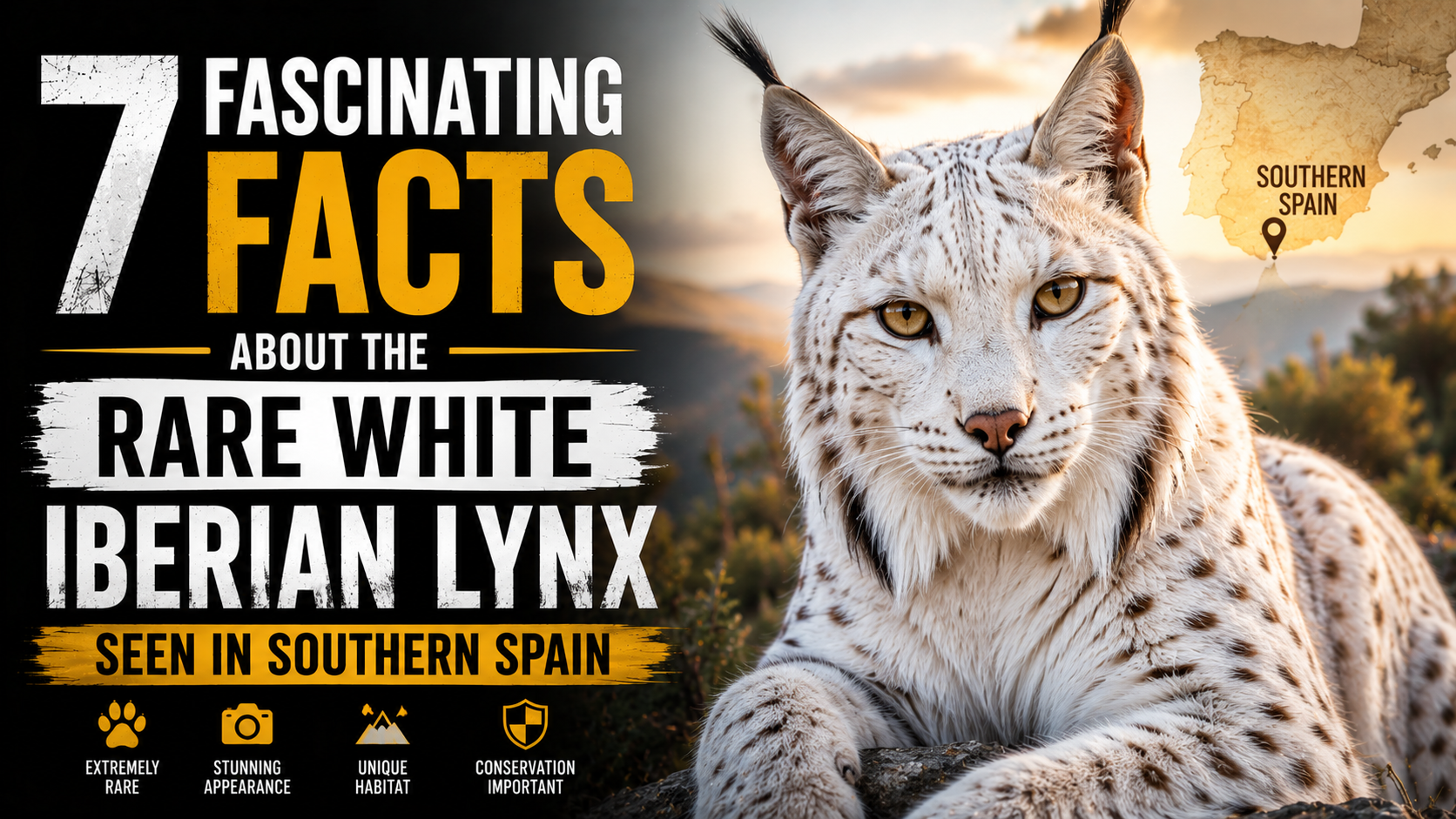
The Iberian lynx is already one of the rarest wild cats in the world, but reports and sightings of an extremely unusual white Iberian lynx in southern Spain have sparked global fascination. Whether viewed as a rare genetic variation, a misunderstood sighting, or an exceptional wildlife moment, the story has captured the attention of conservationists, wildlife enthusiasts, and the general public alike.
The Iberian lynx itself has been the focus of major conservation efforts for decades, once considered critically endangered. Any unusual variation in appearance, especially a white-coated individual, naturally raises curiosity and questions about genetics, habitat, and survival.
While confirmed documentation of a fully white Iberian lynx remains extremely limited and debated among experts, the discussion around such sightings highlights important truths about wildlife adaptation and rarity.
Here are seven fascinating facts about the rare white Iberian lynx seen in southern Spain and what it represents in the broader context of wildlife science and conservation.
1. The Iberian Lynx Is One of the Most Endangered Wild Cats
Before understanding the significance of a rare white variation, it is important to recognize how rare the species itself is.
The Iberian lynx once faced the brink of extinction due to habitat loss, declining rabbit populations (its main food source), and human activity.
Thanks to intensive conservation programs, its population has slowly recovered, but it remains one of the most endangered wild cat species on the planet.
Any unusual sighting within this fragile population draws immediate attention from researchers.
2. White Coloration in Wild Cats Is Extremely Rare
White coloration in wild animals is typically associated with conditions such as leucism or albinism.
Leucism causes partial loss of pigmentation, while albinism results in a complete absence of melanin.
In wild cats, these traits are extremely rare because they can reduce camouflage effectiveness, making survival more difficult.
A white Iberian lynx would therefore represent a highly unusual genetic occurrence.
3. Camouflage Is Essential for Lynx Survival
The Iberian lynx depends heavily on stealth and camouflage to hunt small prey, especially rabbits.
Its spotted coat allows it to blend into Mediterranean scrubland and forested environments.
A white coat would stand out significantly in such terrain, potentially affecting hunting efficiency and survival rates.
This makes the idea of a white lynx both biologically intriguing and ecologically challenging.
4. Rare Sightings Often Spark Scientific Debate
When unusual animal sightings occur, especially involving rare coloration, scientists approach the claims carefully.
Photographic evidence, environmental conditions, and verification methods all play a role in determining authenticity.
In many cases, lighting, camera effects, or misidentification can contribute to confusion.
This is why reports of a white Iberian lynx remain a topic of discussion rather than confirmed scientific fact.
5. Southern Spain Is the Heart of Lynx Conservation
Southern Spain, particularly regions like Andalusia, is central to Iberian lynx conservation efforts.
Protected habitats, breeding programs, and ecological restoration projects have been implemented to support population recovery.
The presence of any unusual lynx in this region immediately draws attention from conservation teams.
It highlights the importance of ongoing monitoring and habitat protection.
6. Genetic Variation Plays a Role in Wildlife Diversity
Even within small populations, genetic variation continues to occur naturally.
Mutations can result in differences in coat color, size, or behavior.
While most variations do not significantly affect survival, some can stand out visually, especially in rare species like the Iberian lynx.
These genetic differences are an important part of biodiversity and evolutionary adaptation.
7. Viral Wildlife Stories Often Blend Fact and Speculation
In the digital age, rare animal sightings often spread quickly online, sometimes before scientific verification is complete.
Images or reports of a white Iberian lynx can easily go viral due to their rarity and visual appeal.
However, viral spread does not always confirm scientific accuracy.
This highlights the importance of distinguishing between confirmed wildlife data and unverified online content.
Why the White Iberian Lynx Captures So Much Attention
The fascination with a potential white Iberian lynx comes from a combination of rarity, beauty, and mystery.
Rare animals naturally attract human curiosity, especially when they deviate from expected patterns.
In this case, the contrast between a critically endangered species and an unusual coloration creates a powerful narrative.
It also reflects a broader human interest in the unexpected and extraordinary in nature.
Conservation Significance Beyond the Mystery
Regardless of whether a fully white Iberian lynx has been definitively confirmed, the discussion itself has value.
It draws attention to the importance of conservation efforts, habitat protection, and genetic diversity within endangered species.
Public interest in such stories often helps raise awareness and support for wildlife preservation initiatives.
In this sense, even uncertain sightings can contribute positively to conservation awareness.
Final Thoughts
The rare white Iberian lynx seen in southern Spain remains a subject of fascination, discussion, and careful scientific consideration.
While its existence is still debated, the story highlights important themes in wildlife biology, including genetic variation, adaptation, and conservation challenges.
More importantly, it reminds us of the fragility and beauty of endangered species like the Iberian lynx.
Whether confirmed or not, the idea of such a rare creature encourages deeper appreciation for wildlife and the ecosystems they depend on.