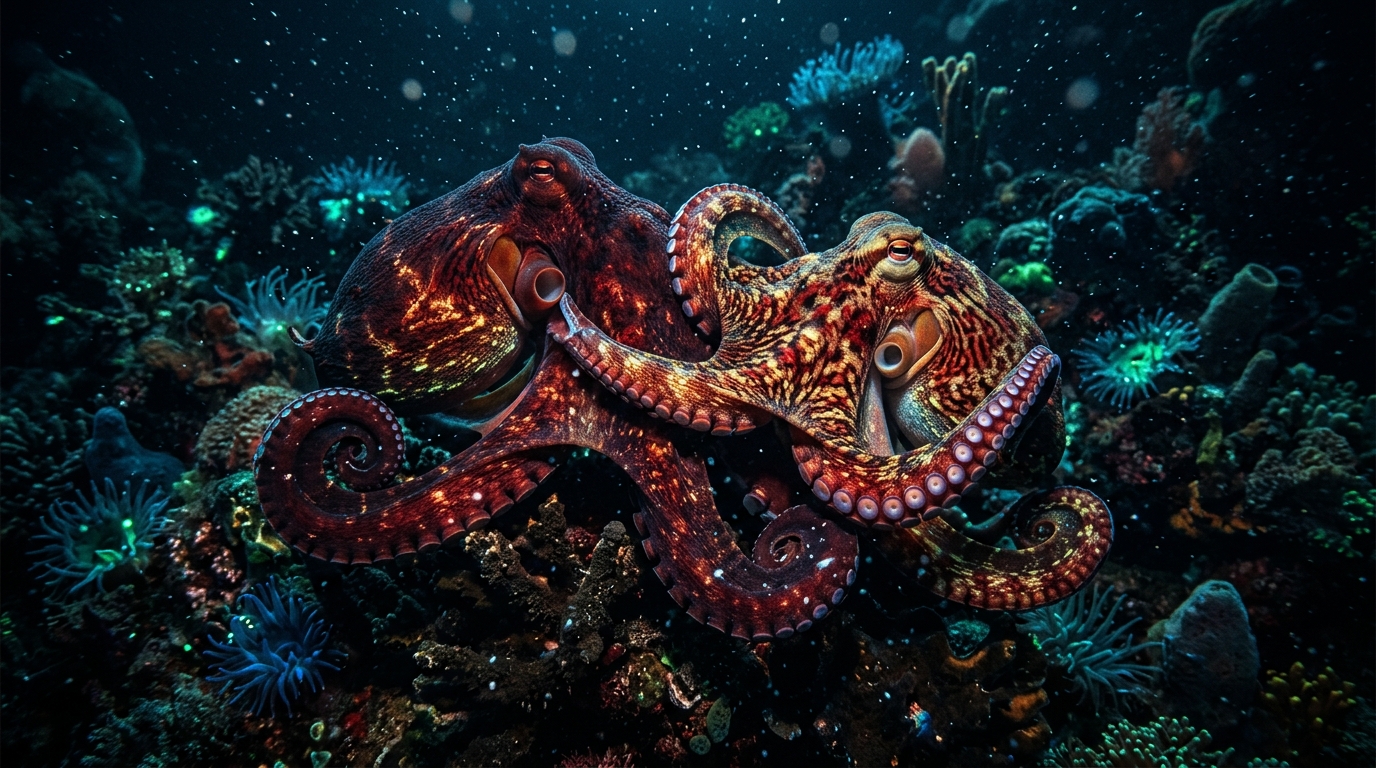
Octopuses are among the most fascinating creatures in the ocean. Known for their remarkable intelligence, problem-solving abilities, and shape-shifting skills, these eight-armed animals continue to surprise scientists with their complex behaviors. Yet one of the most extraordinary aspects of an octopus’s life is something many people never see: its unique reproductive journey.
Unlike most animals, octopuses follow a reproductive strategy that involves intense parental investment, dramatic biological changes, and, ultimately, a life cycle centered on a single opportunity to pass on their genes. Their approach to reproduction is so unusual that it continues to be a major focus of marine biology research.
Here are 13 things most people don’t know about octopus reproduction.
1. Most Octopuses Reproduce Only Once
One of the most surprising facts about octopuses is that they are generally semelparous, meaning they reproduce only once during their lifetime.
After mating and producing offspring, both males and females eventually die. This reproductive strategy differs significantly from animals that breed multiple times throughout their lives.
For octopuses, reproduction is the final and most important stage of life.
2. Males Use a Specialized Arm for Mating
Male octopuses possess a unique arm called the hectocotylus, which is specially adapted for transferring reproductive material to a female.
This modified arm allows the male to deliver packets of sperm without direct internal fertilization. The structure varies among species but serves the same essential purpose across most octopus populations.
3. Courtship Can Be Surprisingly Complex
Octopus courtship is often more sophisticated than people expect.
Males may use body postures, color changes, arm movements, and cautious approaches to communicate with potential mates. Because octopuses are generally solitary animals, these interactions are important for avoiding conflict and increasing reproductive success.
4. Females Can Store Sperm for Later Use
After mating, female octopuses can store sperm for extended periods before fertilizing their eggs.
This ability allows them to choose the optimal time and conditions for egg development. It also increases flexibility in environments where mating opportunities may be unpredictable.
5. A Female Can Lay Thousands of Eggs
The number of eggs produced varies widely depending on the species.
Some octopuses lay a few hundred eggs, while others may produce tens of thousands. The eggs are usually attached to protected surfaces such as rocks, caves, or crevices where they can develop safely.
This large number helps compensate for the many challenges young octopuses face after hatching.
6. Mothers Become Full-Time Caretakers
Once the eggs are laid, the mother’s behavior changes dramatically.
She devotes nearly all her energy to protecting, cleaning, and oxygenating the eggs. During this period, she rarely leaves the nest and remains constantly focused on caring for her future offspring.
This level of dedication is among the most intense examples of parental care in the animal kingdom.
7. She Continuously Fans the Eggs
Developing octopus embryos require a steady supply of oxygen-rich water.
To provide this, the mother constantly fans the eggs with her arms and directs water currents across them. This process helps prevent harmful organisms from growing on the eggs and supports healthy development.
The task continues day and night for months in some species.
8. Many Mothers Stop Eating Entirely
One of the most astonishing aspects of octopus reproduction is that mothers often stop feeding while guarding their eggs.
Rather than leave the nest in search of food, they remain with the developing embryos, relying on stored energy reserves. Over time, this causes significant physical decline.
Their commitment ensures the eggs receive uninterrupted protection.
9. Some Species Guard Eggs for Years
The length of the brooding period depends on species and environmental conditions.
In colder waters, egg development can be extremely slow. Researchers have documented deep-sea octopus mothers guarding their eggs for more than four years—the longest known brooding period of any animal.
This remarkable endurance demonstrates the extraordinary investment octopus mothers make in their offspring.
10. Hormonal Changes Drive the Final Stage of Life
Scientists have discovered that powerful hormonal changes occur after reproduction begins.
Specialized glands help regulate the behavioral and physiological shifts associated with egg care and the final stages of the octopus life cycle. These biological processes play a key role in directing the mother’s intense focus on her developing young.
Researchers continue to study these mechanisms to better understand animal aging and reproduction.
11. Young Octopuses Receive No Care After Hatching
Although mothers devote months or even years to protecting their eggs, parental care ends once the young emerge.
Newly hatched octopuses must immediately fend for themselves. They begin hunting tiny prey and navigating the ocean without guidance from adults.
Only a small percentage survive to adulthood, making the mother’s earlier investment even more important.
12. Reproductive Strategies Vary Among Species
There are hundreds of octopus species, and not all reproduce in exactly the same way.
Differences can be found in mating behaviors, egg numbers, incubation periods, habitat selection, and offspring development. Scientists continue discovering new variations as they study octopus populations around the world.
This diversity highlights the adaptability of these remarkable animals.
13. Their Reproductive Cycle Helps Shape Ocean Ecosystems
Octopus reproduction affects far more than individual animals.
The birth of large numbers of young octopuses provides food for many marine predators, while adult octopuses play important roles as hunters within ocean ecosystems. Their life cycle contributes to the balance and health of marine food webs.
In this way, reproduction influences the broader ecological communities where octopuses live.
Why Octopus Reproduction Fascinates Scientists
Few animals combine intelligence, parental sacrifice, and biological complexity in quite the same way as octopuses.
Researchers are particularly interested in understanding how hormonal changes influence behavior, how mothers sustain such lengthy brooding periods, and why semelparity evolved in these species. Answers to these questions may provide broader insights into evolution, aging, and animal behavior.
The more scientists learn, the more extraordinary octopus reproduction appears.
A Story of Sacrifice and Survival
The reproductive journey of an octopus is one of nature’s most dramatic stories. A female invests everything she has into a single generation, spending her final months—or even years—guarding and nurturing her eggs.
Her sacrifice dramatically increases the chances that at least some of her offspring will survive in a challenging and competitive ocean environment.
This strategy may seem extreme, but it has helped octopuses thrive in oceans around the world for millions of years.
Final Thoughts
Octopus reproduction is unlike almost anything else in the animal kingdom. From specialized mating adaptations and long-term sperm storage to years of maternal care and ultimate self-sacrifice, every stage reveals the incredible complexity of these marine animals.
As scientists continue exploring the hidden lives of octopuses, their reproductive strategies remain one of the most fascinating examples of nature’s ingenuity. They remind us that survival often requires extraordinary commitment—and that some of the most remarkable stories in the natural world unfold far beneath the ocean’s surface.







