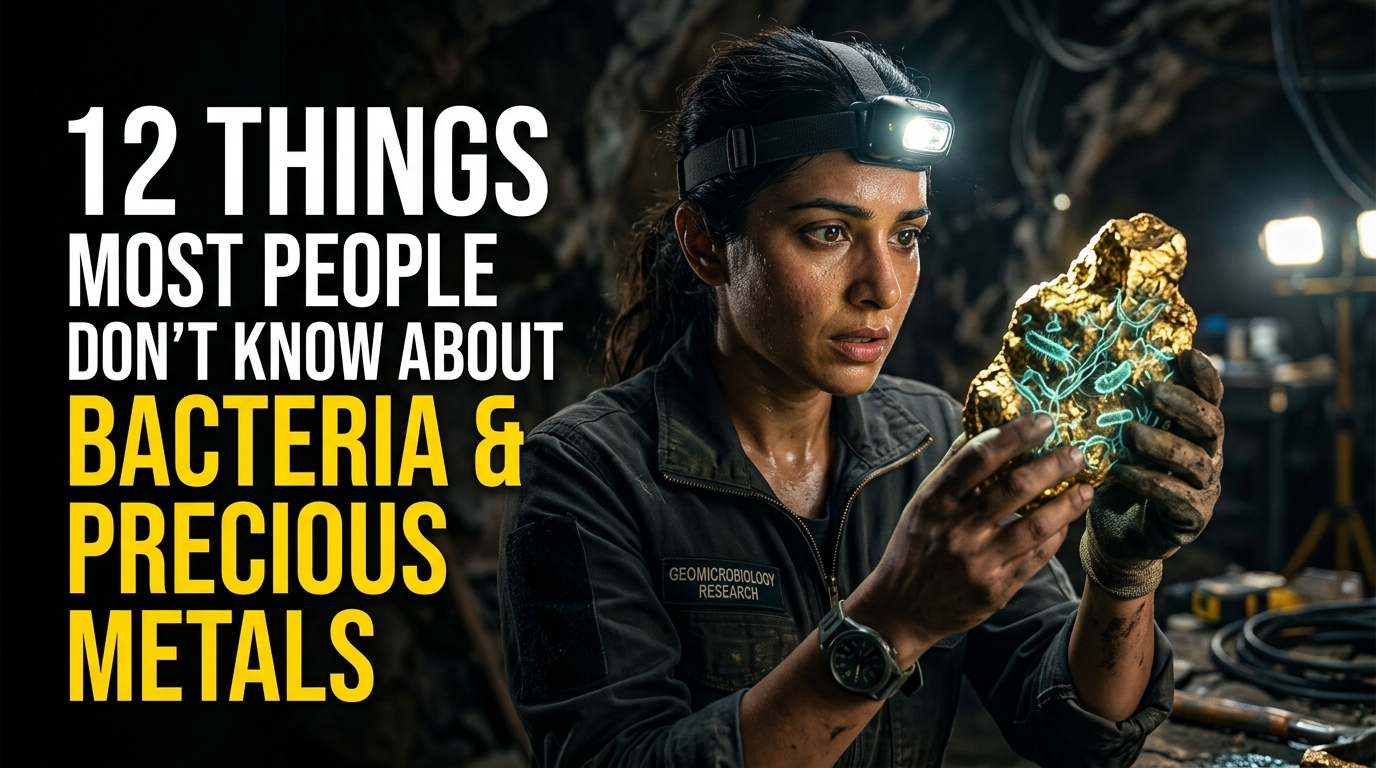
When most people think about bacteria, they imagine microscopic organisms associated with disease, spoiled food, or dirty surfaces. Precious metals, on the other hand, bring to mind gold bars, silver jewelry, and high-value investments. At first glance, these two subjects seem to have nothing in common.
Yet scientists have discovered a fascinating connection between bacteria and some of Earth’s most valuable metals. Certain microbes can survive in environments rich in gold, silver, platinum, and other precious metals. Some can even transform dissolved metal particles into solid forms, playing an unexpected role in the natural formation and movement of these valuable resources.
Researchers are now exploring how bacteria could help recover metals from electronic waste, clean up polluted mining sites, and even contribute to future space exploration. Here are 12 surprising facts about the remarkable relationship between bacteria and precious metals.
1. Some Bacteria Can Survive in Toxic Gold-Rich Environments
Gold is often considered chemically stable, but in certain forms it can be toxic to living organisms. Surprisingly, some bacteria have evolved ways to survive in environments containing high concentrations of dissolved gold compounds.
These microbes possess specialized biological mechanisms that allow them to neutralize or expel toxic gold ions. Without these adaptations, exposure to such conditions would be deadly. Their survival strategies have fascinated scientists because they reveal how life can adapt to some of nature’s harshest chemical environments.
2. Certain Microbes Can Help Create Tiny Gold Nuggets
One of the most surprising discoveries in microbiology is that some bacteria can contribute to the formation of microscopic gold particles.
Researchers have found microbes that absorb dissolved gold compounds and convert them into tiny solid gold deposits. Over long periods, these particles can accumulate and contribute to the development of small gold nuggets found in nature.
While bacteria do not create massive gold deposits on their own, they may play a role in shaping how gold moves and accumulates within certain ecosystems.
3. Gold Can Be Part of a Bacterium’s Survival Strategy
For some bacterial species, dealing with gold is not just a challenge—it is part of their survival process.
When exposed to toxic gold compounds, these microorganisms can chemically transform the metal into less harmful forms. This detoxification process allows them to continue growing in environments where many other organisms would struggle to survive.
Scientists see this as an impressive example of evolution finding creative solutions to environmental stress.
4. Bacteria Are Helping Scientists Recover Precious Metals From Waste
Modern electronics contain small amounts of valuable metals such as gold, silver, palladium, and platinum. Recovering these materials from discarded devices can be difficult and environmentally costly.
Researchers are developing biological methods that use bacteria to extract precious metals from electronic waste. These microbes can selectively interact with certain metal compounds, potentially making recycling processes more efficient and environmentally friendly.
As electronic waste continues to grow worldwide, microbial recycling could become an increasingly important technology.
5. Some Bacteria Can Accumulate Silver Inside Their Cells
Silver is widely known for its antimicrobial properties, but certain bacteria have evolved the ability to tolerate and even accumulate silver particles.
These microorganisms can absorb silver ions from their surroundings and store them within or around their cells. Scientists are studying these interactions to better understand both bacterial survival mechanisms and potential applications in nanotechnology.
The ability of bacteria to handle silver demonstrates how adaptable microbial life can be.
6. Microbes May Hold the Key to Cleaner Mining Operations
Traditional mining often requires large amounts of chemicals and energy. In some cases, it can also create environmental challenges such as water contamination and habitat disruption.
A process known as bioleaching uses microorganisms to help extract metals from ore. Certain bacteria naturally break down mineral-containing rocks, making it easier to recover valuable metals.
This approach can reduce the need for some harsh chemical treatments and may offer a more sustainable alternative for certain mining operations.
7. Platinum and Palladium Also Interact With Bacteria
Gold and silver are not the only precious metals that attract scientific interest. Researchers have discovered that bacteria can interact with platinum and palladium as well.
These metals are commonly used in catalytic converters, electronics, and industrial applications. Some microbial species can absorb or transform platinum-group metals, raising the possibility of using bacteria to recover valuable resources from industrial waste streams.
Such discoveries are expanding the potential role of microbiology in resource management.
8. Bacteria Can Produce Metal Nanoparticles
Nanoparticles are extremely small particles measured in billionths of a meter. Many have unique chemical and physical properties that make them useful in medicine, electronics, and manufacturing.
Certain bacteria can naturally create nanoparticles made from precious metals such as gold and silver. Scientists are investigating whether these biological processes could provide a greener way to manufacture specialized materials.
Using living organisms instead of complex industrial methods could reduce costs and environmental impacts in some applications.
9. Precious Metals Can Influence Microbial Communities
Just as bacteria affect metals, metals can influence bacteria.
The presence of gold, silver, or platinum compounds can change which microbial species thrive in a particular environment. Some bacteria possess resistance mechanisms that allow them to survive where others cannot.
By studying these communities, researchers gain valuable insights into both microbial ecology and the geological conditions of metal-rich regions.
10. Bacteria Might Help Detect Hidden Mineral Deposits
Scientists are exploring whether certain microbial populations could serve as indicators of underground mineral resources.
Because some bacteria are closely associated with metal-rich environments, their presence may reveal clues about what lies beneath the surface. Researchers are investigating microbial signatures that could help guide mineral exploration efforts.
If successful, this approach could provide a more environmentally sensitive method for locating valuable deposits.
11. These Tiny Organisms Could Aid Future Space Missions
The relationship between bacteria and metals may eventually extend beyond Earth.
Researchers are studying how microbes could help extract useful materials from lunar soil, asteroids, or Martian rocks. Future astronauts may need ways to obtain resources without transporting everything from Earth.
Microbial mining technologies could one day assist in producing metals needed for construction, manufacturing, or life-support systems during long-term space missions.
Although still largely experimental, the concept highlights the remarkable versatility of microbial life.
12. Bacteria Are Changing How We Think About Precious Metals
For generations, precious metals were viewed mainly as geological resources formed through physical and chemical processes deep within the Earth. Modern research is revealing that biology may play a bigger role than previously imagined.
Bacteria influence how metals move, transform, accumulate, and recycle throughout natural environments. Their activities can affect ecosystems, mining operations, recycling technologies, and even the future of space exploration.
These discoveries are reshaping scientific understanding of the hidden connections between the living and nonliving worlds.
Conclusion
The relationship between bacteria and precious metals is one of the most unexpected stories in modern science. Far from being simple microorganisms, certain bacteria possess extraordinary abilities that allow them to survive toxic metal-rich environments, create nanoparticles, recover valuable resources, and potentially revolutionize mining and recycling.
As research continues, scientists are uncovering new ways these microscopic organisms interact with gold, silver, platinum, and other precious metals. What once seemed like an unlikely partnership is now opening doors to innovative technologies and deeper insights into how life and geology are interconnected.
The next time you think about gold or silver, remember that some of the most important players in their story may be too small to see with the naked eye.