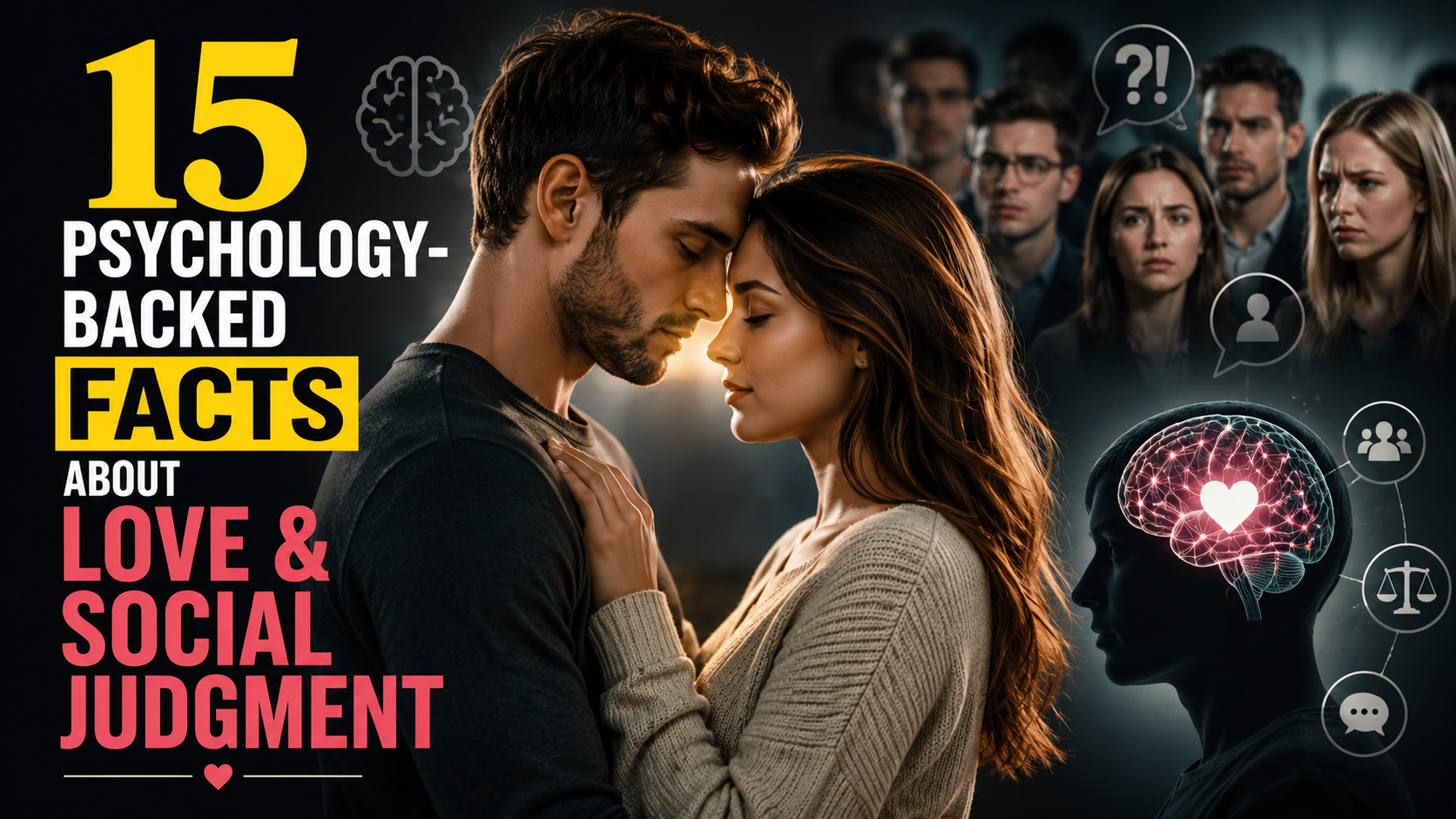
Love is often described as one of the most powerful emotions humans can experience. It inspires poetry, fuels life-changing decisions, and shapes many of our closest relationships. Yet love doesn’t exist in a vacuum. Every romantic relationship is influenced by the opinions, expectations, and judgments of the people around us.
From family approval to social status and cultural expectations, the way others perceive our relationships can affect how we feel about our partners—and even how we see ourselves. Modern psychology has revealed fascinating insights into the connection between love and social judgment, showing that our emotions are often influenced by factors we don’t consciously recognize.
Here are 15 psychology-backed facts that help explain why love and social judgment are so deeply connected.
1. People Often Seek Approval for Their Relationships
While many people like to believe they follow only their hearts, research suggests that social approval plays a significant role in romantic choices.
When friends and family support a relationship, couples often report higher levels of satisfaction and commitment. Positive feedback creates reassurance and reduces uncertainty, making people feel more confident about their decisions.
On the other hand, disapproval from important people can create stress and tension, even when a relationship is otherwise healthy.
2. First Impressions Can Shape Romantic Outcomes
Psychologists have long known that first impressions are incredibly powerful. In relationships, the opinions formed during initial meetings can influence how others view a couple for years.
Parents, friends, and social circles often make quick judgments based on appearance, behavior, profession, or background. Once these impressions are formed, they can be surprisingly difficult to change.
This is one reason why introductions to family members often feel so important.
3. Social Status Influences Relationship Perceptions
People frequently evaluate relationships through the lens of social status, whether they realize it or not.
Factors such as education, career success, income level, and social reputation can influence how a relationship is viewed by others. Studies suggest that people often assume couples with similar social standing are more compatible.
However, genuine compatibility depends on far more than external achievements.
4. The Brain Naturally Makes Quick Judgments
Human brains are designed to make rapid assessments. This ability helped our ancestors survive, but it also means we often judge people before knowing the full story.
When observing a relationship, people may draw conclusions based on limited information. These assumptions can lead to misunderstandings and unfair judgments.
Psychologists refer to this tendency as “thin-slicing,” where people form opinions from very brief observations.
5. Family Expectations Can Strongly Affect Romantic Choices
Family influence remains one of the most powerful forces in relationship decisions.
Even adults who value independence may feel pressure to meet family expectations regarding marriage, culture, religion, or social background. In some cases, family approval becomes a major factor in determining whether a relationship continues.
Research shows that people often experience emotional conflict when personal desires clash with family expectations.
6. Attractive People Are Often Judged More Favorably
Psychologists call this phenomenon the “halo effect.”
When someone is physically attractive, people tend to assume they possess other positive qualities such as intelligence, kindness, or competence—even when there is little evidence to support those assumptions.
This cognitive bias can influence romantic opportunities and social judgments, affecting how couples are perceived by others.
7. Social Media Has Changed How Relationships Are Evaluated
In today’s digital world, relationships are often judged through online content.
Photos, posts, comments, and relationship updates can shape public perceptions. People frequently compare their own relationships to carefully curated images they see online, which can create unrealistic expectations.
Research suggests that excessive comparison on social media may increase dissatisfaction and self-doubt.
8. People Tend to Judge Relationships More Harshly Than Their Own
An interesting psychological pattern is that people often evaluate other couples more critically than they evaluate themselves.
Observers may focus on visible flaws while overlooking complexities that exist behind the scenes. At the same time, individuals tend to justify or excuse problems within their own relationships.
This bias can lead to inaccurate assumptions about what makes a relationship successful.
9. Shared Values Matter More Than Most People Think
Although attraction often captures attention initially, long-term relationship success is strongly linked to shared values.
Psychologists have found that couples who agree on important issues such as family, finances, life goals, and communication styles tend to experience greater stability.
When observers judge relationships solely based on appearance or status, they may overlook the factors that truly matter.
10. Social Rejection Activates Real Emotional Pain
One of the most fascinating findings in psychology is that social rejection affects the brain in ways that resemble physical pain.
When people feel excluded, criticized, or judged by others, brain regions associated with emotional distress become active.
This helps explain why disapproval from family members or close friends can feel deeply painful, especially when it concerns someone we love.
11. People Often Overestimate How Much Others Judge Them
Many individuals spend a significant amount of time worrying about what others think.
Psychologists call this the “spotlight effect.” People tend to believe that others are paying much more attention to their decisions than they actually are.
In reality, most people are focused primarily on their own lives and concerns. Recognizing this can reduce anxiety and help individuals make decisions that align with their values.
12. Emotional Connections Often Defy Logical Analysis
Love does not always follow rational rules.
People may develop strong emotional bonds with individuals who seem unexpected or unconventional to outsiders. While observers often focus on practical considerations, emotional compatibility can be difficult to measure objectively.
This is why some relationships thrive despite widespread skepticism.
13. Cultural Norms Influence Romantic Judgments
Every society has expectations regarding relationships, marriage, and family structures.
These cultural influences shape how people evaluate romantic choices. What is considered acceptable in one culture may be viewed differently in another.
Understanding cultural influences can help explain why relationship judgments vary across communities and generations.
14. Confirmation Bias Reinforces Existing Opinions
Once people form an opinion about a relationship, they often look for evidence that supports their existing beliefs.
Psychologists refer to this tendency as confirmation bias.
For example, if someone initially believes a couple is incompatible, they may focus on disagreements while ignoring positive interactions. This selective attention strengthens their original judgment, even if it isn’t accurate.
15. Healthy Relationships Depend More on Mutual Respect Than Public Approval
Perhaps the most important lesson from psychological research is that lasting relationships are built on internal qualities rather than external opinions.
Trust, communication, respect, empathy, and shared commitment consistently rank among the strongest predictors of relationship success.
While social approval can be helpful, it cannot replace the foundation created by two people who genuinely care for one another.
Final Thoughts
Love and social judgment have always been intertwined. Humans are social creatures, and our relationships naturally exist within larger networks of family, friends, communities, and cultural expectations. Because of this, the opinions of others can influence how we feel about our romantic choices, sometimes more than we realize.
Yet psychology repeatedly shows that appearances, assumptions, and public opinions rarely tell the whole story. First impressions can be misleading, social status can create bias, and cultural expectations can shape judgments that have little to do with genuine compatibility.
The strongest relationships are not necessarily the ones that receive the most approval. Instead, they are often built on trust, understanding, shared values, and mutual respect. By understanding the psychological forces behind love and social judgment, we can become more thoughtful in our own relationships and less likely to make unfair assumptions about others.
At the end of the day, every relationship has a story that outsiders may never fully understand. And sometimes, the most meaningful connections are the ones that challenge expectations and remind us that human emotions are far more complex than simple judgments.







