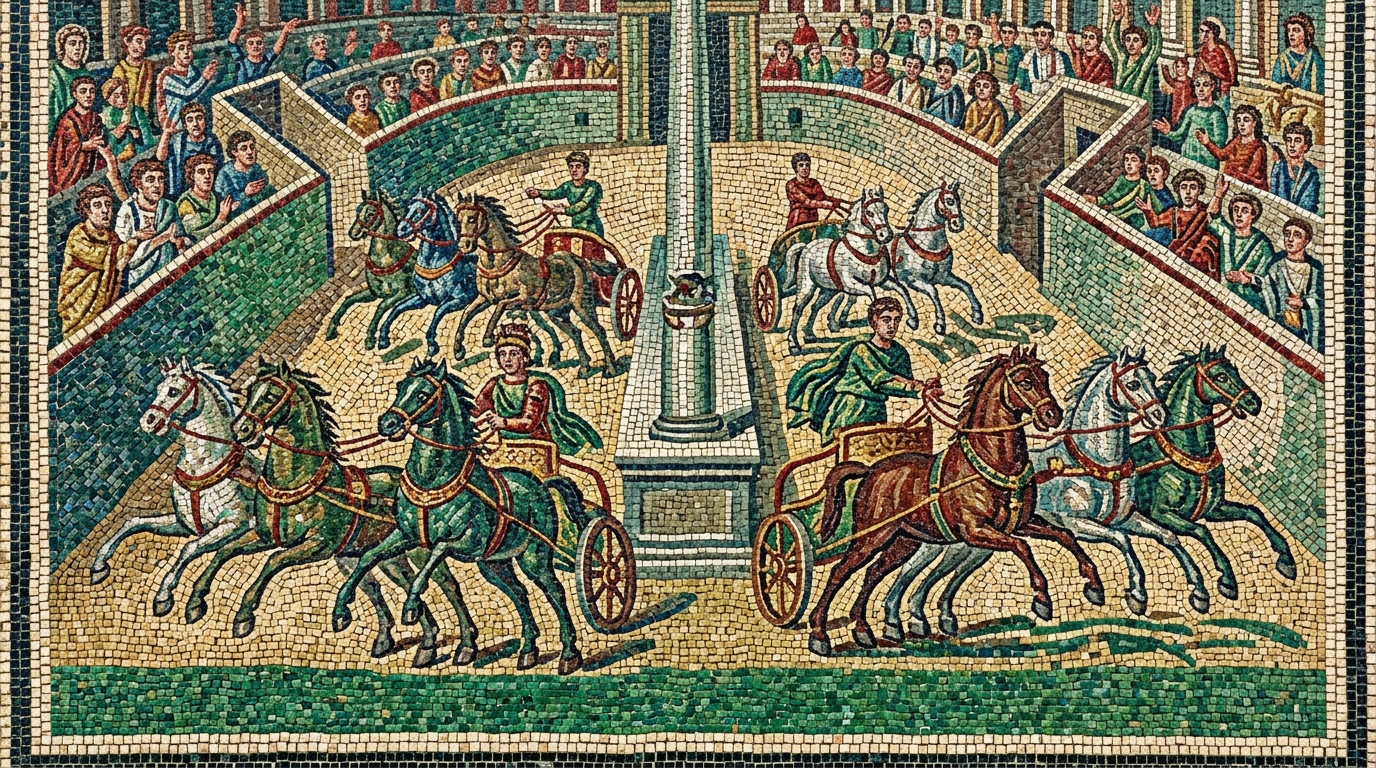
Archaeological discoveries often provide remarkable glimpses into long-lost civilizations, but some finds are especially extraordinary because they preserve scenes from everyday life that would otherwise have been forgotten. One such discovery is an ancient mosaic depicting a Roman hippodrome—a massive arena where chariot races and public spectacles once thrilled thousands of spectators.
More than just a beautiful work of art, the mosaic acts as a historical snapshot, offering invaluable clues about entertainment, architecture, social life, and artistic achievement in the Roman world. Through its intricate designs and carefully arranged images, the mosaic allows modern viewers to step into an arena that existed centuries ago.
Here are fifteen fascinating facts about the ancient mosaic revealing a Roman hippodrome and why historians find it so captivating.
1. The Mosaic Is a Remarkable Survivor
Ancient mosaics are fragile works of art that often suffer damage from time, natural disasters, and human activity.
The survival of this mosaic is therefore extraordinary. Despite centuries buried beneath soil and debris, its designs and patterns endured, preserving details that might otherwise have vanished forever.
Its existence allows historians to examine a visual record created by people who lived during the Roman era.
2. It Depicts a Roman Hippodrome
The mosaic portrays a hippodrome, one of the most exciting and important public spaces in the Roman world.
A hippodrome was a large arena designed primarily for chariot racing. These enormous venues attracted massive crowds eager to witness high-speed competitions and dramatic spectacles.
The depiction provides valuable insights into how these arenas looked and functioned.
3. Chariot Racing Was Incredibly Popular
Modern audiences often compare chariot racing to today’s major sporting events.
Races drew enormous crowds and inspired passionate supporters. Spectators followed their favorite teams and celebrated successful drivers much like modern fans support sports clubs and athletes.
The mosaic highlights just how central public entertainment was to Roman society.
4. The Arena Could Hold Thousands of Spectators
Roman hippodromes were engineering marvels.
Some arenas were capable of accommodating tens of thousands of people. Their size reflected the popularity of public spectacles and the importance governments placed on providing entertainment for citizens.
The mosaic helps researchers visualize the immense scale of these impressive structures.
5. Every Detail Provides Historical Clues
Mosaics often include details that reveal valuable information about ancient life.
Architectural elements, decorative features, and figures shown within the scene can provide evidence about clothing, construction methods, social customs, and public activities.
The hippodrome mosaic therefore functions as more than artwork—it is an important historical document.
6. Roman Mosaics Required Incredible Skill
Creating an elaborate mosaic demanded remarkable craftsmanship.
Artists assembled thousands of tiny colored pieces of stone, ceramic, or glass to create detailed images. The process required patience, planning, and exceptional artistic talent.
The mosaic demonstrates the sophistication and creativity of Roman artisans.
7. It Preserves a Scene of Ancient Entertainment
Many historical artifacts focus on rulers, battles, or religious ceremonies. This mosaic instead captures a form of entertainment enjoyed by ordinary people.
By depicting a hippodrome, the artwork reveals what excited Roman audiences and how people spent their leisure time.
It offers a rare glimpse into the recreational side of ancient civilization.
8. Chariot Drivers Could Become Celebrities
Successful charioteers often achieved extraordinary fame.
Some racers accumulated enormous wealth and gained widespread recognition throughout the Roman world. Victorious drivers attracted devoted supporters and occasionally became among the most celebrated figures of their time.
The mosaic reminds us that sports heroes and celebrity culture are far older than many people realize.
9. The Hippodrome Was Also a Social Center
Roman arenas served purposes beyond entertainment.
People gathered there to meet friends, discuss politics, conduct business, and participate in community life. Public spectacles often became major social events that brought together individuals from many backgrounds.
The mosaic therefore depicts a place that played a significant role in the social fabric of Roman society.
10. It Demonstrates Roman Architectural Sophistication
Constructing large hippodromes required advanced engineering knowledge.
Designers needed to consider seating arrangements, crowd movement, structural stability, and the practical demands of hosting large-scale events.
The mosaic provides valuable evidence of the architectural achievements that helped make Roman civilization famous.
11. The Artwork Preserves Information That Written Sources Cannot
Historical texts provide important information, but images often reveal details that words overlook.
The mosaic allows researchers to study visual elements such as proportions, decorative features, and arrangements within the arena. These details sometimes offer insights unavailable from written records alone.
As a result, the artwork serves as an important complementary source of historical information.
12. It Connects Us to Everyday Romans
One reason the mosaic is so compelling is its human dimension.
The arena it depicts was filled with spectators cheering, celebrating victories, and experiencing moments of excitement and disappointment. The scene reminds us that ancient Romans enjoyed recreation and shared emotional experiences much like people today.
The mosaic transforms distant history into something surprisingly familiar.
13. It Highlights the Importance of Public Spectacles
Roman governments recognized the political and social value of entertainment.
Public events promoted civic identity, strengthened community bonds, and sometimes reinforced political authority. Large spectacles became an essential feature of urban life throughout the empire.
The hippodrome mosaic reflects the central place of mass entertainment within Roman culture.
14. The Discovery Continues to Inspire Research
Archaeologists continue studying ancient mosaics because they frequently contain information that reshapes historical understanding.
Every figure, architectural detail, and artistic choice can contribute to broader discussions about Roman society, technology, and cultural traditions.
The hippodrome mosaic remains an active subject of research and interpretation.
15. It Demonstrates the Enduring Power of Art
Perhaps the most fascinating aspect of the mosaic is its ability to communicate across centuries.
Created by artists who could never have imagined modern audiences, the artwork still captures attention and conveys meaning today. It allows people separated by thousands of years to share an appreciation for beauty, storytelling, and public life.
The mosaic stands as a testament to humanity’s enduring desire to record and celebrate important experiences.
Why the Ancient Hippodrome Mosaic Continues to Fascinate Historians
The ancient mosaic revealing a Roman hippodrome is far more than a decorative masterpiece. It is a surviving window into a vibrant world of racing, entertainment, architecture, and community life.
Through thousands of carefully placed pieces, Roman artists preserved a scene that enables modern viewers to understand how people gathered, celebrated, and experienced public spectacles centuries ago. The mosaic reveals not only the grandeur of Roman arenas but also the humanity of the people who filled them with excitement and energy.
Most importantly, the discovery reminds us that history is not composed solely of emperors and battles. It also consists of ordinary moments—cheering crowds, thrilling competitions, and shared experiences that connect people across time.
After centuries hidden beneath the earth, this remarkable mosaic continues to tell its story, proving that even fragments of ancient art can bring an entire world back to life.