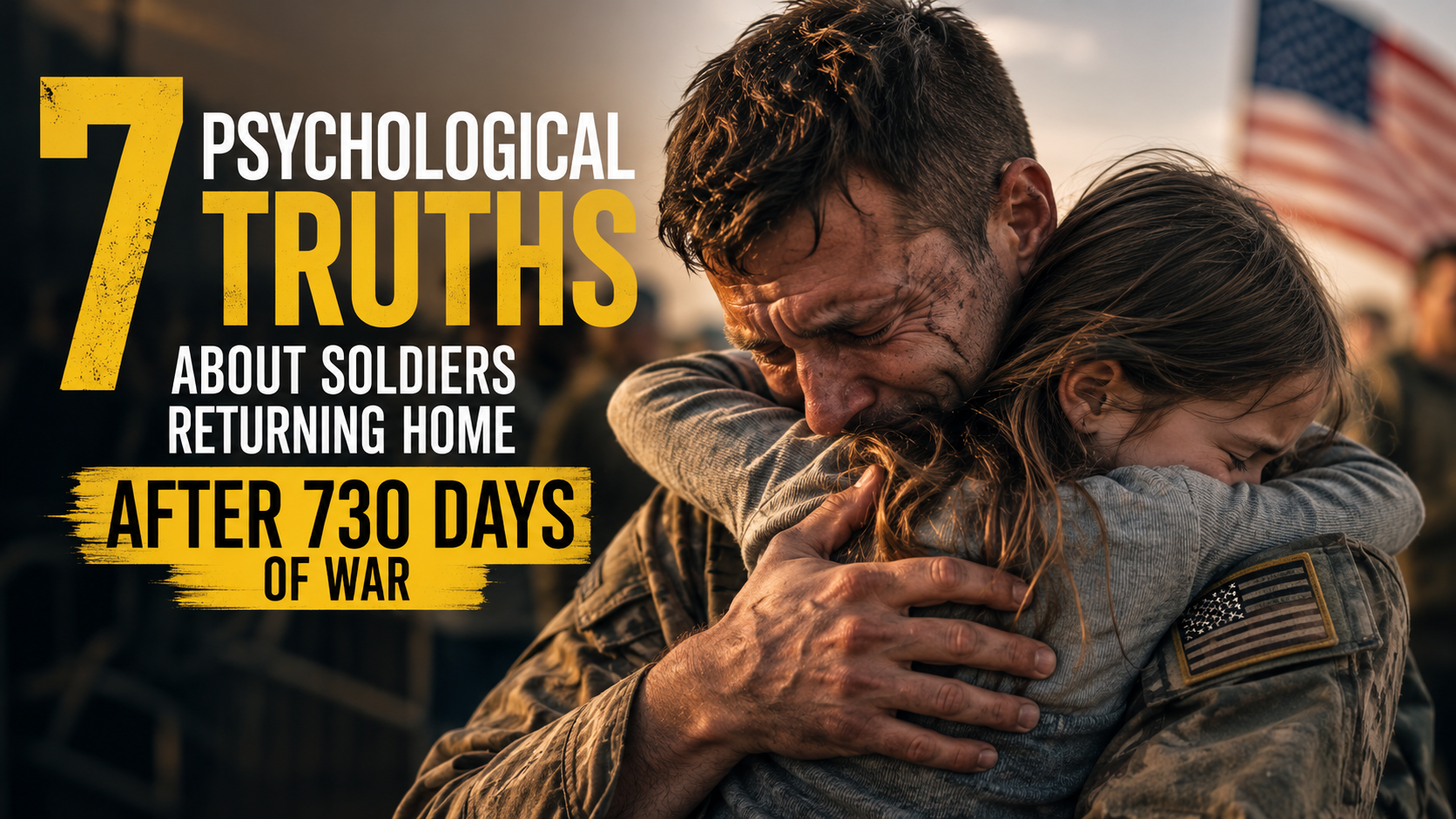
Returning home after two years of continuous military deployment is rarely a simple transition. While the outside world may assume relief and celebration are the only emotions involved, the psychological reality is often far more complex.
After 730 days in a war environment, soldiers carry experiences that reshape how they think, feel, and respond to everyday life. The return home can be both a relief and a deeply disorienting adjustment period.
Here are seven psychological truths that help explain what many soldiers experience when they come back from prolonged conflict.
1. Civilian Life Can Feel Surprisingly Unreal
One of the most common experiences is a sense of detachment from everyday civilian life.
Simple routines—traffic, shopping, casual conversations—can feel oddly distant or unfamiliar.
After prolonged exposure to high-intensity environments, the calm of home life may feel almost surreal at first.
2. Hypervigilance Doesn’t Disappear Immediately
In war zones, constant awareness of surroundings is essential for survival.
Even after returning home, many soldiers remain mentally alert in ways that no longer match their environment.
This heightened state of awareness can take time to gradually fade.
3. Emotional Processing Often Happens in Waves
Rather than experiencing emotions all at once, many returning soldiers process their experiences in stages.
Memories may surface unpredictably, sometimes triggered by sounds, smells, or situations.
This emotional layering is a natural part of adjusting after prolonged stress exposure.
4. Relationships Require Rebuilding, Not Just Returning To
Family and friends often expect a seamless reunion, but emotional reconnection takes time.
Both the soldier and their loved ones may have changed during the separation.
Rebuilding trust, communication, and emotional rhythm is often a gradual process.
5. Purpose and Identity Can Feel Uncertain
Military life often provides a strong sense of structure, mission, and identity.
When that structure is removed, some soldiers struggle with questions about who they are outside of service.
Re-establishing purpose in civilian life can take significant emotional adjustment.
6. Sleep Patterns and Mental Rest Can Be Disrupted
After long periods of heightened alertness, the nervous system may struggle to fully relax.
Sleep disturbances, vivid dreams, or difficulty resting are common during the transition period.
The mind often needs time to recalibrate to a safer environment.
7. Small Triggers Can Have Strong Emotional Impact
Everyday stimuli can unexpectedly activate intense emotional responses.
Loud noises, crowded spaces, or certain environments may bring back vivid memories.
These reactions are not signs of weakness but reflections of deep psychological conditioning.
Understanding the Transition Beyond the Battlefield
The return home is not a single moment—it is a long process of psychological readjustment.
While physical relocation happens quickly, emotional and mental reintegration takes much longer.
Support systems, patience, and understanding play a critical role in helping soldiers navigate this transition.
The Importance of Support Systems
Family, friends, and communities play a vital role in helping returning soldiers adapt.
Simple gestures of patience and understanding can make a meaningful difference.
Professional counseling and peer support groups can also provide essential tools for recovery and adjustment.
Rebuilding a Sense of Normalcy
One of the biggest challenges is redefining what “normal” feels like.
After prolonged exposure to conflict, normal life may initially feel slow or unfamiliar.
Over time, however, many soldiers gradually reconnect with everyday routines and find stability again.
Strength Beyond the Battlefield
While much attention is placed on physical bravery, psychological resilience is equally important.
Returning soldiers often demonstrate remarkable strength in adapting to civilian life after extreme experiences.
Their ability to rebuild, reconnect, and redefine their identity reflects a different but equally powerful form of courage.
Final Thoughts
The psychological journey of returning home after two years of war is complex, layered, and deeply human.
It involves adjustment, reflection, and gradual healing rather than instant recovery.
Understanding these truths helps create a more compassionate perspective toward those who have served.
Ultimately, reintegration is not about returning to who they were before—but learning how to move forward in a world that now feels different, while finding stability, meaning, and connection once again.