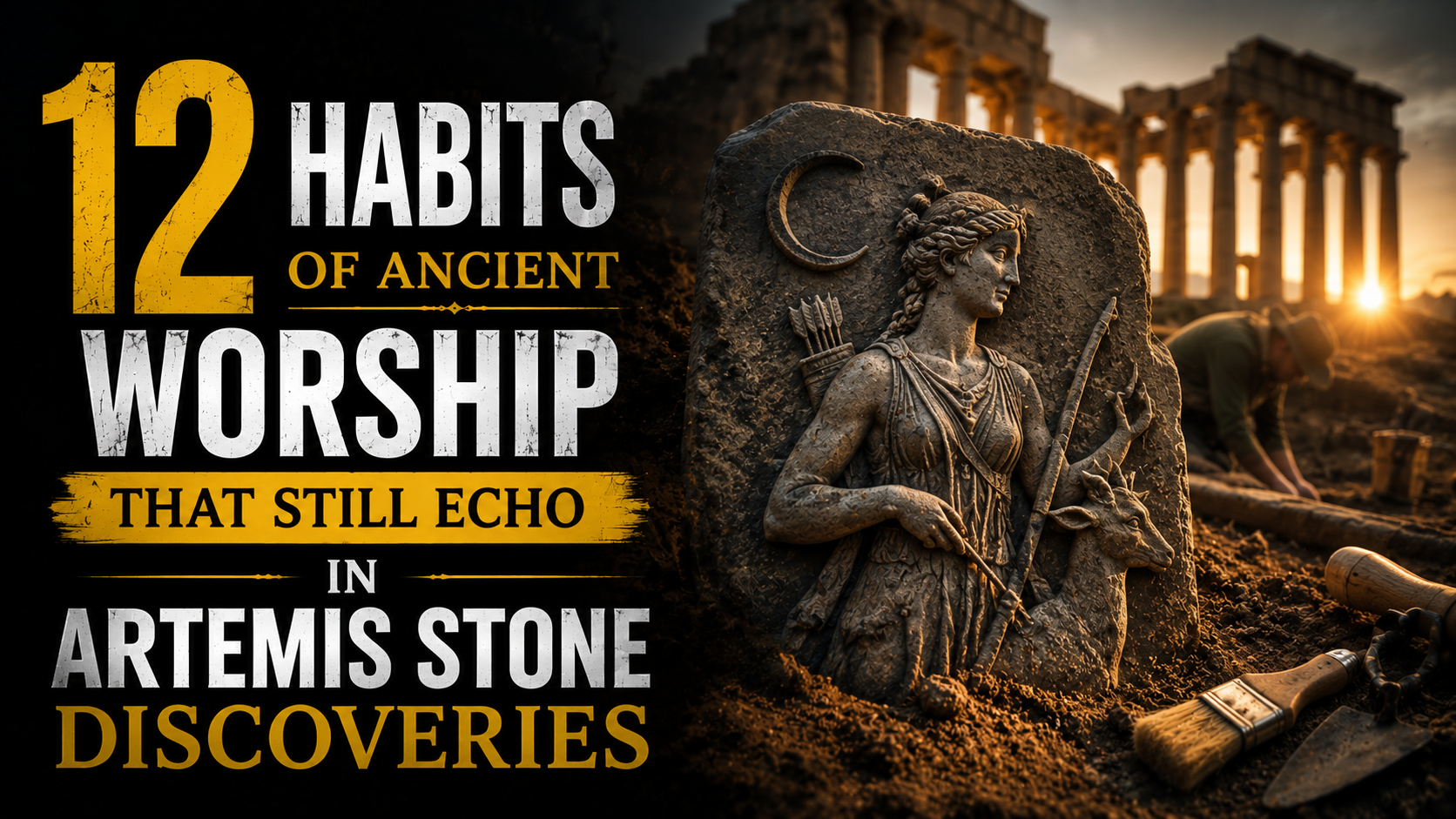
Across the ancient world, worship was not only a spiritual practice but also a deeply social and cultural force. Temples, shrines, and sacred sites were carefully designed to reflect the beliefs of the people who built them. Among the most fascinating archaeological insights into these practices are discoveries linked to Artemis, one of the most widely venerated deities of the ancient Mediterranean world.
Stone inscriptions, temple remains, and ritual artifacts associated with Artemis continue to reveal patterns of devotion that shaped everyday life. These discoveries help historians reconstruct how ancient communities expressed faith, organized rituals, and connected with the divine.
Here are twelve enduring habits of ancient worship that continue to echo through these Artemis-related stone discoveries.
1. Offerings as a Daily Spiritual Practice
One of the most consistent findings at Artemis-related sites is the presence of offerings.
People regularly left objects such as pottery, figurines, and food items as acts of devotion.
These offerings were not occasional—they were part of daily or seasonal spiritual life.
This reflects how worship was integrated into ordinary routines.
2. Sacred Spaces Marked by Natural Landscapes
Many Artemis worship sites were located in forests, near springs, or on elevated ground.
These natural settings were considered extensions of the divine presence.
Stone remains often show how worship spaces were intentionally aligned with their surroundings.
Nature itself was seen as part of the sacred experience.
3. Ritual Purity Before Worship
Archaeological evidence suggests that purification rituals were common before entering sacred areas.
Water basins and cleansing stations found near temple entrances support this practice.
Worshippers likely washed their hands or bodies to prepare for interaction with the divine.
Purity was viewed as essential for spiritual connection.
4. Use of Stone Inscriptions to Communicate With the Divine
Many Artemis sites contain engraved stone inscriptions.
These texts often include prayers, dedications, or records of offerings.
Writing on stone was seen as a permanent way to communicate devotion.
It also helped preserve community memory across generations.
5. Collective Participation in Ritual Events
Worship of Artemis was rarely an individual experience.
Communities gathered for festivals, ceremonies, and seasonal celebrations.
Stone artifacts and spatial layouts of temples suggest large-scale gatherings.
Religion functioned as a shared social identity.
6. Symbolic Use of Animal Imagery
Artemis was closely associated with animals, especially deer and wild creatures.
Stone carvings often depict these symbolic animals alongside ritual scenes.
These images reinforced the connection between nature, divinity, and protection.
They also reflected beliefs about harmony between humans and wildlife.
7. Votive Statues as Personal Expressions of Faith
Small stone or clay statues found at archaeological sites were often dedicated to Artemis.
These votive objects represented personal prayers or gratitude.
Each statue tells a story of individual devotion within a larger religious system.
They highlight the personal side of ancient worship.
8. Seasonal Ritual Cycles Reflected in Site Layouts
Some Artemis sanctuaries appear designed to accommodate seasonal ceremonies.
Orientation of structures suggests alignment with natural cycles such as solstices.
This indicates that worship was tied closely to time and environmental change.
Ritual calendars likely guided community religious life.
9. Gendered Spaces in Worship Practices
Artemis was strongly associated with femininity, protection, and transitions in life stages.
Some archaeological evidence suggests that certain ritual spaces were primarily used by women.
Stone artifacts hint at rites connected to childbirth, coming-of-age, and protection.
This reflects the goddess’s role in personal and social identity.
10. Music and Dance in Sacred Ceremonies
While not preserved directly in stone, spatial arrangements and reliefs suggest ritual performance.
Open courtyards and stage-like areas indicate music and dance were part of worship.
These performances likely played a role in storytelling and communal bonding.
Ritual expression extended beyond spoken prayer.
11. Sacred Boundaries Marked by Stone Structures
Many Artemis sites feature boundary markers carved from stone.
These demarcations separated sacred space from the outside world.
Crossing into these areas symbolized entering a different spiritual realm.
The physical structure reinforced religious meaning.
12. Continuity of Worship Across Generations
One of the most striking patterns in Artemis-related discoveries is long-term site use.
Evidence shows that sanctuaries were maintained and expanded over centuries.
Successive generations added inscriptions, offerings, and architectural modifications.
This continuity reflects enduring cultural devotion.
The Archaeological Importance of Artemis Stone Discoveries
These discoveries are more than remnants of ancient religion—they are records of human behavior, belief, and identity.
Each carved stone, inscription, and artifact contributes to a broader understanding of how ancient societies structured their spiritual lives.
Archaeologists use these findings to reconstruct rituals that would otherwise be lost to time.
Worship as a Reflection of Society
Ancient worship practices were deeply connected to social organization.
They influenced family life, civic identity, and even political structures.
The archaeological record of Artemis worship shows how religion shaped community cohesion.
Faith was not separate from daily existence—it was part of it.
Why These Discoveries Still Matter Today
Studying ancient worship habits helps modern audiences understand the roots of cultural traditions.
It also reveals how humans have consistently sought meaning through ritual and symbolism.
The Artemis discoveries highlight universal themes of devotion, nature, and identity.
These themes remain relevant across time and cultures.
Final Thoughts
The stone remains associated with Artemis worship offer a powerful glimpse into ancient spiritual life.
They show that worship was not a single act but a complex system of habits, spaces, and symbols.
From offerings and inscriptions to communal rituals and seasonal ceremonies, these practices reflect a deeply interconnected worldview.
Even today, these discoveries continue to illuminate how ancient people understood their place in the world—and how they expressed devotion through enduring, meaningful traditions carved in stone.