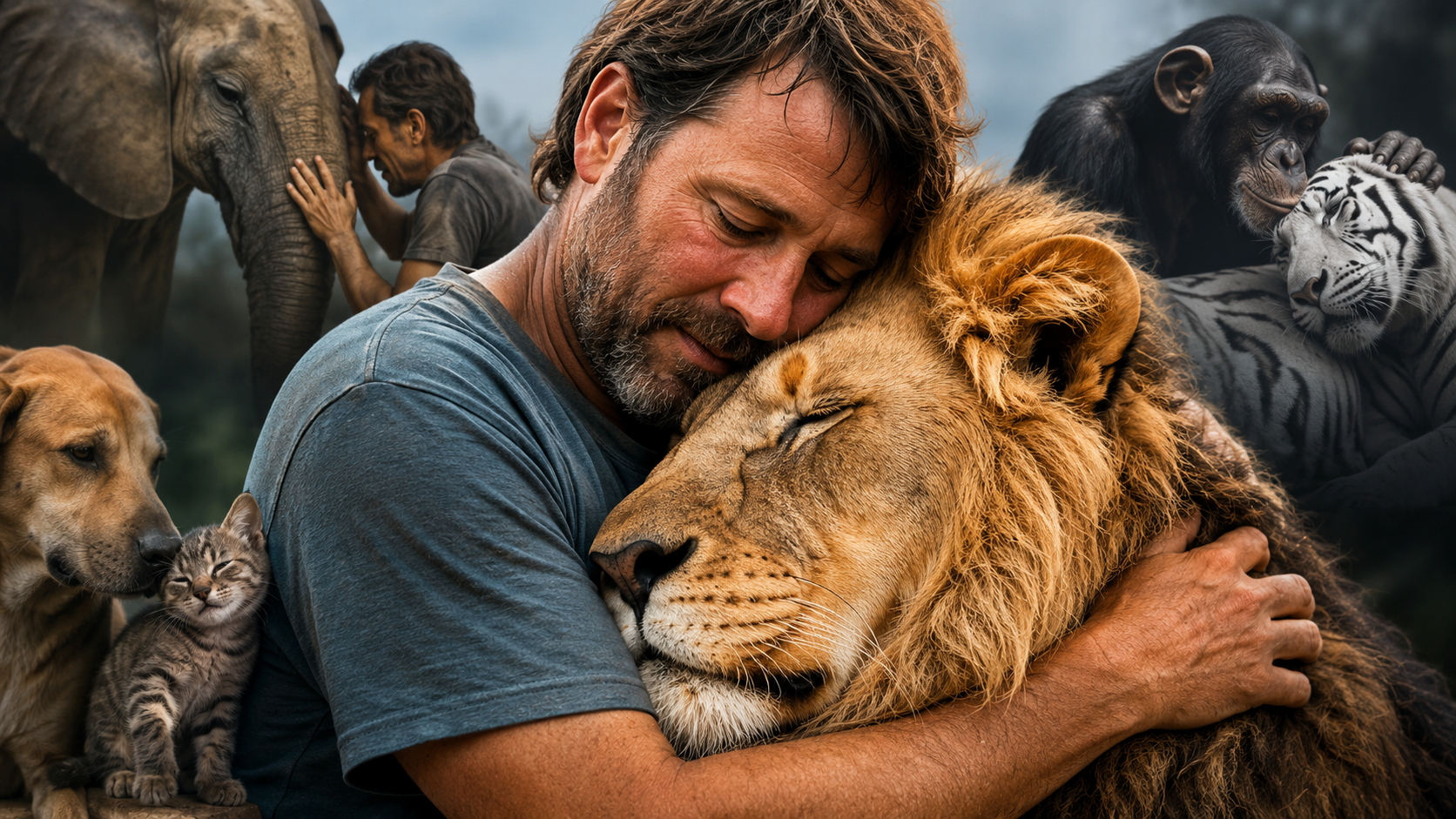
Nature is often described as a world ruled by survival. Animals hunt, compete, defend territory, and protect their own species. For centuries, scientists believed instinct controlled nearly every aspect of animal behavior. But time and time again, extraordinary stories from the animal kingdom have challenged that belief.
Across forests, oceans, farms, shelters, and even city streets, animals have shown compassion, loyalty, grief, empathy, and friendship in ways that seem almost impossible. Some form unlikely bonds with creatures they would normally fear. Others risk their own safety to protect animals outside their species. These emotional connections reveal something deeper about life on Earth — that kindness and companionship may be more universal than we once imagined.
Researchers continue to study animal emotions, and many now agree that creatures experience complex social feelings similar to humans. While their behaviors may not look exactly like ours, the evidence is becoming harder to ignore. Animals mourn losses, celebrate reunions, comfort one another, and build relationships that can last for years.
Here are seven emotional facts about animal bonds that completely defy natural instincts and continue to amaze people around the world.
1. Predators and Prey Sometimes Form Lifelong Friendships
In the wild, predators and prey are supposed to remain enemies. Survival depends on it. Yet there have been astonishing cases where animals ignored those instincts entirely and developed peaceful relationships instead.
One of the most famous examples involved a lioness in Kenya who repeatedly adopted baby antelopes instead of hunting them. Wildlife experts were stunned because lions are natural predators of antelope species. Even more surprising was the gentle way the lioness protected the young animals from danger.
Similar stories have appeared around the world. Dogs have been known to care for baby deer. Cats have nurtured ducklings. In some sanctuaries, cheetahs and dogs become inseparable companions. These relationships often form when animals are raised together or when one animal senses vulnerability in another.
Scientists believe several factors may explain these unusual friendships. Socialization at a young age can override hunting instincts, especially in captive environments. Hormonal responses linked to caregiving may also play a role. In some cases, animals appear to respond emotionally to loneliness or stress by seeking companionship wherever they can find it.
What makes these bonds so fascinating is that they challenge the idea that instinct always controls behavior. Instead, they suggest animals are capable of adapting emotionally and socially in ways far more flexible than once believed.
These unlikely friendships also remind humans that fear and conflict are not always inevitable. Even in nature, connection sometimes proves stronger than instinct.
2. Elephants Mourn Their Dead in Remarkably Human Ways
Among all animals studied by scientists, elephants display some of the clearest signs of grief and emotional memory.
When an elephant dies, herd members often react in ways that strongly resemble mourning. They may stand silently around the body for hours or even days. Some gently touch the bones with their trunks. Others attempt to lift or wake the fallen elephant long after death has occurred.
Researchers have also documented elephants revisiting the remains of family members years later. They appear especially drawn to skulls and tusks, carefully examining them while ignoring the bones of other species nearby.
These behaviors suggest elephants possess strong emotional awareness and long-term social memory. Elephant herds are deeply family-oriented, often led by older matriarchs whose knowledge helps the group survive. Losing a member affects the entire social structure.
Young elephants have also shown signs of depression after losing mothers or siblings. Some become withdrawn, anxious, or unusually aggressive. Wildlife caretakers have reported orphaned elephants seeking comfort from humans or other animals after traumatic losses.
Scientists still debate whether animal grief is identical to human grief, but the emotional similarities are difficult to dismiss. Brain studies have shown elephants possess highly developed regions linked to empathy, social communication, and emotional processing.
These observations continue to reshape how humans understand intelligence and emotion in the animal kingdom. Grief may not belong only to people. It may be a natural response shared by many social species capable of deep attachment.
3. Dolphins Rescue Animals — and Humans — in Dangerous Situations
Dolphins are famous for their intelligence, but their emotional behavior may be even more impressive.
For decades, there have been reports of dolphins protecting injured pod members, helping stranded whales, and even rescuing humans from danger. In several documented cases, dolphins formed protective circles around swimmers threatened by sharks.
Marine biologists believe dolphins possess advanced social awareness and cooperative instincts. They live in highly organized communities where communication and teamwork are essential for survival. These social skills may contribute to their willingness to assist others in distress.
In one remarkable incident, dolphins helped guide a disoriented whale calf back toward deeper water. In another, a pod supported an injured dolphin at the ocean’s surface so it could continue breathing.
Perhaps most fascinating is that dolphins sometimes help creatures with no direct benefit to themselves. This behavior challenges traditional theories that animals act purely out of self-interest.
Studies suggest dolphins may recognize emotional distress signals similarly to how humans interpret fear or panic. Their large brains contain complex structures associated with emotional intelligence and problem-solving.
Some researchers even compare dolphin societies to early human communities because of their cooperation, communication, and emotional bonds.
While scientists remain careful about assigning human emotions to animals, dolphin behavior continues to provide compelling evidence that empathy may exist beyond our species.
4. Dogs Can Detect Human Emotions Better Than Most People Realize
The connection between humans and dogs is one of the strongest interspecies bonds on Earth. But science now suggests dogs understand us on a much deeper emotional level than previously believed.
Studies have shown dogs can recognize human facial expressions, body language, and vocal tones. Many can tell the difference between happiness, sadness, anger, and fear simply by observing a person’s behavior.
Dogs also react emotionally to human stress. When owners cry, many dogs attempt to comfort them by leaning close, licking, or staying nearby. Researchers believe dogs may respond to emotional cues through both observation and scent changes linked to hormones like cortisol.
This extraordinary sensitivity likely developed through thousands of years of domestication. Dogs evolved alongside humans and gradually became experts at reading human behavior.
Brain imaging studies reveal that dogs process human voices using regions similar to those humans use themselves. Some experiments even suggest dogs experience increased oxytocin — often called the “bonding hormone” — during affectionate interactions with owners.
Service dogs provide another powerful example of emotional intelligence in animals. Many are trained to detect seizures, panic attacks, low blood sugar, or emotional crises before humans recognize the symptoms themselves.
But beyond training, countless stories describe dogs staying beside sick owners, refusing to leave grieving family members, or traveling incredible distances to reunite with the people they love.
Their loyalty goes beyond obedience. It reflects a genuine emotional attachment that has developed over thousands of years of shared companionship.
5. Some Animals Adopt Babies That Aren’t Their Own
In nature, raising offspring requires enormous energy and risk. Most species focus only on protecting their own young. Yet many animals occasionally do something extraordinary — they adopt babies from entirely different species.
Cats nursing squirrels, dogs caring for tiger cubs, gorillas protecting abandoned kittens, and chickens raising puppies have all been observed in homes, sanctuaries, and rescue centers.
This behavior may sound unusual, but researchers believe maternal instincts can sometimes extend beyond species boundaries. Hormones linked to caregiving can trigger nurturing behavior whenever an infant appears vulnerable or helpless.
In social species, protecting young may also strengthen emotional stability within groups. Some animals appear driven by empathy-like responses rather than strict biological logic.
There are even examples in the wild. Female dolphins have occasionally cared for calves from other pods. Certain primates have adopted orphaned infants unrelated to them genetically.
These acts challenge the long-standing belief that animal behavior is guided only by survival and reproduction. Instead, they suggest emotional connection and social caregiving can sometimes override evolutionary advantage.
Humans are often moved deeply by these stories because they reflect values we associate with compassion and unconditional care. Seeing animals cross natural boundaries to protect vulnerable lives reminds us that nurturing behavior may be more universal than expected.
6. Ravens and Crows Remember Kindness — and Cruelty
Crows and ravens are among the smartest birds on Earth, but their emotional and social memory may be even more remarkable than their intelligence.
Research has shown these birds can recognize individual human faces for years. More importantly, they remember whether a person treated them kindly or threatened them.
In experiments, crows warned other birds about specific humans they considered dangerous. Even birds that had never encountered those humans learned to avoid them through social communication.
But these birds are not motivated only by fear. Ravens and crows have also demonstrated behaviors that resemble gratitude and trust. Some people who regularly feed wild crows report receiving small “gifts” in return, including shiny objects, buttons, or bits of glass.
Scientists believe these birds form strong social networks and possess advanced problem-solving abilities. They cooperate, teach one another, and even appear to hold grudges.
Ravens have also been observed consoling distressed companions after fights or stressful encounters. Some researchers interpret this as evidence of emotional sensitivity and social awareness.
These birds challenge outdated assumptions that intelligence belongs mainly to mammals. Their ability to remember emotional experiences and build long-term relationships shows that sophisticated social behavior exists across many branches of the animal kingdom.
The next time a crow watches from a nearby tree, it may be noticing far more than most people imagine.
7. Animals Can Experience Deep Loneliness and Emotional Trauma
One of the most emotional discoveries in modern animal research is that many animals suffer psychologically when isolated, neglected, or separated from loved ones.
Parrots often develop anxiety or self-destructive behaviors when deprived of social interaction. Chimpanzees raised alone can experience lifelong emotional difficulties. Dogs left without companionship may develop severe separation anxiety.
In marine parks, some whales and dolphins have shown repetitive behaviors associated with stress and depression. Orphaned elephants have displayed symptoms that researchers compare to post-traumatic stress disorder.
These emotional responses highlight how deeply social many species truly are. Relationships are not optional extras for these animals — they are essential to emotional well-being.
Scientists now understand that healthy social bonds help regulate stress, improve survival, and support brain development in many species. Emotional connection is not just a human need. It appears deeply rooted across the animal world.
Rescue organizations frequently witness dramatic emotional recoveries when neglected animals finally receive care and companionship. Abused dogs learn to trust again. Lonely parrots become playful after bonding with caretakers. Traumatized horses calm down when paired with gentle companions.
These transformations suggest emotional healing is possible for animals just as it is for people.
As research continues, society is slowly changing how it views animal welfare. More experts now argue that emotional health should be considered alongside physical care when protecting animals.
Why These Animal Bonds Matter More Than Ever
The emotional lives of animals continue to fascinate scientists and ordinary people alike because they reveal something profound about life itself.
For a long time, humans viewed emotions as uniquely human traits. But modern research paints a very different picture. Compassion, grief, loyalty, empathy, and friendship may exist across far more species than anyone once believed.
These emotional bonds challenge old assumptions about intelligence and instinct. They show that survival is not the only force shaping behavior in nature. Relationships matter too.
Animal friendships that cross species boundaries remind people that connection can emerge in the most unexpected places. Stories of loyalty and protection inspire empathy and encourage humans to think differently about the creatures sharing our planet.
They also raise important ethical questions. If animals experience emotional pain, attachment, and social loss, then human responsibility toward them becomes even greater.
From family pets to endangered wildlife, understanding animal emotions can influence how societies approach conservation, farming, entertainment, and rescue work.
Perhaps the most powerful lesson from these extraordinary bonds is simple: emotions are not limited by language or species. Across oceans, forests, and homes around the world, animals continue to demonstrate that companionship, trust, and care are deeply woven into the fabric of life.
And every time an unlikely friendship forms or a grieving animal refuses to leave a companion behind, the natural world reminds humanity that empathy may be one of Earth’s most universal instincts after all.