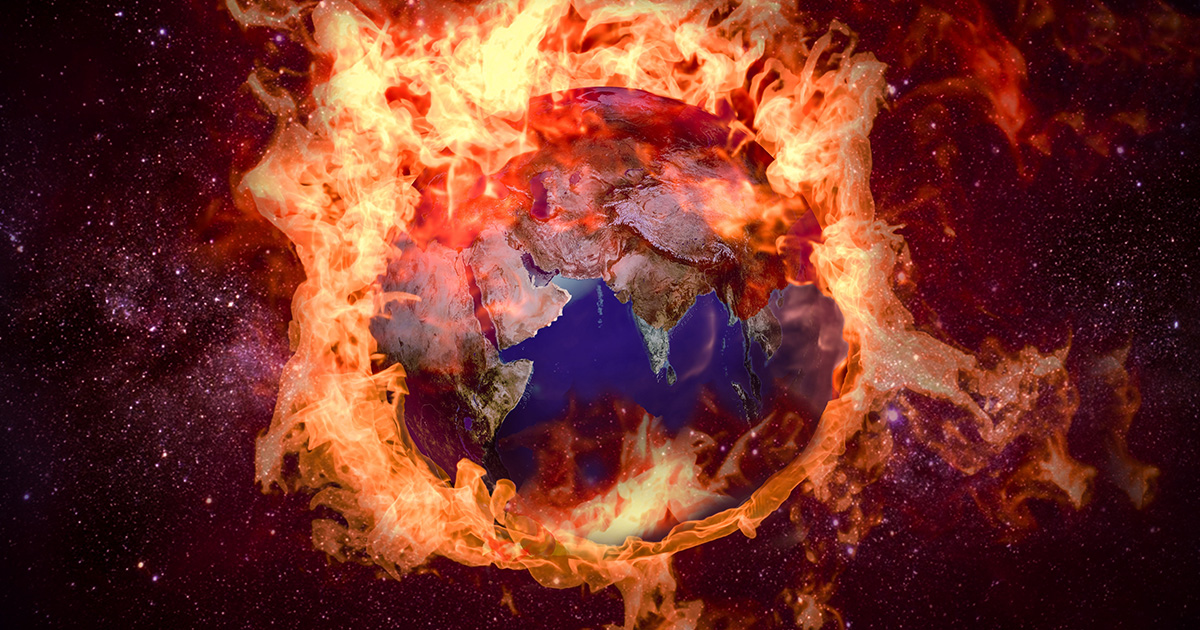
Scientists have issued a stark warning about the state of the world, pointing to the symbolic Doomsday Clock as evidence that humanity may be edging closer to a global crisis than ever before.
The latest update has drawn widespread attention after experts announced that the clock now stands just 85 seconds from midnight—the nearest it has ever been to its symbolic endpoint. While the Doomsday Clock is not an actual countdown, it serves as a powerful visual representation of how close humanity may be to catastrophic threats of its own making.
The clock is managed by the Bulletin of the Atomic Scientists, an organization founded by scientists who were involved in the early nuclear era. According to the group, the clock was created to help the public understand the dangers posed by technologies and actions that could threaten civilization on a global scale.
Each year, a panel of experts evaluates major risks facing the world and decides whether the clock’s hands should be moved forward or backward. Their assessment considers a range of issues, including nuclear weapons, climate change, emerging technologies, geopolitical instability, and other threats that could have far-reaching consequences.
In its 2026 assessment, the organization painted a troubling picture. Experts cited increasing nuclear tensions, the escalating effects of climate change, and the rapid development of advanced technologies such as artificial intelligence as key factors behind the decision to move the clock closer to midnight.
The Doomsday Clock was first introduced in 1947, shortly after the atomic bombings of Hiroshima and Nagasaki marked the beginning of the nuclear age. At that time, it was set at seven minutes before midnight, reflecting concerns about the growing dangers associated with nuclear weapons.
Over the decades, the clock has been adjusted numerous times to reflect shifts in global conditions. During periods of heightened international tensions, it has moved closer to midnight. In more hopeful moments, it has been pushed back.
The safest point in the clock’s history came in 1991, when it was set at 17 minutes before midnight. That adjustment followed significant progress in reducing nuclear arsenals after U.S. President George H.W. Bush and Soviet leader Mikhail Gorbachev announced major arms reduction efforts and advances in nuclear disarmament agreements.
More recently, however, the trend has moved in the opposite direction. The clock was set at 90 seconds to midnight in both 2023 and 2024, before advancing to 89 seconds the following year. Now, at just 85 seconds before midnight, scientists say the world faces a combination of risks unlike any seen before.
Although the Doomsday Clock does not predict an exact date for disaster, its creators view it as an urgent warning. Their message is clear: without meaningful action to address global threats, humanity could continue moving closer to a future marked by unprecedented danger.







