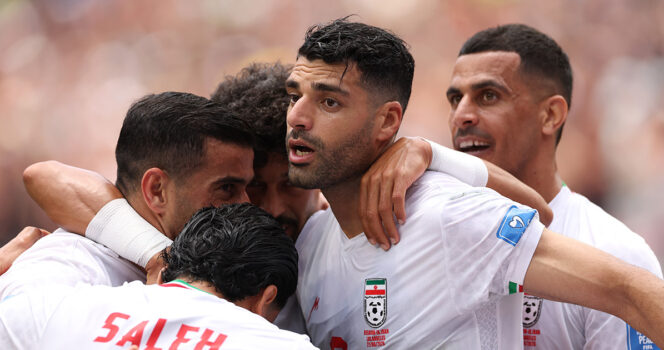
Iranian Team Faces Challenges Beyond the Pitch
The Iranian national football team arrived at the 2026 FIFA World Cup carrying more than just sporting expectations. Against the backdrop of ongoing political tensions between Iran and the United States, the team’s participation became one of the tournament’s most closely watched stories.
Long before Iran kicked a ball in competition, uncertainty surrounded whether players and officials would even be permitted to enter the United States. The situation created logistical challenges that few other teams had to face, making their World Cup campaign unique before it even began.
While football is often celebrated as a sport that brings nations together, Iran’s experience highlighted how international politics can still impact athletes competing on the world’s biggest stage.
After their second group-stage match in Los Angeles, however, the Iranian players made headlines for a different reason. Before leaving the stadium, they left behind a message that quickly captured attention around the world.
Visa Uncertainty Created Early Obstacles
In the weeks leading up to the World Cup, questions surrounded whether members of Iran’s delegation would receive approval to enter the United States.
The uncertainty lingered for months, creating difficulties for planning and preparation.
Eventually, visas were approved for the players approximately ten days before their opening match, allowing the squad to travel and participate in the tournament.
However, not everyone received permission to enter.
According to reports from the Iranian Football Federation, several senior members of the delegation were denied visas.
Those reportedly unable to travel included administrative staff, analysts, media personnel, and representatives connected to government affairs.
The absence of key support staff created additional challenges for the national team as they prepared for one of the most important competitions in international football.
Forced to Operate Under Special Conditions
Unlike many other participating nations, Iran was not allowed to establish its tournament headquarters inside the United States.
Instead, the team was based in Tijuana, Mexico, throughout the group stage.
The arrangement required players and staff to travel into the United States only for official matches before returning to Mexico immediately afterward.
This unusual travel schedule drew criticism from Iranian officials and coaching staff, who argued it disrupted preparation and recovery.
For most national teams, World Cup success depends on maintaining routines, maximizing training opportunities, and limiting travel-related fatigue.
Iran’s circumstances made those goals significantly more difficult.
Every match involved additional travel logistics that competing teams largely avoided.
As a result, the squad found itself navigating challenges both on and off the field.
Coach Voices Frustration
Iran head coach Amir Ghalenoei publicly expressed disappointment with the restrictions placed on his team.
Speaking during the tournament, he questioned why flexibility was eventually offered for Iran’s final group-stage match but not for earlier games.
According to the coach, limited access to training facilities and reduced preparation time negatively affected the squad’s readiness.
He argued that competing teams enjoyed advantages that Iran did not receive.
Ghalenoei pointed out that several opponents were able to arrive earlier, train more extensively, and settle into tournament conditions with fewer complications.
From his perspective, the different treatment made preparation far more difficult than it needed to be.
The coach emphasized that his concern was not political but practical.
Preparing a national team for World Cup competition requires careful planning, and every lost training session can make a difference at the highest level.
Mixed Results on the Field
Despite the obstacles, Iran entered the tournament determined to compete.
The team opened its World Cup campaign hoping to advance from a competitive group.
After two matches, however, results had been mixed.
Iran suffered one defeat and earned a draw, leaving its hopes of advancing dependent on the final group-stage fixture.
One of the most notable performances came in Los Angeles, where Iran battled Belgium to a scoreless draw.
The result demonstrated the team’s resilience and defensive organization despite the unusual circumstances surrounding its tournament participation.
While the draw did not guarantee advancement, it provided a valuable point and kept qualification hopes alive heading into the final match.
For the players, it was also an opportunity to showcase their determination in the face of challenges beyond football itself.
A Message Left Behind
Following the draw against Belgium, the Iranian squad prepared to return to Mexico.
Before leaving the stadium, however, the players and staff chose to leave behind a written message in the dressing room.
The note was later shared on social media by members of the team and the Iranian Football Federation.
Its contents quickly attracted attention.
Rather than focusing on politics, controversy, or complaints, the message emphasized national pride, respect, and unity.
The statement read:
“From the ancient Persia of thousands of years ago to the civilized Iran of today, the spirit of Iran remains alive and steadfast.”
The words reflected the players’ desire to represent their nation’s history and culture on a global stage.
Competing With Pride
The message continued by describing the team’s approach to the tournament.
“We came to Los Angeles with pride, competed with honor, and leave with dignity.”
For many supporters, these words captured the attitude the players hoped to display throughout the competition.
Regardless of results, the team sought to represent its country with professionalism and respect.
International sporting events often carry emotional significance for athletes and fans alike.
For nations facing political tensions or international scrutiny, representing one’s homeland can take on an even deeper meaning.
The note suggested that the players viewed their participation as about more than football alone.
It was also about identity, culture, and national pride.
Gratitude Toward Supporters
The message also expressed appreciation for Iranian supporters who had followed the team throughout its World Cup journey.
The players thanked fans in Los Angeles and around the world who continued to support them despite difficult circumstances.
“Thank you to every Iranian who gave their heart, voice, and soul for Iran throughout these 180 minutes.”
Those words resonated strongly with many supporters.
Iranian fans have long been known for their passionate support of the national team, both at home and abroad.
Throughout the World Cup, large groups of supporters attended matches, creating vibrant atmospheres despite the political complexities surrounding the tournament.
For many fans, the acknowledgment from the players reinforced the strong bond between the team and its supporters.
A Call for Peace
Perhaps the most widely shared portion of the message came at the end.
Rather than ending with a sporting slogan or competitive declaration, the team chose a broader message.
“May peace, respect, and friendship prevail among all nations.”
The closing statement was interpreted by many as an appeal for unity during a period marked by international tensions.
Football has often been described as a universal language capable of bringing people together across borders and cultures.
By emphasizing peace and friendship, the Iranian players appeared to reinforce that ideal.
The message quickly circulated online, generating discussion among football fans worldwide.
Many praised its tone and focus on shared human values rather than division.
Looking Ahead to the Final Group Match
Iran’s World Cup journey is not yet complete.
The team is scheduled to face Egypt in Seattle in its final group-stage match.
With qualification still possible, the players will be hoping to secure a result that keeps their tournament alive.
The match represents another opportunity to demonstrate their abilities on the field after weeks of navigating unique challenges away from it.
Regardless of the outcome, the team’s experience at this World Cup has already become one of the tournament’s most talked-about stories.
More Than Just Football
International sporting competitions often serve as a reflection of larger global realities.
Iran’s World Cup campaign has illustrated how politics, diplomacy, and sport can intersect in complex ways.
Yet amid the travel restrictions, visa concerns, and logistical hurdles, the players ultimately chose to leave behind a message focused on dignity, gratitude, and peace.
For supporters, that note may become one of the lasting memories of Iran’s 2026 World Cup experience.
It served as a reminder that while football is fundamentally about competition, it can also provide opportunities for understanding, respect, and connection between people from different backgrounds.
As the tournament continues, Iran’s players remain focused on their final challenge on the pitch.
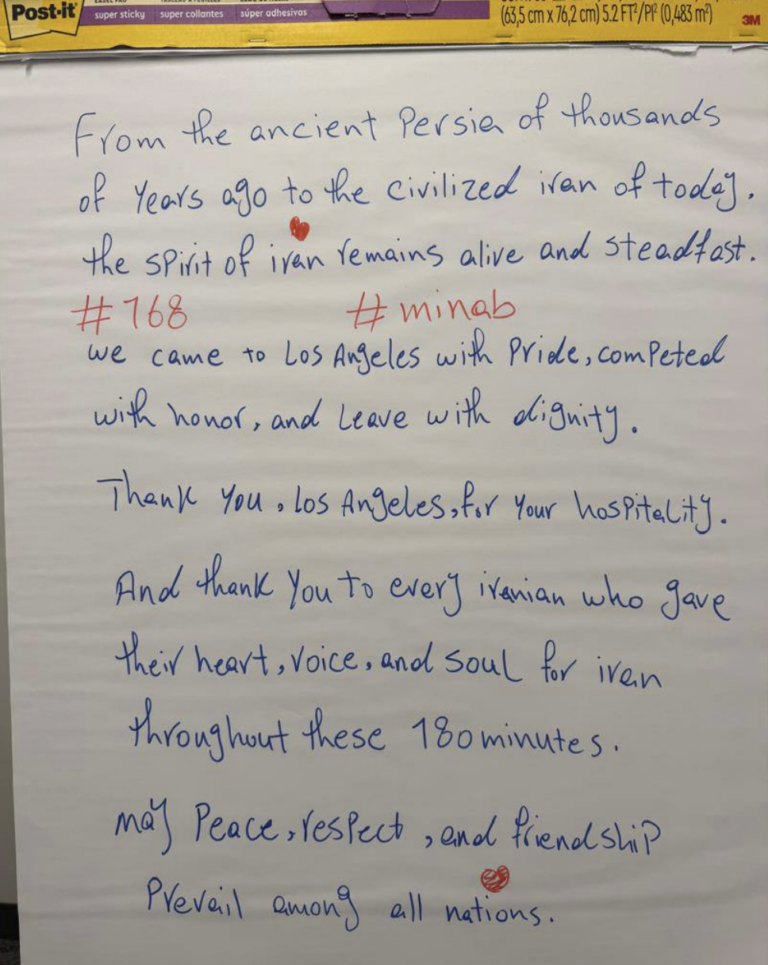
But for many observers, their words in the Los Angeles dressing room have already left a lasting impression.