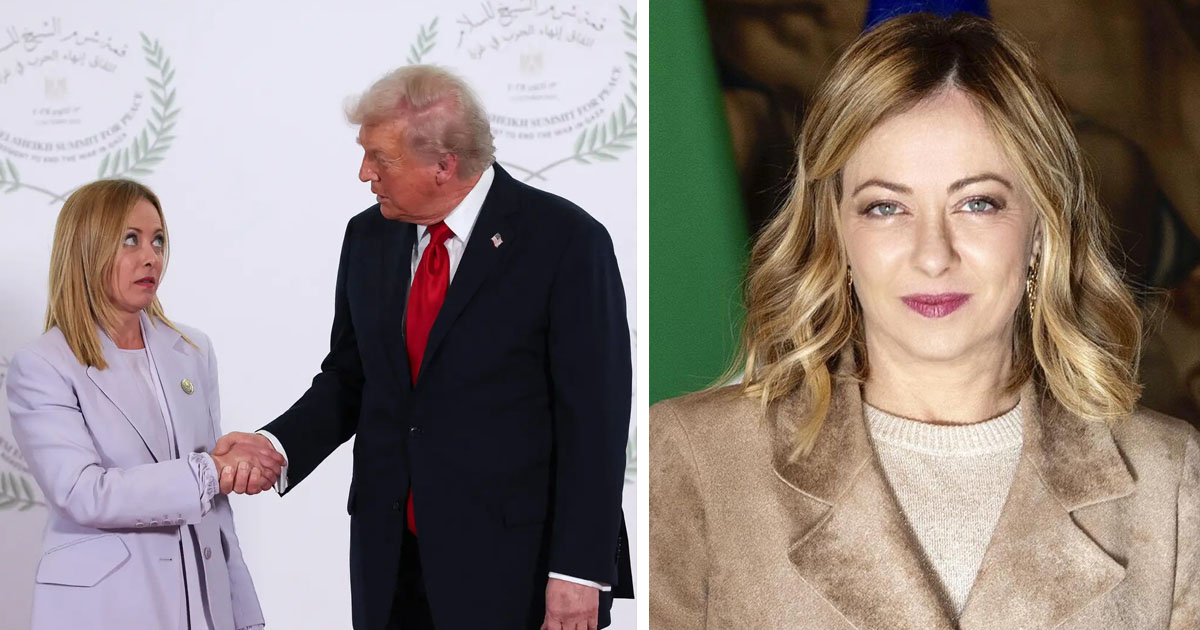
A fresh diplomatic dispute has erupted between Italian Prime Minister Giorgia Meloni and U.S. President Donald Trump after remarks he made about their interaction at this week’s G7 Summit in France.
During an interview with Italian television network La7, Trump claimed that Meloni was eager to be photographed with him and suggested that he agreed to the picture only because he felt sympathy for her.
According to Trump, Meloni had repeatedly sought the photo opportunity. He stated that he would not normally have agreed but did so because he felt sorry for her.
The comments quickly sparked a reaction from the Italian leader, who strongly denied Trump’s version of events and accused him of inventing the story.
Meloni Rejects Trump’s Account
Responding on Instagram, Meloni expressed disbelief at the president’s remarks and made it clear that she viewed them as unacceptable.
She wrote that she was genuinely shocked by the comments, emphasizing that neither she nor Italy had ever needed to plead for recognition from anyone.
Meloni also questioned Trump’s approach toward allied nations, suggesting that this was not the first time he had publicly targeted partners who traditionally stand alongside the United States. She added that she wished he would direct the same level of determination toward countries and forces that threaten Western interests.
The disagreement soon widened beyond the two leaders. Italy’s Foreign Minister, Antonio Tajani, condemned Trump’s statements, saying they were insulting not only to Meloni but to the entire country. In response, he announced the cancellation of a scheduled visit to the United States on June 21 and 22.
Tensions Between Rome and Washington Continue to Grow
The latest clash adds to a growing list of disagreements that have strained relations between the two governments, despite both leaders representing conservative political movements.
Earlier this year, tensions escalated when Italy refused to grant the United States access to a strategically important air base in Sicily following American military strikes on Iran. The decision angered Trump, who publicly criticized Meloni and expressed disappointment over Italy’s stance.
At the time, Trump said he was surprised by her refusal and suggested that both Meloni and Italy had changed significantly from what he once knew.
The two leaders have also sparred over religious and foreign-policy issues. Trump previously criticized Pope Leo, describing him as ineffective on international affairs and weak when dealing with crime.
Meloni came to the Pope’s defense, arguing that calls for peace are both reasonable and appropriate for the head of the Catholic Church. Her response triggered another sharp reaction from Trump, who accused her of failing to take the threat of a nuclear-armed Iran seriously.
With public disagreements now extending across diplomacy, security policy, and international affairs, the relationship between Rome and Washington appears increasingly strained, raising questions about how the two allies will navigate future challenges together.







