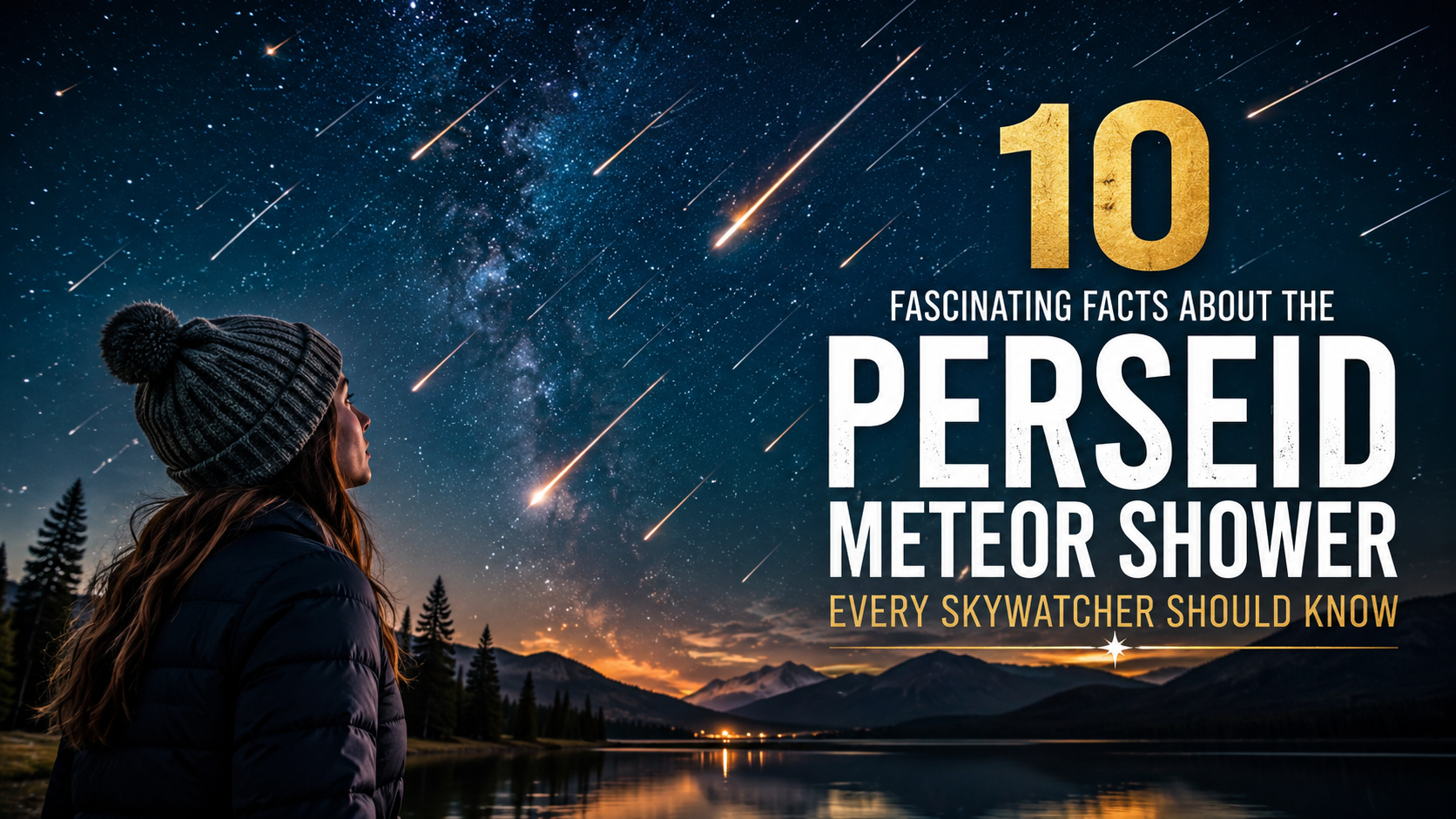
Few celestial events capture the imagination quite like a meteor shower. Every year, millions of people step outside after dark, look toward the heavens, and hope to catch a glimpse of a brilliant streak of light racing across the night sky. Among all annual meteor displays, the Perseid meteor shower stands out as one of the most spectacular and reliable.
Known for its bright meteors, high activity rates, and warm summer viewing conditions in the Northern Hemisphere, the Perseids have become a favorite event for amateur astronomers and casual stargazers alike. Whether you’re a seasoned skywatcher or someone planning your first meteor-shower experience, understanding the science behind this celestial show can make it even more rewarding.
Here are ten fascinating facts about the Perseid meteor shower that every sky enthusiast should know.
1. The Perseids Occur Every Year
One of the reasons the Perseids are so popular is their reliability.
Unlike rare astronomical events that may occur only once in a lifetime, the Perseid meteor shower returns annually. The shower typically becomes active in mid-July and continues through late August, with peak activity usually occurring around August 11–13.
Because it appears consistently every year, skywatchers can plan ahead and make it a regular summer tradition.
2. The Shower Is Caused by a Comet
Many people are surprised to learn that meteor showers originate from comets.
The Perseids are produced by debris left behind by Comet Swift–Tuttle, a massive comet that orbits the Sun approximately once every 133 years.
As the comet travels through the solar system, it sheds tiny particles of dust and rock. Each year, Earth passes through this debris stream, and those particles collide with our atmosphere, creating the meteors we see from the ground.
In essence, every Perseid meteor is a tiny piece of cometary material burning up high above Earth.
3. The Meteors Travel at Incredible Speeds
Perseid meteors are astonishingly fast.
As they enter Earth’s atmosphere, they travel at speeds of roughly 37 miles (60 kilometers) per second. At such tremendous velocities, even tiny particles create brilliant flashes of light as friction with atmospheric gases causes them to heat up and vaporize.
The meteors themselves are often no larger than grains of sand or small pebbles, yet they produce dazzling displays visible from great distances.
Their speed contributes significantly to the shower’s dramatic appearance.
4. The Name Comes From a Constellation
The Perseid meteor shower gets its name from the constellation Perseus.
If observers trace the paths of the meteors backward across the sky, they appear to originate from a point known as the radiant, which lies near this constellation.
Of course, the meteors are not actually coming from Perseus itself. The effect is simply a matter of perspective, much like railroad tracks appearing to converge in the distance.
Nevertheless, the constellation provides a useful reference point for identifying the shower.
5. Some Years Produce More Than 100 Meteors Per Hour
Under ideal viewing conditions, the Perseids can be incredibly active.
During peak nights, observers in dark locations may see between 50 and 100 meteors per hour, and occasionally even more. The exact rate depends on factors such as sky darkness, weather conditions, moonlight, and the observer’s location.
This high activity level makes the Perseids one of the most productive meteor showers of the year.
For many skywatchers, it offers the best chance to witness multiple meteors within a short period.
6. Perseid Meteors Are Often Exceptionally Bright
Not all meteor showers are equally dramatic.
The Perseids are particularly famous for producing bright meteors known as fireballs. These exceptionally luminous meteors can outshine the surrounding stars and sometimes leave glowing trails that remain visible for several seconds.
Fireballs occur when larger fragments of comet debris enter the atmosphere.
Their brightness often creates memorable viewing experiences and contributes to the shower’s popularity.
7. You Don’t Need a Telescope to Enjoy Them
Unlike many astronomical observations, meteor showers require no special equipment.
In fact, telescopes and binoculars can actually limit your view because they focus on a small portion of the sky. The best way to watch the Perseids is simply to find a dark location, allow your eyes to adjust to the darkness, and look upward.
A comfortable chair or blanket is often more useful than expensive gear.
This accessibility makes the Perseids one of the easiest astronomical events for beginners to enjoy.
8. The Best Viewing Happens Before Dawn
While meteors can appear throughout the night, the hours before sunrise typically offer the most impressive displays.
During the early morning hours, the side of Earth where observers are standing faces directly into the stream of incoming particles. This increases the likelihood of meteors entering the atmosphere overhead.
As a result, activity tends to intensify after midnight and reaches its highest levels before dawn.
Dedicated skywatchers often stay up late—or wake up very early—to maximize their chances of seeing the most meteors.
9. Ancient Cultures Noticed the Perseids Too
The Perseid meteor shower has been observed for centuries.
Historical records indicate that people have documented the shower for well over a thousand years. In some parts of Europe, the Perseids became associated with religious traditions and were sometimes referred to as the “Tears of Saint Lawrence” because the annual peak occurs near the feast day of Saint Lawrence.
Long before modern astronomy explained the phenomenon, observers recognized that these meteors appeared predictably each year.
Their enduring visibility has made them one of the oldest continuously observed celestial events.
10. They Offer a Glimpse Into the Solar System’s History
Watching the Perseids is more than an enjoyable pastime—it’s also a connection to the ancient history of the solar system.
The particles creating the meteors originated from a comet that has traveled through space for countless millennia. When those fragments burn up in Earth’s atmosphere, they provide a visible reminder of the dynamic processes shaping our cosmic neighborhood.
Each meteor represents material that may have existed since the early formation of the solar system.
In that sense, every streak of light is a tiny messenger from deep cosmic history.
How to Get the Best Perseid Viewing Experience
To maximize your chances of seeing the Perseids, choose a location far from city lights. Rural areas, parks, and elevated viewing spots often provide the darkest skies.
Allow your eyes at least 20 to 30 minutes to adjust to the darkness, and avoid looking at bright phone screens whenever possible. Bring warm clothing if temperatures are expected to drop overnight, and be prepared to spend time simply watching the sky.
Patience is important. Meteors appear unpredictably, and some of the most spectacular ones arrive when least expected.
Why the Perseids Remain So Popular
The Perseid meteor shower combines several factors that make it uniquely appealing. It occurs during summer in much of the Northern Hemisphere, produces frequent and bright meteors, and requires no specialized equipment to enjoy.
Most importantly, it creates a sense of wonder.
Watching a meteor streak across the sky can be a powerful reminder of our place in the universe. For a brief moment, observers witness an event that connects Earth, a distant comet, and the vastness of space.
That experience continues to inspire people year after year.
Final Thoughts
The Perseid meteor shower is far more than a beautiful celestial display. It is an annual encounter with the remnants of a comet, a lesson in astronomy, and a tradition enjoyed by generations of skywatchers around the world.
From its origins in Comet Swift–Tuttle to its brilliant fireballs and centuries of recorded observations, the Perseids offer countless reasons to step outside and look up. Whether you see one meteor or a hundred, the experience provides a memorable glimpse into the wonders of the cosmos.
For anyone who appreciates the night sky, the Perseids remain one of the year’s most rewarding astronomical events—and one that never fails to remind us just how extraordinary the universe can be.







