High-pressure moments reveal more than skill—they reveal mindset, discipline, and inner stability. Whether in sports, leadership, medicine, or everyday life, people often notice that some individuals perform with unusual calm and clarity even when the stakes are high.
One factor frequently discussed in psychological and personal development circles is spiritual commitment. This doesn’t refer to a single belief system, but rather to a consistent inner framework built on values, reflection, and meaning.
When practiced sincerely, it can influence how people respond to stress, uncertainty, and responsibility.
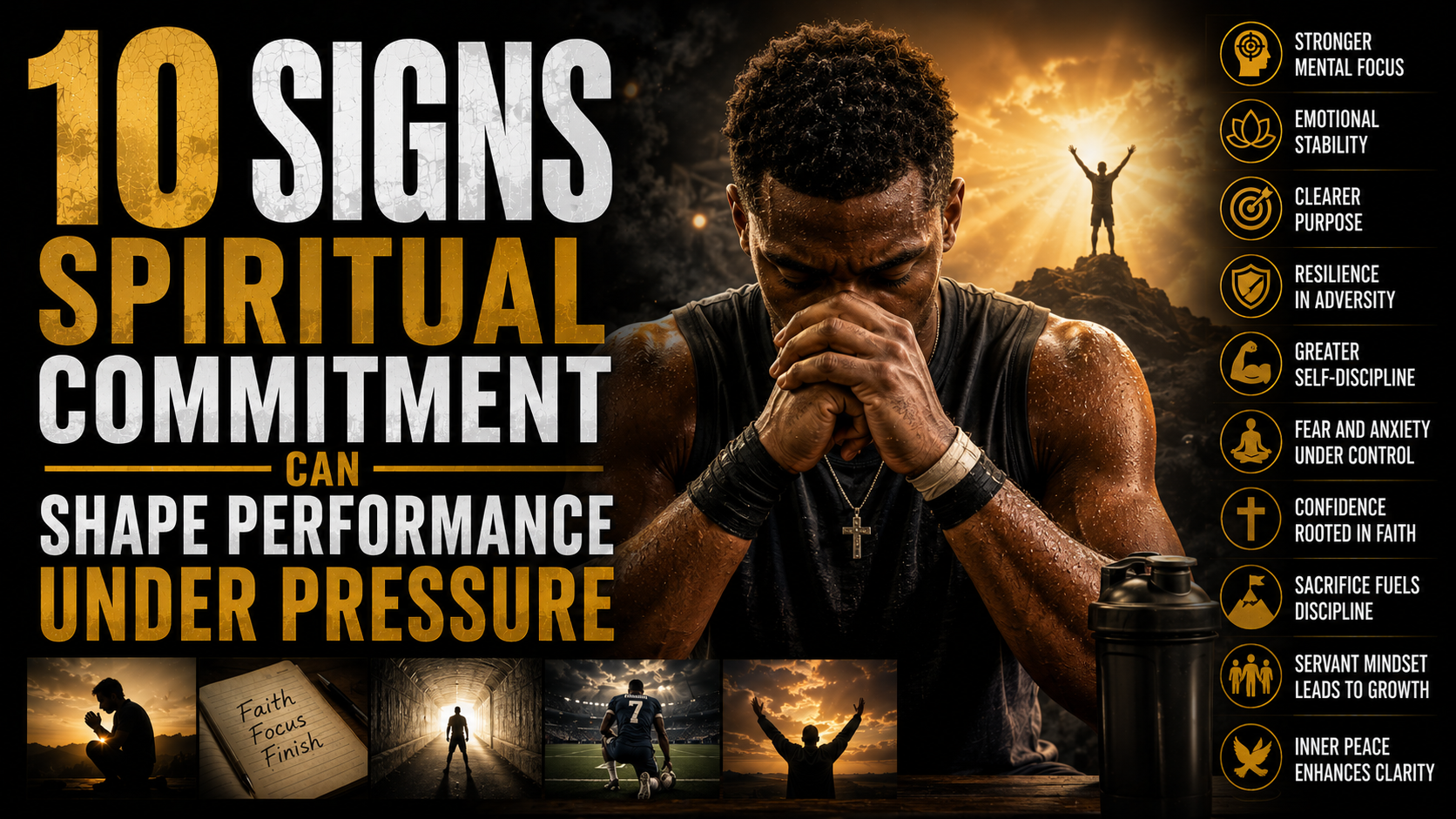
Here are 10 signs that spiritual commitment can shape performance under pressure.
1. Calmness Remains Steady in Chaotic Situations
One of the clearest indicators is emotional steadiness during stressful moments.
Instead of reacting impulsively, individuals grounded in spiritual practice tend to pause and regulate their response.
This calm presence often leads to clearer decision-making under pressure.
2. Focus Improves When Distractions Increase
Pressure environments are often filled with noise—both literal and mental.
Spiritual discipline can help train attention toward what truly matters.
This allows individuals to filter distractions and stay focused on priorities.
3. Decisions Become More Intentional
Rather than rushing into choices, spiritually grounded individuals often take a reflective approach.
They consider long-term consequences and personal values before acting.
This leads to decisions that feel more aligned and less reactive.
4. Emotional Recovery Happens Faster After Setbacks
Setbacks are inevitable in high-pressure environments.
A strong internal belief system can help individuals recover emotionally more quickly.
Instead of dwelling on failure, they reframe it as part of a larger learning process.
5. Confidence Comes From Inner Stability, Not External Validation
Performance pressure often increases when approval from others becomes the main motivation.
Spiritual commitment shifts confidence inward.
This creates stability even when external feedback is uncertain or critical.
6. Stress Is Interpreted Differently
Instead of viewing stress purely as a threat, spiritually grounded individuals may interpret it as a challenge or opportunity for growth.
This shift in perception reduces emotional overload.
It also helps maintain composure in demanding situations.
7. Greater Patience Under Uncertainty
High-pressure environments often involve waiting, unpredictability, and incomplete information.
Spiritual practices tend to reinforce patience and acceptance of uncertainty.
This reduces frustration and improves long-term performance.
8. Stronger Sense of Purpose Drives Persistence
When pressure increases, motivation can weaken unless it is tied to something deeper.
A strong spiritual foundation often provides a sense of purpose beyond immediate outcomes.
This helps individuals persist even when challenges intensify.
9. Reduced Fear of Failure
Fear of failure can significantly impair performance.
Spiritual commitment often reframes failure as part of growth rather than a final judgment.
This reduces anxiety and allows for more confident action.
10. Better Balance Between Effort and Rest
High performers sometimes struggle with burnout under sustained pressure.
Spiritual awareness often emphasizes balance, reflection, and restoration.
This leads to more sustainable performance over time.
Why Spiritual Discipline Matters in High-Pressure Environments
In competitive or demanding settings, technical skill alone is rarely enough.
Mental clarity, emotional regulation, and resilience often determine outcomes.
Spiritual discipline supports these qualities by encouraging reflection, grounding, and perspective.
It does not eliminate pressure—but it changes how pressure is experienced.
The Psychology Behind Inner Stability
Modern psychology increasingly recognizes the role of mindfulness, meaning-making, and value-based thinking in performance.
These concepts overlap closely with spiritual discipline.
When individuals operate from a stable internal framework, their responses become more measured and effective.
This creates consistency even in unpredictable environments.
Real-World Applications Across Fields
The influence of spiritual commitment can appear in many areas:
- Athletes maintaining composure in final minutes of competition
- Doctors making critical decisions in emergency rooms
- Leaders navigating organizational crises
- Students handling academic pressure during exams
In each case, internal grounding helps stabilize external performance.
The Balance Between Pressure and Perspective
Pressure itself is not necessarily harmful—it is often part of growth.
What determines its impact is how it is interpreted and managed.
Spiritual commitment often provides a broader perspective, helping individuals see challenges as temporary rather than overwhelming.
This shift alone can significantly improve outcomes.
Final Thoughts
Spiritual commitment does not guarantee success, nor does it remove stress from difficult situations.
However, it can shape how individuals think, feel, and respond when pressure is high.
Through calmness, purpose, patience, and emotional resilience, it offers a framework that supports stronger and more sustainable performance.
In the end, the most consistent performers under pressure are often not just the most skilled—but the most centered.







