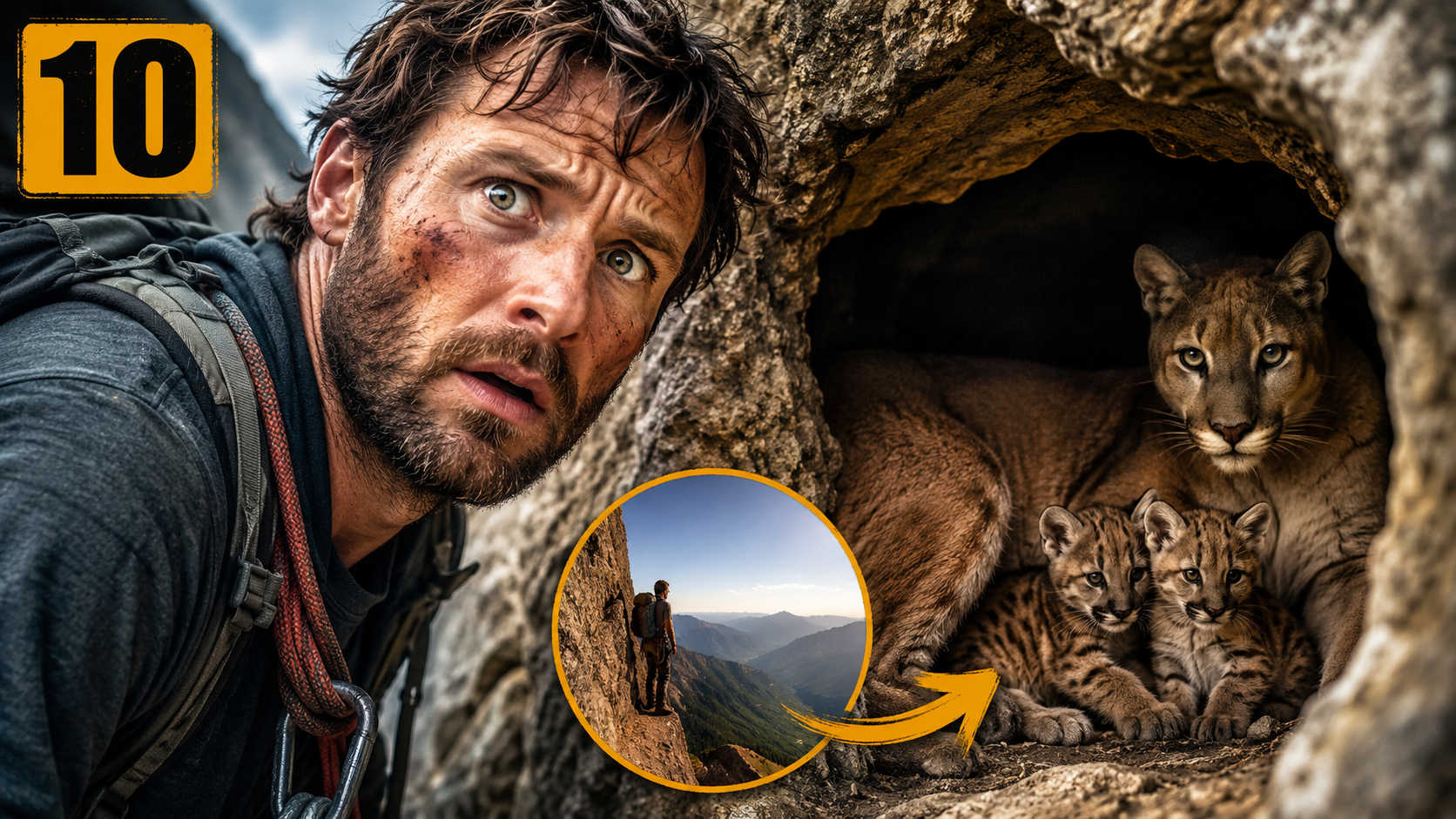
Few outdoor experiences are as thrilling—or as unexpected—as stumbling upon a wild animal in its natural habitat. For one climber, an ordinary adventure turned into an unforgettable encounter after accidentally discovering a mountain lion den. The incident quickly captured attention because it offered a rare glimpse into the secretive world of one of North America’s most elusive predators.
Mountain lions, also known as cougars or pumas, are masters of staying hidden. Most people spend years exploring wilderness areas without ever seeing one. Finding a den is even rarer, as these big cats carefully choose secluded locations to raise their young and avoid potential threats.
The surprising encounter serves as a reminder of both the mystery of wildlife and the importance of respecting the animals that share our outdoor spaces. Here are ten fascinating facts inspired by the climber’s accidental discovery of a mountain lion den.
1. Mountain Lion Dens Are Extremely Difficult to Find
Mountain lions are experts at concealment. They prefer remote landscapes filled with dense vegetation, rocky outcrops, and natural shelters that offer protection and privacy.
Female mountain lions are especially careful when selecting den sites for their cubs. They often choose locations that are difficult for predators, other animals, and even humans to access. This makes accidental discoveries exceptionally rare.
2. Female Mountain Lions Raise Their Cubs Alone
Unlike some animals that share parenting responsibilities, mountain lion mothers care for their young entirely on their own.
After giving birth, the mother provides food, protection, and guidance without assistance from the male. She remains highly attentive to her cubs, moving them when necessary and teaching them survival skills as they grow.
The discovery of a den often highlights the extraordinary dedication of these solitary mothers.
3. Mountain Lion Cubs Are Born With Spotted Coats
Many people are surprised to learn that mountain lion cubs look very different from adults.
Young cubs are born with dark spots and ringed tails that help them blend into their surroundings. These markings provide natural camouflage during their vulnerable early months.
As they mature, the spots gradually fade, and the cubs develop the uniform coloring associated with adult mountain lions.
4. Mountain Lions Are Among the Most Secretive Large Predators
Despite their wide distribution across the Americas, mountain lions remain incredibly difficult to observe in the wild.
They generally avoid people and rely heavily on stealth and silence. Many mountain lions live surprisingly close to human communities while remaining almost entirely unseen.
The accidental discovery of a den serves as a powerful reminder of how much wildlife activity often goes unnoticed.
5. Mother Mountain Lions Are Highly Protective
A female mountain lion with cubs can be particularly cautious and defensive.
Her primary concern is the safety of her young. Although mountain lions usually avoid confrontation with people, mothers may closely monitor anything that approaches the den.
Wildlife experts emphasize that anyone who unexpectedly encounters a den should calmly leave the area and avoid disturbing the animals.
6. Cubs Stay With Their Mother for a Long Time
Mountain lion cubs do not become independent immediately.
They often remain with their mother for more than a year and, in some cases, close to two years. During this period, they learn essential skills such as stalking prey, navigating their environment, and recognizing potential dangers.
This extended learning process helps prepare young mountain lions for life as solitary hunters.
7. Mountain Lions Have Remarkable Climbing Abilities
The climber’s encounter was especially fitting because mountain lions themselves are exceptional climbers.
Their powerful legs and muscular bodies allow them to navigate steep terrain with ease. They can leap impressive distances, scale rocky landscapes, and climb trees when necessary.
These abilities make them highly adaptable predators capable of thriving in a variety of environments.
8. A Den Is More Than Just a Shelter
A mountain lion den serves as a safe nursery during one of the most vulnerable stages of a cub’s life.
The secluded location provides protection from harsh weather and reduces the risk of encounters with predators or disturbances. Mothers often select den sites with extraordinary care, sometimes relocating their cubs if conditions change or potential threats arise.
Finding such a den offers a rare glimpse into a hidden and important chapter of mountain lion life.
9. Encounters Like This Highlight the Importance of Wilderness Conservation
The existence of mountain lion dens reminds us that wild landscapes support complex and often unseen ecosystems.
Remote areas provide essential habitat where animals can hunt, reproduce, and raise their young. As human development expands into natural environments, protecting these habitats becomes increasingly important.
The climber’s experience underscores how vital undisturbed wilderness remains for species that depend on privacy and space.
10. The Discovery Demonstrates That Nature Still Holds Surprises
In an age of satellite imagery and modern technology, it is easy to assume that there are few mysteries left in the natural world.
Yet unexpected encounters continue to reveal just how much remains hidden. A climber setting out on an ordinary adventure likely never imagined discovering one of nature’s most secretive nurseries.
The incident serves as a reminder that wild places still contain moments of wonder capable of surprising even experienced outdoor enthusiasts.
Why This Encounter Captivated People
Stories like this capture public imagination because they provide a rare window into the lives of animals that are seldom seen. Mountain lions inspire both respect and curiosity because of their intelligence, stealth, and adaptability.
The discovery of a den also highlights the delicate balance between humans and wildlife. As people spend more time exploring natural landscapes, opportunities for unexpected encounters increase. These experiences remind us that we are visitors in environments that countless species call home.
A Lesson in Respecting Wild Spaces
The climber who accidentally found a mountain lion den experienced something extraordinarily rare. The encounter offered a brief glimpse into the private world of one of North America’s most elusive predators and revealed the remarkable care that mountain lion mothers invest in raising their cubs.
At the same time, the story carries an important message. Wildlife encounters are most meaningful when approached with respect and caution. Observing nature from a safe distance allows animals to continue their lives without unnecessary disturbance.
Ultimately, the accidental discovery of a mountain lion den reminds us that even in a modern world, nature still guards many of its secrets. Hidden among remote cliffs, forests, and rocky landscapes are countless stories waiting to be uncovered—stories that inspire wonder and deepen our appreciation for the wild creatures that share our planet.







