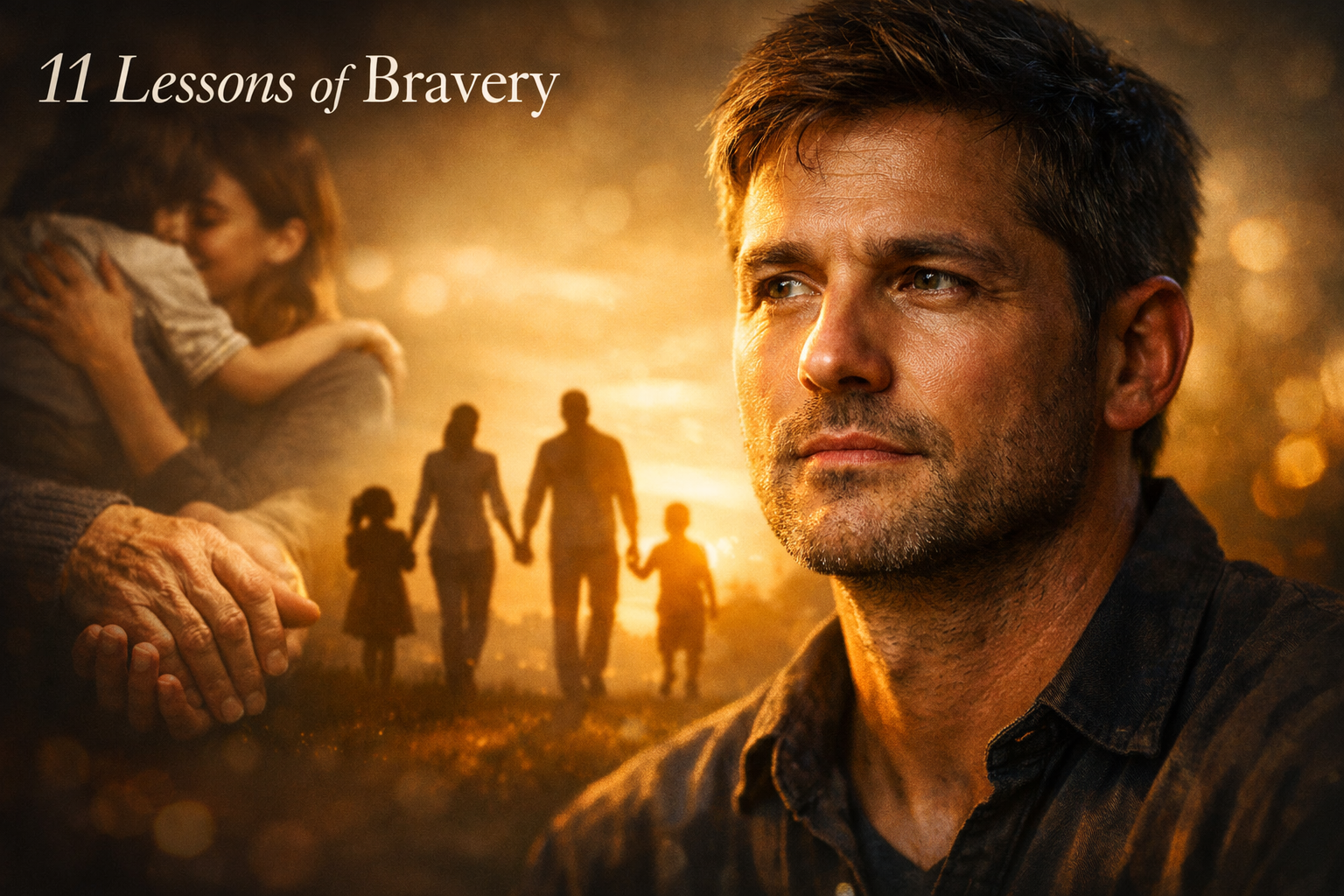
When most people think of bravery, they imagine dramatic moments—firefighters rushing into danger, soldiers on the battlefield, or heroes making life-saving decisions in seconds. While those examples certainly represent courage, some of the most meaningful acts of bravery happen far away from headlines and public recognition.
They take place around kitchen tables, hospital rooms, school events, family businesses, and ordinary homes. They appear in the choices parents make for their children, the sacrifices grandparents make for future generations, and the resilience families show when life doesn’t go according to plan.
Real-life family stories often reveal a version of bravery that is quieter but no less powerful. These moments remind us that courage isn’t always about grand gestures. More often, it’s about showing up, moving forward despite fear, and choosing hope when circumstances feel uncertain.
Here are 11 important lessons about bravery that can be found in the everyday stories families pass down from generation to generation.
1. Bravery Often Begins With Fear
One of the biggest misconceptions about courage is that brave people aren’t afraid.
In reality, many family stories teach the opposite lesson. The parent starting over after losing a job, the grandparent moving to a new country with little more than hope, or the teenager facing a difficult challenge at school often experiences significant fear.
What makes these moments courageous isn’t the absence of fear—it’s the decision to act despite it.
Family experiences frequently demonstrate that bravery and fear can exist side by side. In fact, courage often becomes visible only when fear is present.
The willingness to keep moving forward despite uncertainty is one of bravery’s defining characteristics.
2. Small Acts Can Require Great Courage
Not every brave act changes history.
Sometimes courage appears in surprisingly ordinary situations. It may involve having a difficult conversation, admitting a mistake, asking for help, or standing up for what’s right.
Family stories often highlight moments that seem small from the outside but felt enormous to the people involved.
A child defending a friend, a parent making a difficult decision for their family’s future, or a sibling supporting a loved one during a crisis can all demonstrate remarkable courage.
These stories remind us that bravery isn’t measured by public attention but by personal significance.
3. Sacrifice Is Often Part of Courage
Many memorable family stories involve sacrifice.
Parents frequently put their children’s needs ahead of their own. Grandparents may work long hours to create opportunities for future generations. Family members often give their time, resources, and energy to support loved ones during difficult periods.
These sacrifices aren’t always easy.
Choosing to endure hardship for someone else’s benefit requires emotional strength and commitment.
Family history often reveals that courage is not only about facing danger but also about making selfless choices when they matter most.
4. Resilience Is a Form of Bravery
Life rarely unfolds exactly as planned.
Families encounter illness, financial struggles, loss, disappointment, and unexpected setbacks. Yet many stories passed through generations focus not on the hardship itself but on how people responded to it.
Resilience—the ability to recover and continue moving forward—is one of the most powerful forms of courage.
The family member who rebuilds after failure, adapts to change, or refuses to give up during difficult times often demonstrates extraordinary bravery.
These experiences teach that courage is not always dramatic. Sometimes it looks like persistence.
5. Speaking the Truth Takes Courage
Honesty is often more difficult than people realize.
Telling the truth may involve admitting mistakes, expressing difficult emotions, or confronting uncomfortable realities. Family stories frequently include moments when someone chose honesty despite potential consequences.
Whether addressing a conflict, acknowledging a personal struggle, or standing up against wrongdoing, truth-telling requires vulnerability.
These examples remind us that bravery is not only physical—it is also emotional and moral.
The courage to be honest can strengthen relationships and create lasting trust.
6. Bravery Is Often Motivated by Love
Many acts of courage stem from a desire to protect or support others.
Parents take risks for their children. Siblings defend one another. Partners stand together through challenges. Family members provide care during illness and comfort during difficult times.
Love frequently becomes the force that helps people overcome fear.
When individuals focus on helping those they care about, they often discover strengths they didn’t know they possessed.
Family stories repeatedly show that love and courage are deeply connected.
7. Change Requires Courage
Every family experiences major transitions.
Moving to a new city, changing careers, starting a business, entering a new phase of life, or adapting to unexpected circumstances all involve uncertainty.
Family histories are filled with examples of people stepping into unfamiliar situations without guarantees of success.
The willingness to embrace change despite uncertainty is a powerful form of bravery.
These stories remind us that growth often begins when people leave their comfort zones and face the unknown.
8. Asking for Help Is Not Weakness
Many people mistakenly view independence as the ultimate sign of strength.
Yet family experiences often teach a different lesson. During difficult times, some of the bravest choices involve reaching out for support.
Whether seeking medical care, emotional guidance, financial assistance, or practical help, asking for support requires humility and honesty.
It means acknowledging vulnerability and trusting others enough to accept assistance.
Family stories frequently demonstrate that courage is not about doing everything alone. Sometimes it means recognizing when help is needed.
9. Everyday Responsibilities Can Be Acts of Courage
Bravery isn’t limited to extraordinary events.
For many families, courage appears in daily responsibilities and commitments. Raising children, caring for aging relatives, managing financial obligations, and supporting loved ones through difficult circumstances all require ongoing strength.
These acts rarely receive public recognition.
Yet they often demand patience, discipline, and perseverance over long periods.
Family stories remind us that courage can be found not only in single moments but also in consistent dedication over time.
10. Courage Inspires Future Generations
One remarkable aspect of family stories is their ability to influence future behavior.
Children often learn about courage by observing parents, grandparents, and other relatives. Stories of perseverance, kindness, sacrifice, and determination can become powerful sources of inspiration.
A single example of bravery may shape values for decades.
When families share these experiences, they pass along more than memories. They transmit lessons about character, resilience, and responsibility.
In this way, courage can extend far beyond the individual who first demonstrated it.
11. Bravery Is Often Quiet and Unnoticed
Perhaps the most important lesson hidden in family stories is that courage rarely seeks attention.
Many of the bravest people never consider themselves heroes. They simply do what they believe is necessary for the people they care about.
They show up during difficult times, continue despite setbacks, and make sacrifices without expecting recognition.
These quiet acts of courage often leave the deepest impact.
Family histories are filled with individuals whose strength may never appear in books or news stories but whose actions shaped the lives of everyone around them.
Their bravery becomes part of a family’s legacy.
Why Family Stories Matter
Family stories serve an important purpose beyond preserving memories.
They help people understand where they come from, what challenges previous generations faced, and how those experiences shaped family values. Through these stories, courage becomes something tangible rather than abstract.
Listening to a grandparent describe overcoming hardship or hearing a parent recount a difficult decision provides valuable perspective.
These stories often reveal that bravery is not reserved for extraordinary individuals. It is a quality that ordinary people demonstrate every day.
This realization can be both comforting and empowering.
The Different Forms of Courage
One reason family stories are so powerful is that they showcase the many forms bravery can take.
Some examples involve physical courage, such as protecting others during emergencies. Others highlight emotional courage, including vulnerability, forgiveness, or perseverance through loss.
There is also moral courage—the willingness to stand by one’s values even when doing so is difficult.
Family experiences often illustrate all three forms, helping us appreciate the complexity of bravery.
Courage is not one single trait. It appears in countless ways depending on the circumstances.
How These Lessons Apply to Modern Life
Although the details of family stories may differ, the lessons remain highly relevant today.
Modern challenges may involve career uncertainty, health concerns, financial pressures, relationship difficulties, or personal growth. The courage required to navigate these situations is often similar to the bravery demonstrated by previous generations.
By reflecting on family experiences, people can gain confidence in their own ability to face challenges.
The stories remind us that resilience, determination, and hope have helped countless individuals overcome adversity before.
They can help us believe we are capable of doing the same.
Final Thoughts
Bravery is often portrayed as something dramatic and extraordinary. Yet real-life family stories reveal a different truth. Courage frequently appears in ordinary moments—in difficult decisions, personal sacrifices, honest conversations, and the determination to keep going when life becomes challenging.
These stories teach us that bravery is not the absence of fear. It is the willingness to act despite fear. It is choosing responsibility over comfort, hope over despair, and love over self-interest.
Perhaps the greatest lesson hidden in family history is that courage belongs to everyday people. Parents, grandparents, siblings, and relatives often demonstrate extraordinary strength without ever seeking recognition.
Their stories remind us that bravery is not reserved for heroes in history books. It exists all around us, woven into the lives of ordinary families and passed from one generation to the next through the lessons they leave behind.







