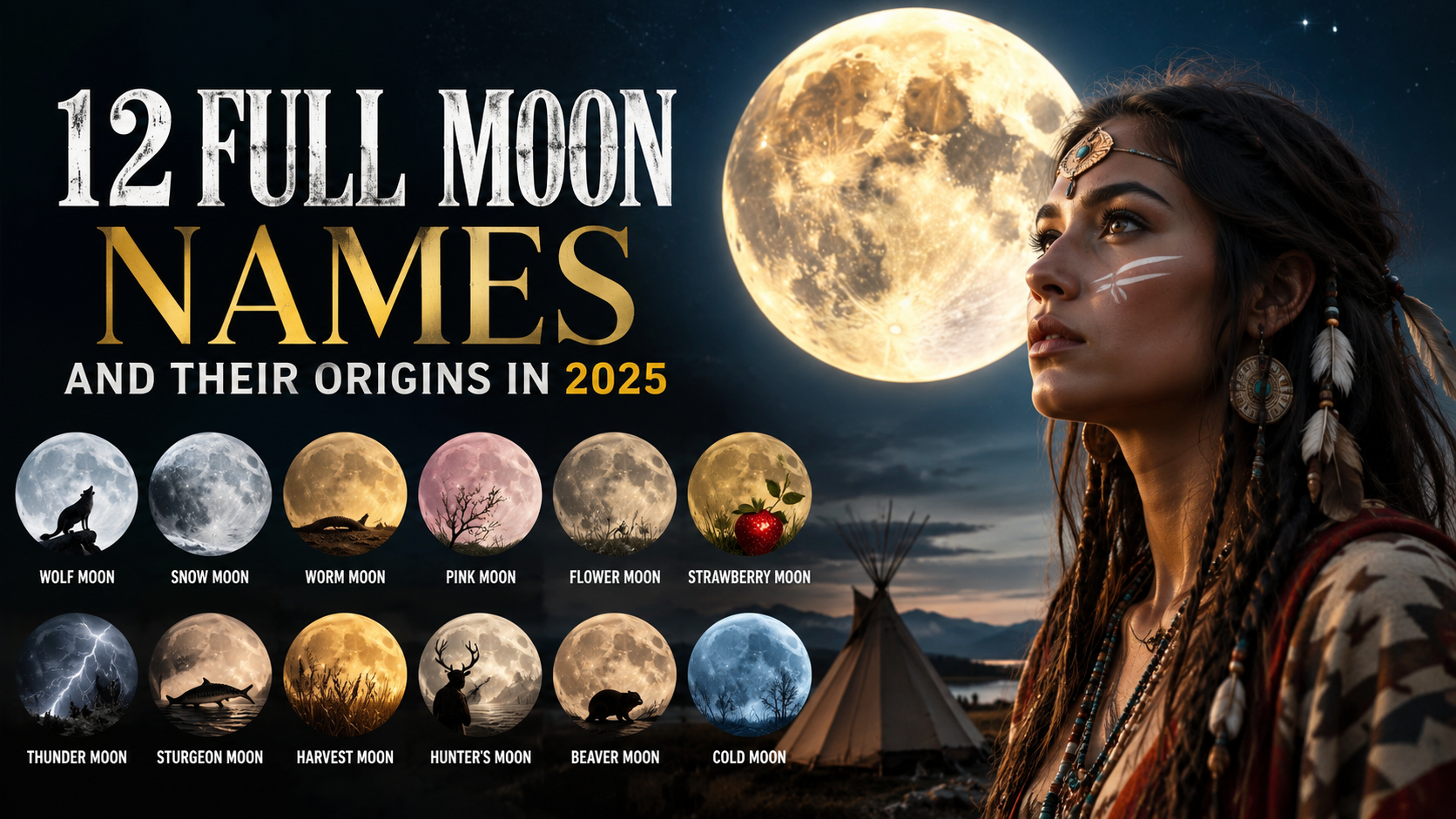
For thousands of years, people have looked to the Moon as a guide for tracking time, seasons, and natural cycles. Long before modern calendars became widespread, many cultures named each full moon to reflect the changing conditions of the year. These names often came from observations of weather patterns, animal behavior, agricultural activities, and seasonal events that were important to daily life.
Today, the traditional names for the full moons remain popular, offering a fascinating connection to history and nature. While different cultures have developed their own lunar naming traditions, many of the names commonly used in North America are derived from Indigenous knowledge, colonial-era farming practices, and longstanding folklore.
In 2025, skywatchers around the world had the opportunity to observe each full moon while reflecting on the rich history behind its name. Here are the 12 traditional full moon names of 2025 and the fascinating origins that continue to make them meaningful today.
January: The Wolf Moon
The first full moon of the year is traditionally known as the Wolf Moon.
This name is often linked to the winter months when wolves were believed to be more frequently heard howling near settlements. During cold weather and food shortages, wolf calls may have been especially noticeable in the quiet winter landscape.
Although modern research suggests wolves howl primarily to communicate with their pack rather than because of hunger, the image of wolves calling beneath a bright winter moon has endured for generations.
The Wolf Moon symbolizes resilience, survival, and the harsh beauty of midwinter.
February: The Snow Moon
February’s full moon is commonly called the Snow Moon.
In many northern regions, February historically brought some of the year’s heaviest snowfall. Communities relied heavily on weather observations, and naming the moon after seasonal conditions helped people mark the progression of the year.
The Snow Moon reflects a period when winter often reaches its peak, covering landscapes in snow and creating challenging conditions for travel and daily life.
The name serves as a reminder of the close relationship between people and the natural world before modern forecasting existed.
March: The Worm Moon
The Worm Moon marks the transition from winter to spring.
As temperatures begin to rise, the ground starts to thaw, allowing earthworms and other small creatures to become active again. Their return signals the gradual awakening of ecosystems after the cold winter months.
Some historians also associate the name with beetle larvae emerging from tree bark as warmer weather returns.
Either way, the Worm Moon represents renewal, growth, and the first signs of spring’s arrival.
April: The Pink Moon
Despite its colorful name, the Pink Moon does not actually appear pink.
The name comes from a wildflower known as creeping phlox, which blooms in shades of pink during early spring across parts of North America. These flowers are often among the first vibrant signs of the changing season.
The Pink Moon celebrates nature’s reawakening and the return of colorful landscapes after winter’s gray tones.
Its name has become one of the most recognizable and beloved in the lunar calendar.
May: The Flower Moon
As spring reaches full bloom, May’s full moon is known as the Flower Moon.
The origin is easy to understand: many regions experience an abundance of blooming flowers during this time of year. Gardens, meadows, and forests become filled with color as plants take advantage of warmer temperatures and longer days.
The Flower Moon symbolizes abundance, beauty, and the flourishing of life throughout the natural world.
For many people, it marks one of the most vibrant periods of the year.
June: The Strawberry Moon
June’s full moon carries the charming name Strawberry Moon.
The title originates from Indigenous communities that associated this period with the harvesting of wild strawberries. The fruit’s relatively short harvesting season made it an important seasonal marker.
Although the moon itself does not resemble a strawberry, the name reflects the significance of local food sources and agricultural timing.
The Strawberry Moon serves as a reminder of the close connection between seasonal cycles and traditional harvesting practices.
July: The Buck Moon
The full moon of July is known as the Buck Moon.
This name comes from the time of year when male deer, or bucks, begin growing new antlers. During summer, antlers develop rapidly, eventually becoming one of the animal’s most distinctive features.
For communities that closely observed wildlife, this annual process provided a useful indicator of seasonal change.
The Buck Moon highlights the role of animal behavior in shaping traditional calendars and cultural knowledge.
August: The Sturgeon Moon
August’s full moon is traditionally called the Sturgeon Moon.
The name is associated with large sturgeon fish that were historically abundant in certain lakes and rivers during late summer. These ancient fish were important food resources for many communities and became linked with this time of year.
Sturgeon are among the oldest surviving fish species, having existed for millions of years.
The Sturgeon Moon reflects both seasonal abundance and the enduring relationship between people and aquatic ecosystems.
September: The Harvest Moon
Perhaps the most famous full moon name is the Harvest Moon.
Unlike most lunar names, the Harvest Moon is tied to timing rather than a specific month. It refers to the full moon occurring closest to the autumnal equinox.
Historically, this moon provided farmers with additional evening light during harvest season. The bright moonlight allowed work to continue later into the night, helping communities gather crops before colder weather arrived.
Its practical importance made the Harvest Moon one of the most celebrated moons of the year.
October: The Hunter’s Moon
Following the Harvest Moon comes the Hunter’s Moon.
After crops had been harvested, fields were more open, making it easier to spot animals. This period was often associated with hunting and preparing food supplies for the coming winter.
The Hunter’s Moon provided valuable illumination during evenings when people were actively gathering resources.
Its name reflects the importance of planning ahead and ensuring communities were prepared for colder months.
November: The Beaver Moon
November’s full moon is known as the Beaver Moon.
Several explanations exist for this name. One popular interpretation links it to the period when beavers actively prepare their lodges and food caches for winter. Another suggests it reflects a traditional time for setting beaver traps before waterways froze.
Regardless of its precise origin, the Beaver Moon highlights the importance of observing animal behavior and seasonal changes.
It serves as a reminder of nature’s preparations for winter.
December: The Cold Moon
The final full moon of the year is called the Cold Moon.
As winter takes hold across much of the Northern Hemisphere, temperatures often drop significantly. Long nights and shorter days characterize this season, making the name particularly fitting.
The Cold Moon reflects the arrival of winter’s harshest conditions and the transition toward a new year.
Its simple yet powerful name captures the essence of the season and the enduring influence of nature on traditional calendars.
Why Full Moon Names Endure
The continued popularity of full moon names reflects humanity’s long-standing fascination with the night sky.
These names offer more than just labels for lunar events. They preserve historical knowledge, cultural traditions, and observations about the natural world. They remind us that generations before modern technology relied on careful attention to seasonal changes and celestial cycles.
Each name tells a story about how people interacted with their environment and adapted to the rhythms of nature.
Different Cultures, Different Moon Names
It is important to note that full moon naming traditions vary widely across cultures.
Indigenous communities throughout North America developed numerous regional names based on local environments and seasonal events. Other cultures around the world have their own lunar traditions, reflecting different climates, agricultural practices, and beliefs.
The names commonly used today represent only a portion of the rich diversity of lunar traditions that exist globally.
Exploring these different perspectives provides a deeper appreciation for the many ways humans have connected with the Moon throughout history.
The Moon’s Continuing Influence
Even in an age of smartphones and digital calendars, the Moon continues to capture human imagination.
Photographers plan around full moons, astronomers track lunar phases, and countless people still pause to admire a bright moon rising above the horizon. The traditional names add an extra layer of meaning, transforming a routine astronomical event into a connection with centuries of history.
They remind us that while technology has changed how we live, our fascination with the sky remains remarkably consistent.
Final Thoughts
The 12 full moon names of 2025 offer a fascinating glimpse into humanity’s relationship with nature, timekeeping, and the changing seasons. From the icy Wolf Moon of January to the Cold Moon of December, each name reflects observations that helped communities understand and navigate the world around them.
These traditional lunar names continue to inspire curiosity because they blend astronomy, history, folklore, and environmental awareness into a single enduring tradition. They serve as reminders that even something as familiar as the full moon carries stories passed down through generations.
The next time a full moon rises, consider the name associated with it and the history behind that tradition. You may find that the Moon has far more to tell than its bright appearance alone.







