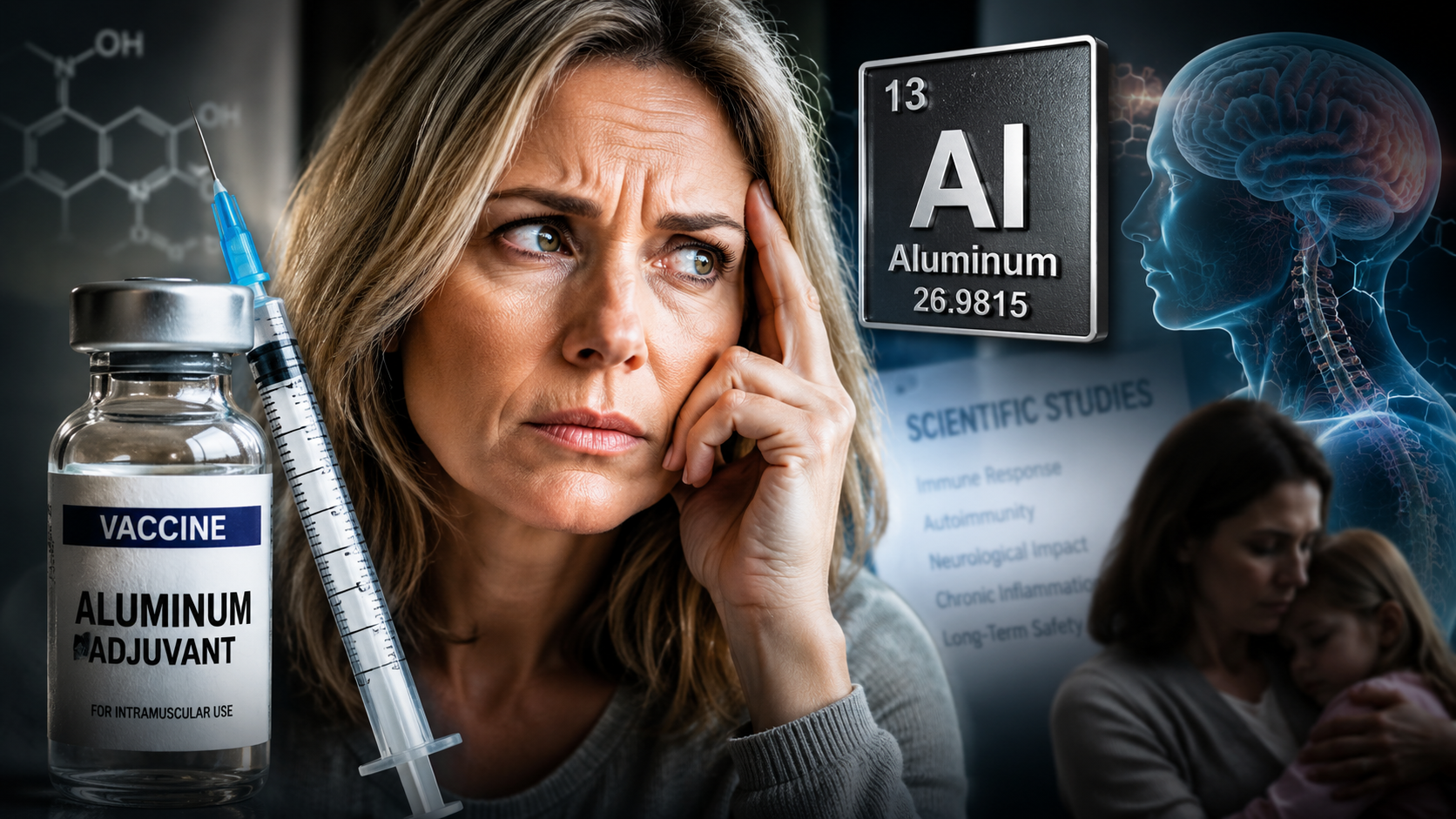
Vaccines have played a major role in reducing the spread of many serious infectious diseases, and one of the tools that has helped make certain vaccines effective is the use of adjuvants. Adjuvants are ingredients added to some vaccines to strengthen the body’s immune response, allowing the vaccine to provide better protection.
Among the most widely used adjuvants are aluminum-based compounds, often referred to as aluminum adjuvants. These substances have been included in various vaccines for decades and have been the subject of extensive scientific study. Because vaccines are administered to healthy individuals—including children—researchers have devoted significant effort to understanding both their short-term and long-term safety.
While aluminum adjuvants continue to be discussed in scientific and public health circles, a large body of research has helped clarify many questions surrounding their effects on the human body. Here are eight important scientific findings that have shaped current understanding of aluminum adjuvants and long-term health.
1. Aluminum Adjuvants Have Been Studied for Decades
One of the most important facts about aluminum adjuvants is that they are not a recent addition to medicine.
Aluminum-containing adjuvants have been used in certain vaccines since the 1930s. Over the course of many decades, researchers, regulatory agencies, healthcare organizations, and vaccine manufacturers have accumulated a substantial amount of data regarding their safety and effectiveness.
This long history provides scientists with the opportunity to evaluate outcomes across multiple generations and large populations. Few medical products have been observed over such an extended period of time.
The lengthy record of use has become an important source of information when assessing potential long-term effects.
2. Aluminum Helps Strengthen the Immune Response
Researchers originally became interested in aluminum compounds because of their ability to improve vaccine performance.
Aluminum adjuvants work by helping the immune system recognize vaccine components more effectively. This enhanced response can lead to stronger and longer-lasting immune protection.
Without adjuvants, some vaccines may not stimulate sufficient immunity or may require larger quantities of antigen to achieve the same level of effectiveness.
Scientists continue to study the precise mechanisms involved, but decades of research indicate that aluminum adjuvants help promote a more robust immune response, which is why they remain useful in certain vaccines.
3. The Body Is Regularly Exposed to Aluminum
A common point of discussion involves the fact that aluminum is naturally present in the environment.
People are exposed to small amounts of aluminum through food, drinking water, air, and various consumer products. In fact, dietary exposure generally exceeds the amount received from vaccines over time.
Scientific studies have examined how the body processes aluminum from different sources. Most absorbed aluminum is eliminated through the kidneys, while only a small portion remains in the body for longer periods.
Researchers emphasize that exposure alone does not determine health effects; the amount, route of exposure, and biological handling of a substance all play important roles.
4. Extensive Safety Monitoring Has Not Found Evidence of Widespread Long-Term Harm
One of the most significant findings from vaccine safety research is that large-scale monitoring programs have not identified evidence that aluminum adjuvants cause widespread long-term health problems in the general population.
National and international health agencies continuously review safety data from clinical trials, post-marketing surveillance systems, epidemiological studies, and scientific investigations.
These reviews have generally concluded that approved vaccines containing aluminum adjuvants have favorable safety profiles when used as recommended.
Researchers continue to monitor outcomes because ongoing evaluation is a fundamental part of vaccine safety science, but current evidence has not demonstrated broad long-term health risks attributable to aluminum adjuvants in approved vaccines.
5. Local Reactions Are the Most Common Side Effects
Scientific studies consistently show that the most frequently reported effects associated with aluminum-containing vaccines occur at the injection site.
These reactions may include temporary soreness, redness, swelling, or tenderness. Such responses are generally considered signs that the immune system is responding to the vaccine.
In some cases, small lumps or nodules can develop near the injection site and may persist for a period of time before gradually resolving.
Researchers have extensively documented these local reactions, which are typically mild compared with the diseases vaccines are designed to prevent.
6. Scientists Continue to Study How Aluminum Moves Through the Body
Although aluminum adjuvants have been studied for decades, researchers continue investigating how they behave after administration.
Modern technologies allow scientists to track aluminum-containing particles with increasing precision. Studies examine how aluminum is distributed, processed, transported, and eventually eliminated from the body.
This ongoing work helps refine scientific understanding and contributes to improvements in vaccine design and safety assessment.
The fact that research continues does not necessarily indicate a known problem; rather, it reflects the scientific community’s commitment to continually improving knowledge and maintaining public confidence in medical products.
7. Certain Medical Conditions Require Special Consideration
Researchers recognize that not all individuals process substances in exactly the same way.
For example, people with severe kidney dysfunction may have reduced ability to eliminate aluminum from the body. Because of this, scientists have explored how different health conditions might influence aluminum handling.
These investigations help healthcare professionals make informed recommendations for specific patient populations and contribute to the development of safety guidelines.
Understanding how biological differences affect responses remains an important area of medical research.
8. Ongoing Research Supports Continuous Improvement in Vaccine Science
Perhaps the most important finding is that scientific inquiry into aluminum adjuvants has never stopped.
Researchers continue exploring alternative adjuvants, new vaccine technologies, and improved formulations that may further enhance effectiveness and safety. Modern vaccine development increasingly benefits from advances in immunology, molecular biology, and materials science.
The goal is not only to maintain high safety standards but also to create next-generation vaccines that offer strong protection with the best possible balance of benefits and risks.
This commitment to continuous improvement reflects the broader scientific approach to public health: evidence is regularly reviewed, new data are incorporated, and recommendations evolve as knowledge advances.
Why Aluminum Adjuvants Remain a Topic of Research
The study of vaccine ingredients is an important part of maintaining trust in healthcare systems.
Scientists recognize that vaccines are administered to large populations, often beginning in infancy. As a result, even rare outcomes warrant careful investigation.
Research into aluminum adjuvants continues because long-term monitoring is a cornerstone of responsible medical practice. Ongoing studies allow researchers to identify trends, evaluate new evidence, and address emerging questions.
This process helps ensure that vaccine recommendations remain grounded in the best available science.
Understanding Risk in Context
Discussions about aluminum adjuvants often highlight the importance of evaluating risk within a broader context.
Every medical intervention involves weighing potential risks against expected benefits. Public health experts assess not only the safety of vaccine ingredients but also the dangers posed by the diseases vaccines help prevent.
When evaluating scientific evidence, researchers consider factors such as exposure levels, biological mechanisms, population data, and reproducibility of findings.
This comprehensive approach helps provide a more accurate picture than focusing on a single study or isolated observation.
The Future of Adjuvant Research
Scientists continue exploring new ways to improve vaccine performance.
Researchers are developing innovative adjuvants designed to stimulate specific immune responses, reduce required doses, and improve protection against challenging diseases. Some newer technologies may complement or eventually replace traditional adjuvants in certain applications.
At the same time, aluminum adjuvants remain valuable reference points because of their long history of use and extensive safety data.
Future discoveries will likely build upon decades of knowledge while incorporating new scientific tools and techniques.
Final Thoughts
Aluminum adjuvants have been part of vaccine science for nearly a century and remain among the most extensively studied vaccine components. Research has shown that they help strengthen immune responses, have a long record of use, and continue to be monitored through rigorous scientific and regulatory processes.
The eight findings discussed here illustrate how scientists evaluate questions about long-term health effects through ongoing research, large-scale safety monitoring, and continual review of emerging evidence. While questions and investigations continue—as they do with many areas of medicine—the current body of research has provided substantial information about how aluminum adjuvants function and how they affect the body.
As vaccine science advances, continued research will help refine understanding, improve formulations, and ensure that public health decisions remain guided by the strongest available evidence.







