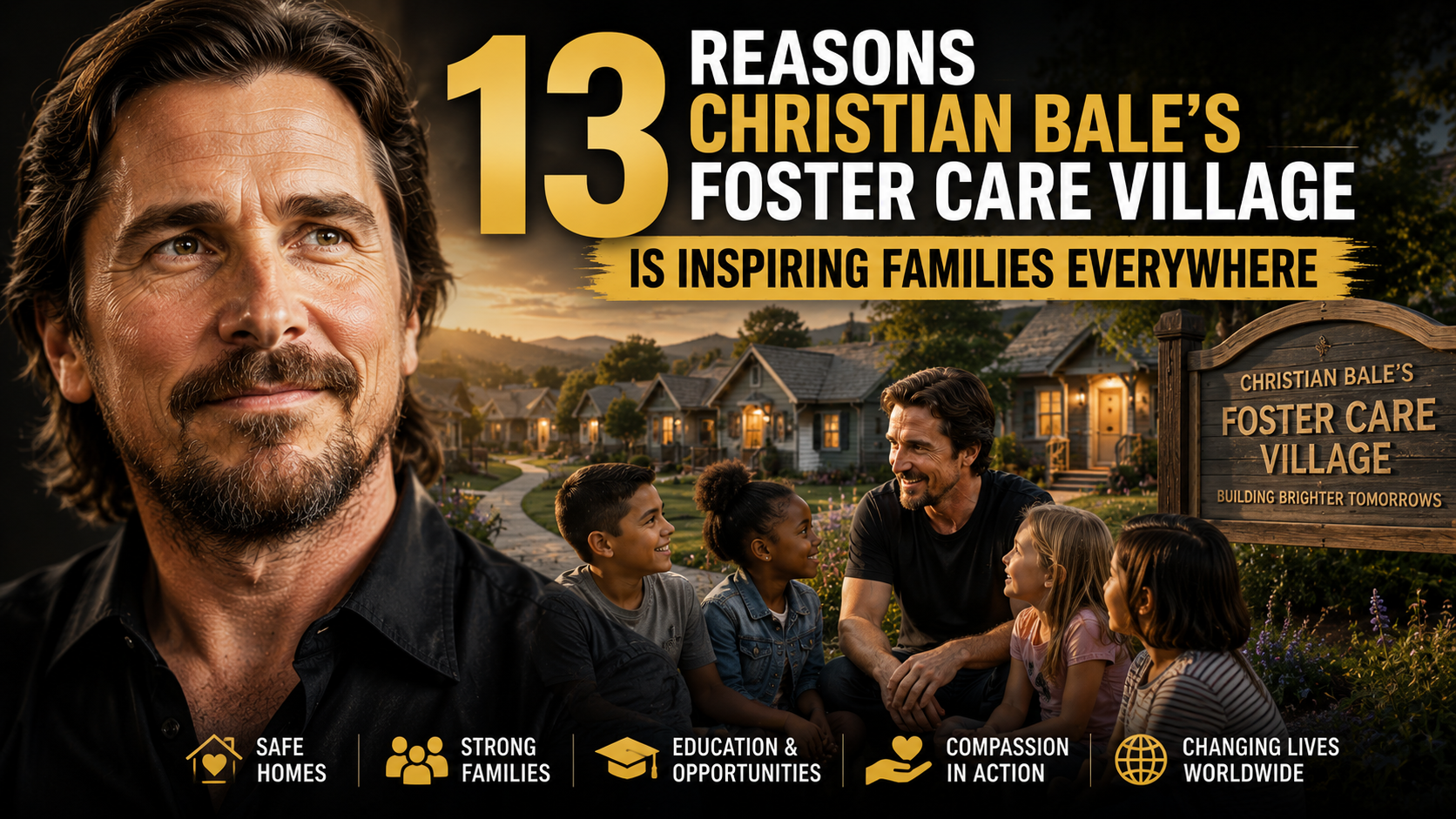
When people think of celebrities making headlines, they often picture movie premieres, award shows, or blockbuster projects. But sometimes, the most meaningful stories happen far away from the spotlight. One of those stories involves actor Christian Bale and his commitment to improving the lives of children in foster care.
Best known for his unforgettable performances on screen, Bale has also dedicated time and resources to a cause that affects thousands of vulnerable children. His support for a foster care village—a community designed to keep siblings together while providing stable, family-centered care—has captured attention for all the right reasons.
The concept goes beyond simply providing housing. It focuses on creating a nurturing environment where children can heal, build relationships, and experience the stability that every child deserves. At a time when many foster children face separation from siblings, frequent relocations, and emotional uncertainty, this model offers a different approach.
Families, educators, social workers, and child advocates have praised the initiative because it addresses some of the most difficult challenges within the foster care system. More importantly, it offers hope.
Here are 13 reasons why Christian Bale’s foster care village is inspiring families and communities around the world.
1. It Prioritizes Keeping Siblings Together
One of the most heartbreaking realities of foster care is that brothers and sisters are often separated due to placement limitations.
When children enter the foster system, they are already coping with significant emotional challenges. Losing daily contact with siblings can make those experiences even more difficult.
The foster care village model aims to prevent this separation whenever possible.
By creating housing specifically designed to accommodate sibling groups, children can remain connected to the people who know them best. These relationships often provide comfort, familiarity, and emotional support during uncertain times.
For many families, this focus on preserving sibling bonds is one of the most powerful aspects of the project.
2. It Creates a Real Sense of Community
Children thrive when they feel connected to others.
Rather than placing foster families in isolated situations, the village concept encourages community interaction and mutual support. Caregivers, children, and staff become part of a larger network working toward shared goals.
This environment helps reduce feelings of loneliness and isolation.
Children can form friendships with peers who understand similar experiences, while caregivers gain access to support systems that can help them navigate challenges.
The sense of belonging created within the community becomes an important part of the healing process.
3. It Focuses on Stability
Consistency plays a critical role in a child’s development.
Unfortunately, many foster children experience multiple placements, school changes, and disruptions that make stability difficult to achieve.
The foster care village is designed to provide a more predictable environment where children can build routines and long-term relationships.
Stable housing, familiar surroundings, and ongoing support help create a foundation for emotional growth.
Families recognize that children need more than shelter—they need security, continuity, and dependable connections.
This model seeks to provide all three.
4. It Highlights the Importance of Emotional Healing
Foster care is often discussed in terms of logistics and placement numbers, but emotional well-being is equally important.
Children entering foster care may carry trauma, grief, confusion, or anxiety.
The village approach acknowledges these realities and emphasizes healing alongside physical care.
Access to supportive adults, mental health resources, and nurturing environments helps children process difficult experiences and develop resilience.
This focus on emotional health resonates with families because it reflects a deeper understanding of children’s needs.
5. It Encourages Compassion Over Judgment
Stories about foster care sometimes suffer from misconceptions and stereotypes.
Projects like this help shift public conversations toward empathy and understanding.
By highlighting the challenges foster children face and the support they need, the initiative encourages people to view these children through a lens of compassion rather than judgment.
Families often find this message inspiring because it reminds communities that every child deserves dignity, respect, and opportunity.
Compassion has the power to change lives, and this project demonstrates that principle in action.
6. It Shows How Creative Solutions Can Address Complex Problems
The foster care system faces numerous challenges that cannot be solved through simple answers.
What makes the foster care village particularly inspiring is its innovative approach.
Instead of relying solely on traditional models, it reimagines how care can be delivered.
The idea combines housing, support services, community engagement, and family-centered care into a single environment.
This creativity demonstrates that meaningful change often begins when people are willing to think differently about longstanding problems.
Families appreciate solutions that focus on practical improvements rather than temporary fixes.
7. It Demonstrates the Power of Advocacy
One person cannot solve every challenge within the foster care system.
However, influential voices can draw attention to important issues and inspire broader action.
Christian Bale’s involvement has helped bring visibility to the needs of foster children and the importance of family preservation.
Advocacy often serves as the first step toward meaningful change.
By using his platform to support a cause rather than promote himself, Bale has encouraged more people to learn about foster care and explore ways they can help.
8. It Supports Foster Parents and Caregivers
Successful foster care depends heavily on the dedication of caregivers.
Yet foster parents often face significant emotional, logistical, and financial challenges.
The village model recognizes that supporting children also means supporting the adults who care for them.
Access to nearby resources, professional assistance, and community networks can help reduce caregiver stress and improve outcomes for children.
Families understand that strong support systems benefit everyone involved.
When caregivers feel supported, they are better equipped to provide consistent and nurturing care.
9. It Emphasizes Long-Term Success
Many social programs focus primarily on immediate needs.
While emergency support is important, long-term success requires sustained attention and planning.
The foster care village model looks beyond short-term placement solutions.
It seeks to create environments where children can build confidence, pursue education, develop healthy relationships, and prepare for adulthood.
This future-oriented approach resonates with families because it focuses on lasting impact rather than temporary relief.
The goal isn’t simply helping children survive difficult circumstances—it’s helping them thrive.
10. It Raises Awareness About Foster Care Challenges
Millions of people know very little about the realities of foster care.
As a result, important issues often receive less attention than they deserve.
High-profile initiatives help educate the public and encourage meaningful conversations.
The increased awareness generated by this project can inspire volunteerism, foster parent recruitment, donations, and policy discussions.
Families often become more engaged when they better understand the challenges facing vulnerable children.
Awareness is frequently the first step toward action.
11. It Reinforces the Importance of Family Connections
Human relationships play a critical role in child development.
The foster care village recognizes that maintaining healthy family connections whenever possible can support emotional well-being.
Whether through sibling relationships, foster families, mentors, or supportive adults, meaningful connections help children feel valued and secure.
Families are inspired by this emphasis because it reflects a universal truth: strong relationships provide the foundation for growth and resilience.
Every child deserves people who care about them and remain present in their lives.
12. It Offers Hope During Difficult Circumstances
Perhaps the most powerful aspect of the project is the hope it represents.
Many foster children have experienced situations beyond their control. They may feel uncertain about the future or disconnected from the stability that other children take for granted.
A supportive community can help restore confidence and optimism.
The village model demonstrates that difficult beginnings do not have to determine a child’s future.
Families connect deeply with this message because hope is often the starting point for healing and transformation.
13. It Inspires Others to Get Involved
One inspiring project can motivate countless others.
The foster care village serves as a reminder that meaningful change often begins when people choose to act.
Not everyone can build a community for foster children, but everyone can contribute in some way.
Some people become foster parents. Others volunteer, donate, mentor young people, or advocate for better policies.
The initiative encourages individuals and communities to consider how they can make a positive difference.
That ripple effect may become one of its most important achievements.
Why This Approach Resonates With Families
Families understand the importance of love, stability, and belonging.
The foster care village embodies these values in a practical and compassionate way.
Rather than focusing solely on institutional solutions, it centers the needs of children and the relationships that help them flourish.
Parents recognize how essential consistent support is for healthy development. They understand the comfort siblings provide one another and the importance of growing up in a nurturing environment.
Because the project reflects these universal family values, it resonates far beyond the foster care community.
The Bigger Lesson Behind the Village
At its core, the foster care village represents a broader lesson about how communities can respond to social challenges.
Meaningful change often happens when people focus on human needs rather than bureaucratic processes.
Children need more than housing. They need relationships.
They need encouragement.
They need opportunities.
Most importantly, they need environments where they feel safe, valued, and supported.
The village model seeks to provide those essentials, demonstrating what can happen when compassion and innovation work together.
Final Thoughts
Christian Bale’s foster care village has inspired families around the world because it offers a hopeful vision of what child-centered care can look like.
By prioritizing sibling connections, emotional healing, community support, caregiver resources, and long-term success, the initiative addresses some of the most pressing challenges within the foster care system.
More than anything, it reminds us that every child deserves stability, belonging, and the chance to build a brighter future.
The project’s growing influence proves that when people come together with empathy and purpose, remarkable things can happen. And for countless children and families, that message is every bit as powerful as the village itself.







