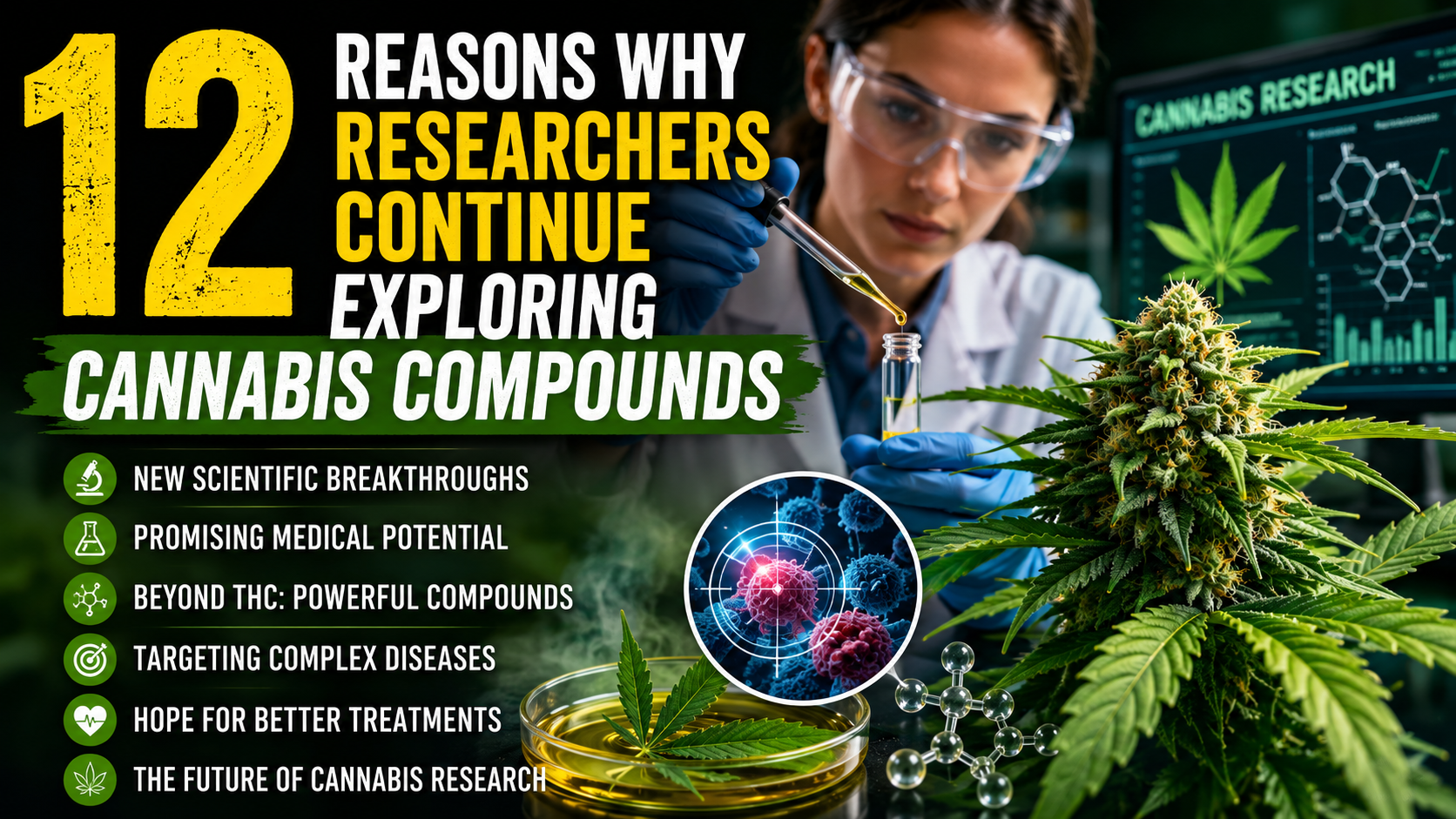
The scientific interest surrounding cannabis has grown significantly over the past two decades. Once studied mainly for its psychoactive effects, cannabis is now being examined for a much broader range of potential medical applications. Researchers across the world are investigating how certain compounds found in the plant interact with the human body and whether they may contribute to future treatments for various health conditions.
One area that has attracted particular attention is cancer research. Laboratory studies have shown that some non-psychoactive cannabis compounds may influence how certain cancer cells behave under controlled conditions. While these findings are still in the early stages and should not be interpreted as proof of a cancer cure, they have sparked important scientific questions that researchers continue to explore.
Here are 12 key reasons why scientists remain interested in studying cannabis compounds and their potential role in medicine.
1. Cannabis Contains Hundreds of Unique Chemical Compounds
Many people associate cannabis primarily with THC, the compound responsible for the plant’s intoxicating effects. However, cannabis contains hundreds of naturally occurring chemicals, including cannabinoids, terpenes, and flavonoids.
Among the most studied cannabinoids are:
- THC (tetrahydrocannabinol)
- CBD (cannabidiol)
- CBG (cannabigerol)
- CBC (cannabichromene)
Each compound interacts differently with the body, creating numerous possibilities for scientific investigation.
Researchers believe many of these substances remain poorly understood, making cannabis an important area of ongoing medical research.
2. Some Compounds Do Not Produce Intoxication
One reason cannabis research has expanded is that not all cannabinoids cause psychoactive effects.
CBD, for example, does not create the “high” commonly associated with marijuana. This distinction has made non-psychoactive compounds particularly attractive for medical investigation.
Scientists are interested in understanding whether these compounds can provide therapeutic benefits while minimizing unwanted side effects that might interfere with daily life.
3. The Human Body Has a Built-In Endocannabinoid System
A major breakthrough in cannabis science came with the discovery of the endocannabinoid system.
This complex biological network helps regulate numerous functions, including:
- Mood
- Appetite
- Sleep
- Memory
- Pain perception
- Immune activity
Cannabinoids can interact with receptors within this system, which may help explain why they produce such a wide range of effects.
Understanding these interactions remains one of the most important goals of current research.
4. Laboratory Studies Have Produced Intriguing Results
In laboratory settings, researchers have observed that certain cannabis-derived compounds can influence cell behavior.
Some studies have reported effects on:
- Cell growth
- Inflammation
- Cell signaling
- Programmed cell death
These findings are particularly interesting because they suggest cannabinoids may affect biological processes involved in various diseases.
However, laboratory findings do not automatically translate into effective treatments for humans. Much more research is required before any conclusions can be drawn about clinical benefits.
5. Researchers Are Looking for New Approaches to Cancer Treatment
Cancer remains one of the world’s leading health challenges.
Although significant advances have been made in surgery, chemotherapy, radiation therapy, targeted therapies, and immunotherapy, researchers continue searching for additional treatment options.
The possibility that certain plant-derived compounds could influence cancer-related pathways has encouraged scientists to investigate cannabis more closely.
Importantly, researchers are studying these compounds as potential additions to existing therapies—not replacements for proven medical treatments.
6. Cannabis May Influence Inflammatory Responses
Inflammation plays a role in many chronic diseases.
Scientists have discovered that cannabinoids can interact with immune pathways involved in inflammatory processes. This has led researchers to explore whether certain compounds may have applications in conditions where inflammation contributes to symptoms.
Because inflammation affects numerous bodily systems, understanding how cannabinoids influence these responses remains a high priority.
7. Interest Extends Beyond Cancer Research
Although cancer-related studies often receive media attention, cannabis research covers many other areas of medicine.
Scientists are exploring potential applications involving:
- Chronic pain
- Neurological disorders
- Sleep disturbances
- Anxiety-related conditions
- Seizure disorders
- Inflammatory diseases
This broad scope helps explain why cannabis continues to be a major focus of medical research worldwide.
8. Personalized Medicine Is Becoming More Important
Modern medicine increasingly recognizes that patients respond differently to treatments.
Factors such as genetics, age, lifestyle, and overall health can influence how therapies work.
Researchers are examining whether cannabinoid-based treatments could eventually become part of personalized treatment approaches tailored to individual biological characteristics.
This area remains highly experimental but reflects a growing trend in healthcare.
9. Scientists Want Better Understanding of Safety Profiles
Before any medical treatment becomes widely accepted, researchers must carefully evaluate safety.
Cannabis compounds are no exception.
Current studies focus on questions such as:
- Appropriate dosing
- Drug interactions
- Long-term effects
- Potential risks
- Patient-specific responses
Understanding these factors is essential before broader clinical applications can be considered.
10. Advances in Technology Are Accelerating Research
Modern scientific tools allow researchers to study cannabis compounds with far greater precision than was possible in previous decades.
Advanced technologies now help scientists:
- Analyze molecular structures
- Track cellular responses
- Study genetic interactions
- Identify biological pathways
- Evaluate treatment outcomes
These technological improvements are helping researchers generate more reliable data and better understand how cannabinoids function inside the body.
11. Public Interest Continues to Grow
As awareness of medical cannabis increases, public interest has expanded dramatically.
Patients, healthcare providers, policymakers, and researchers all want clearer answers regarding potential benefits and limitations.
This demand for evidence encourages additional scientific investigation.
Researchers recognize the importance of separating scientifically supported findings from misinformation, speculation, and exaggerated claims.
Reliable research helps ensure public discussions remain grounded in evidence rather than assumptions.
12. Many Important Questions Remain Unanswered
Perhaps the biggest reason researchers continue exploring cannabis compounds is that there is still so much to learn.
Scientists are actively investigating questions such as:
- Which compounds have the greatest medical potential?
- How do cannabinoids interact with different diseases?
- Which patients might benefit most?
- What are the long-term effects of treatment?
- How can therapies be optimized safely?
The answers to these questions could shape future medical research for years to come.
Why Scientific Caution Matters
Exciting laboratory findings often generate headlines, particularly when they involve serious diseases such as cancer.
However, it’s important to understand that laboratory studies represent only the earliest stage of medical research.
Many compounds that show promise in cell cultures or animal models ultimately fail to demonstrate the same effectiveness in human clinical trials.
This does not mean the research lacks value. Instead, it highlights the importance of careful scientific evaluation before drawing conclusions.
Responsible research requires multiple stages of testing, including:
- Laboratory studies
- Animal research
- Early human trials
- Large clinical studies
- Long-term safety evaluations
Only after completing these steps can scientists determine whether a treatment is truly effective and safe.
The Future of Cannabis Research
The future of cannabis science appears increasingly sophisticated.
Researchers are moving beyond broad questions about cannabis itself and focusing on specific compounds, biological mechanisms, and targeted medical applications.
Rather than viewing cannabis as a single substance, scientists now recognize it as a complex collection of chemicals that may have very different effects depending on the compound being studied.
This more precise approach is helping researchers identify which areas deserve further investigation and which claims require stronger evidence.
Final Thoughts
The growing interest in cannabis compounds reflects a larger trend in modern medicine: the search for innovative treatments based on a deeper understanding of human biology.
Researchers continue studying cannabinoids because they interact with important systems throughout the body and may influence a variety of biological processes. Laboratory findings have raised intriguing possibilities, particularly in areas such as inflammation, pain management, neurological disorders, and cancer-related research.
At the same time, scientists emphasize the need for caution. Promising early results should not be confused with proven medical treatments. Continued research, rigorous clinical trials, and long-term safety studies remain essential before definitive conclusions can be reached.
As science advances, cannabis research will likely continue evolving, providing valuable insights into both the plant itself and the complex biological systems it affects. Whether future discoveries lead to new therapies or simply deepen our understanding of human health, the field remains one of the most closely watched areas of modern medical research.