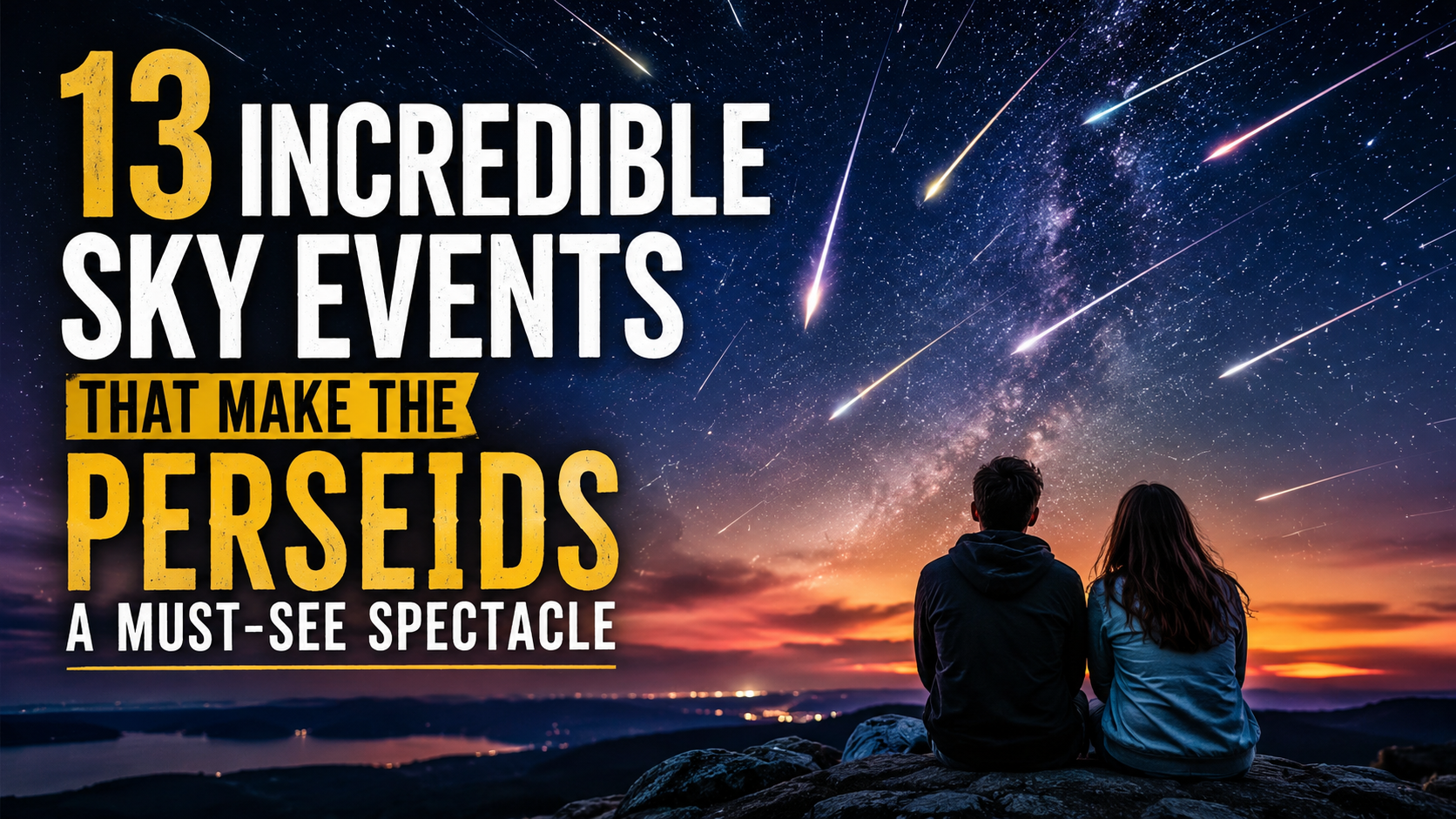
Every year, millions of people look forward to one of the most dazzling celestial displays visible from Earth: the Perseid meteor shower. Known for its bright meteors, frequent activity, and reliable appearance, the Perseids have earned a reputation as one of the world’s most beloved astronomical events.
For many skywatchers, the Perseids serve as an annual reminder of the beauty and wonder that exists beyond our planet. Whether viewed from a remote mountain, a quiet countryside field, or a backyard under dark skies, the experience can be unforgettable.
But the Perseids are more than just a collection of shooting stars. Throughout the shower, observers may witness a variety of remarkable sky events that make the spectacle even more exciting. From blazing fireballs to glowing meteor trails, these phenomena help transform an ordinary night into a memorable encounter with the cosmos.
Here are 13 incredible sky events that make the Perseid meteor shower a must-see spectacle year after year.
1. Brilliant Shooting Stars Streaking Across the Sky
The most recognizable feature of the Perseids is, of course, the meteors themselves.
As Earth passes through a stream of debris left behind by the comet Comet Swift–Tuttle, tiny particles enter the atmosphere at tremendous speeds. The resulting friction causes them to heat up and glow, producing bright streaks of light commonly called shooting stars.
Many observers can see dozens of meteors per hour during peak activity, creating a steady display that keeps eyes fixed on the sky.
2. Spectacular Fireballs
Among the most exciting Perseid sightings are fireballs.
These exceptionally bright meteors are produced by larger fragments of cometary debris. Fireballs can shine far brighter than ordinary meteors and sometimes rival the brightness of planets or even the Moon.
Their dramatic appearance often becomes the highlight of an observing session, leaving viewers talking about the experience long after the event has ended.
3. Persistent Glowing Trails
Some Perseid meteors leave behind glowing trails that linger in the atmosphere.
Known as persistent trains, these illuminated streaks can remain visible for several seconds or even minutes after the meteor itself disappears. High-altitude winds may gradually twist and distort the glowing trail, creating beautiful and constantly changing patterns.
These lingering traces add an extra layer of spectacle to the meteor shower.
4. Meteor Outbursts
Although meteor activity is usually steady, observers occasionally witness sudden bursts of increased activity.
During these periods, multiple meteors may appear within a short span of time, creating a dramatic and exciting viewing experience. Such outbursts can occur unexpectedly and often reward those who remain patient throughout the night.
Moments like these remind skywatchers that nature can still deliver surprises.
5. The Radiant in Perseus
Meteor showers appear to originate from a specific region of the sky known as the radiant.
For the Perseids, this point lies within the constellation Perseus. While meteors can streak across any part of the sky, tracing their paths backward makes them appear to converge near Perseus.
Watching the radiant rise higher during the night adds another dimension to the observing experience.
6. Stunning Milky Way Views
The Perseid meteor shower occurs during a time of year when the Milky Way is often prominently visible in dark skies.
Observers fortunate enough to escape light pollution can enjoy not only meteors but also the glowing band of our galaxy stretching across the heavens.
The combination of shooting stars and a brilliant Milky Way creates one of the most impressive natural displays visible from Earth.
7. Planetary Sightings
Depending on the year and planetary positions, Perseid observers may also spot bright planets sharing the night sky.
Planets such as Jupiter, Saturn, Mars, or Venus can appear as brilliant points of light while meteors flash overhead. These celestial neighbors provide additional points of interest during long observing sessions.
Seeing planets and meteors together helps highlight the dynamic nature of our solar system.
8. Satellite Passes
Modern skywatchers often notice satellites crossing the sky during meteor observations.
Unlike meteors, satellites move steadily without leaving bright streaks. Spotting them can be an interesting reminder of humanity’s growing presence in space.
The contrast between ancient cosmic debris and modern technology creates a unique perspective on humanity’s relationship with the heavens.
9. Occasional Meteor Colors
Not all meteors appear white.
Some Perseid meteors display shades of green, blue, yellow, orange, or even red. These colors are caused by different elements vaporizing as the particles burn up in Earth’s atmosphere.
The variation adds visual richness to the meteor shower and provides clues about the composition of the incoming debris.
For attentive observers, colorful meteors are among the most memorable sights of the event.
10. Atmospheric Glow Effects
During active meteor displays, observers may occasionally notice subtle atmospheric phenomena accompanying bright meteors.
Large fireballs can briefly illuminate the surrounding sky, clouds, or landscape. In particularly dark locations, these flashes can be surprisingly dramatic.
The effect enhances the sense that the entire sky is participating in the spectacle.
11. Unexpected Double Meteors
While relatively uncommon, observers sometimes witness two meteors appearing nearly simultaneously.
These double meteor events can occur when separate particles enter the atmosphere at nearly the same time or when fragments from a larger piece of debris travel together.
Such moments often generate excitement because of their rarity and striking appearance.
12. Long Earth-Grazing Meteors
Some Perseid meteors enter Earth’s atmosphere at very shallow angles.
Known as Earth-grazers, these meteors travel across large portions of the sky before burning out. Their extended paths can create spectacular displays lasting several seconds.
Because they cover such great distances visually, Earth-grazers are among the most impressive meteors observers can encounter.
13. The Shared Experience of Skywatching
While not a physical celestial phenomenon, one of the most remarkable aspects of the Perseids is the shared human experience they create.
Families, friends, amateur astronomers, and curious newcomers gather under the same sky to witness the event together. Across different countries and cultures, people pause to admire a display that has been observed for centuries.
This sense of connection adds emotional significance to the astronomical spectacle and helps explain why the Perseids remain so popular.
What Causes the Perseid Meteor Shower?
The Perseids occur when Earth passes through debris left behind by Comet Swift–Tuttle.
As the comet travels through the solar system, it sheds particles of dust and rock. Each August, our planet moves through this trail of material. When these particles strike Earth’s atmosphere at speeds exceeding 130,000 miles per hour (about 210,000 kilometers per hour), they heat up and create the bright streaks visible from the ground.
Most of these particles are surprisingly small, often no larger than grains of sand, yet they produce spectacular displays because of their tremendous velocity.
Why the Perseids Are So Popular
Several factors contribute to the Perseids’ reputation as one of the best meteor showers of the year:
- High meteor rates.
- Frequent bright fireballs.
- Reliable annual activity.
- Comfortable summer viewing conditions.
- Easy naked-eye observation.
- Long history of observation.
- Visibility across much of the Northern Hemisphere.
These advantages make the Perseids especially appealing to both beginners and experienced skywatchers.
Tips for the Best Viewing Experience
To maximize the chances of seeing Perseid meteors, consider the following suggestions:
Choose a Dark Location
Artificial lighting can greatly reduce visibility. Rural locations generally provide the best conditions.
Allow Time for Dark Adaptation
Eyes typically require 20 to 30 minutes to fully adjust to darkness.
Look at a Wide Area of Sky
Meteors can appear almost anywhere, so maintaining a broad field of view improves the likelihood of spotting them.
Stay Comfortable
Bring a reclining chair, blanket, or sleeping bag to make extended observation more enjoyable.
Be Patient
Meteor activity naturally fluctuates. The longer you observe, the greater your chances of witnessing memorable events.
The Perseids and Scientific Research
Although the Perseids are popular among casual observers, they also provide valuable opportunities for scientific study.
Researchers use meteor observations to investigate cometary debris, atmospheric interactions, and the composition of small objects within the solar system. Advanced cameras, radar systems, and other instruments help scientists gather data that improves understanding of these fascinating phenomena.
The shower therefore contributes to both public enjoyment and scientific discovery.
Final Thoughts
The Perseid meteor shower remains one of the most celebrated astronomical events on Earth for good reason. Beyond its famous shooting stars, it offers a rich variety of sky phenomena, including fireballs, glowing trails, Earth-grazing meteors, colorful streaks, and breathtaking views of the Milky Way.
These 13 incredible sky events demonstrate why countless people make time each year to observe the Perseids. The combination of beauty, accessibility, and wonder creates an experience that appeals to everyone from first-time stargazers to seasoned astronomers.
Whether you witness a single brilliant fireball or spend hours watching dozens of meteors cross the heavens, the Perseids provide a powerful reminder that some of the universe’s most extraordinary spectacles are visible simply by stepping outside and looking up.







