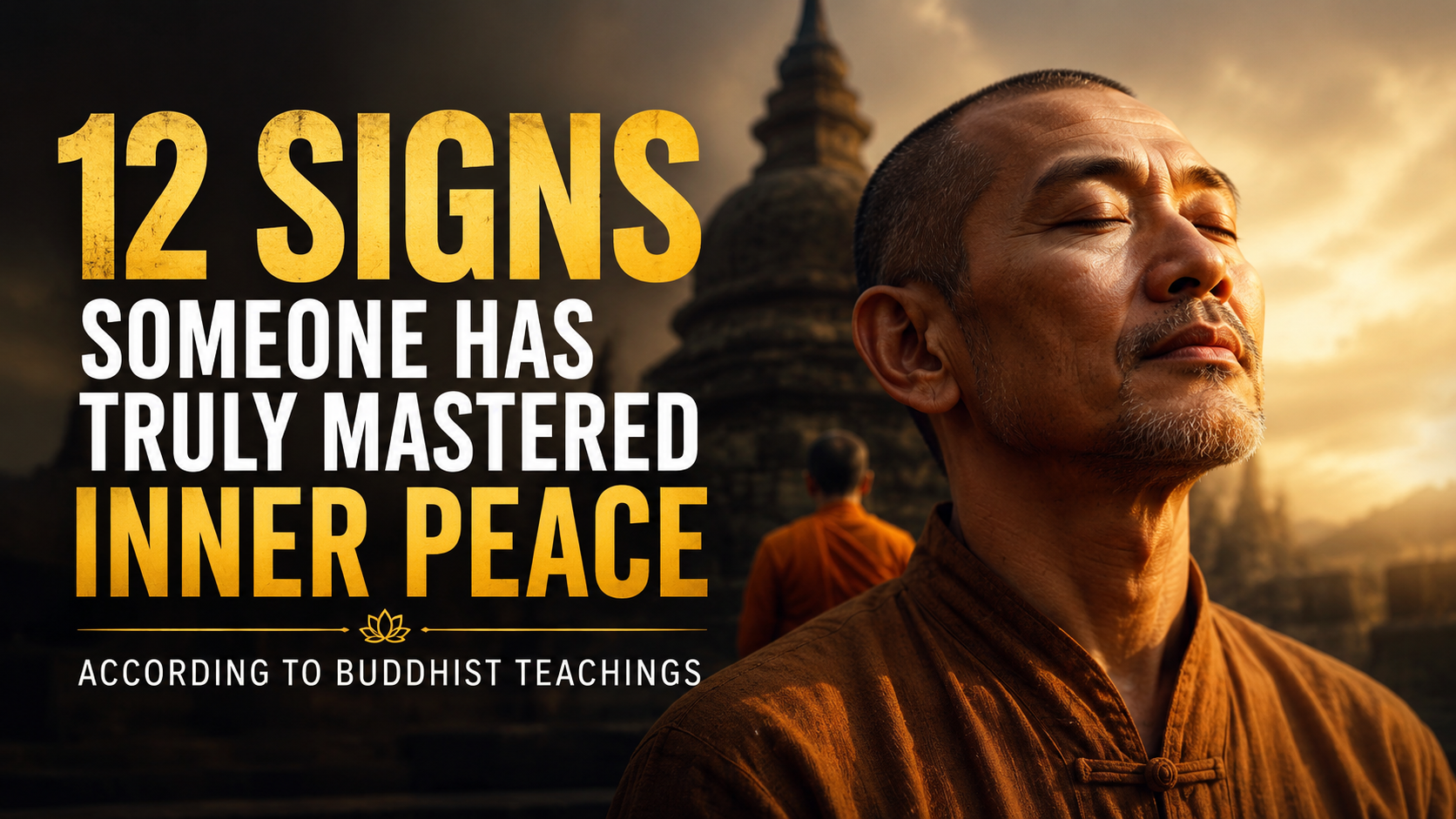
In a world filled with stress, noise, competition, and endless distractions, inner peace has become one of the rarest qualities a person can possess. Many people spend their entire lives chasing happiness through money, status, relationships, or success, only to discover that lasting peace never comes from external things.
Buddhist teachings have explored the nature of peace and human suffering for thousands of years. Rather than focusing on temporary pleasure, Buddhism teaches people how to develop a calm and balanced mind regardless of what is happening around them.
True inner peace does not mean living without problems. It means remaining emotionally steady, mentally clear, and spiritually grounded even during difficult moments.
According to Buddhist philosophy, inner peace is something that must be cultivated from within through awareness, compassion, acceptance, and self-discipline. People who have genuinely mastered this state often display certain behaviors and attitudes that quietly set them apart from others.
Here are 12 powerful signs someone has truly mastered inner peace, according to Buddhist teachings.
1. They Don’t React to Everything
One of the clearest signs of inner peace is emotional control.
People who are deeply at peace do not feel the need to react impulsively to every criticism, disagreement, or inconvenience. Instead of allowing emotions to take over, they pause, observe, and respond thoughtfully.
Buddhist teachings emphasize mindfulness — the practice of becoming aware of thoughts and emotions without immediately acting on them. Someone with inner peace understands that anger, frustration, and fear are temporary mental states.
This doesn’t mean they never feel emotions. It simply means emotions no longer control their behavior.
While others may become defensive or aggressive during stressful situations, peaceful individuals remain calm and composed. Their stability often influences the people around them as well.
2. They Are Comfortable Being Alone
Many people fear silence and loneliness because they are uncomfortable with their own thoughts. A person who has mastered inner peace, however, does not depend on constant entertainment, validation, or social attention.
They enjoy solitude because they have built a healthy relationship with themselves.
In Buddhism, self-awareness and meditation are important practices for understanding the mind. People who are internally balanced often use quiet moments to reflect, recharge, and reconnect with themselves.
They do not constantly seek distractions to escape reality. Instead, they embrace stillness and find comfort in simplicity.
Being alone no longer feels empty to them — it feels peaceful.
3. They Let Go of the Need to Control Everything
Life is unpredictable. No matter how carefully someone plans, things will eventually go wrong.
People without inner peace often struggle because they try to control every outcome, every person, and every situation. Buddhist teachings remind us that attachment and control are major sources of suffering.
Someone who has mastered peace understands this deeply.
They know they cannot control everything, so they focus their energy on what they can control: their mindset, actions, and choices.
Rather than resisting change, they learn to adapt to it gracefully. They accept uncertainty as a natural part of life instead of fighting against it.
This acceptance gives them a sense of emotional freedom that many people never experience.
4. They Don’t Constantly Seek Validation
People who lack inner peace often rely heavily on external approval. They want others to praise them, admire them, or confirm their worth.
But someone who is truly at peace no longer bases their self-esteem on public opinion.
Buddhist teachings encourage detachment from ego and identity. Peaceful people understand that chasing validation creates endless emotional dependence.
They do not feel the need to prove themselves all the time. They are secure enough to live authentically without constantly seeking recognition.
This quiet confidence allows them to make decisions based on values rather than popularity.
5. They Forgive More Easily
Holding onto resentment is emotionally exhausting.
People who have cultivated inner peace understand that anger and bitterness often hurt the person carrying them more than the person who caused the pain.
Forgiveness does not mean excusing harmful behavior or pretending nothing happened. Instead, it means choosing not to let pain dominate the mind forever.
Buddhism teaches compassion not only for others, but also for oneself. Peaceful individuals recognize that humans are imperfect and everyone makes mistakes.
Because of this understanding, they are less likely to stay trapped in cycles of hatred, revenge, or emotional toxicity.
They choose healing over emotional suffering.
6. They Live in the Present Moment
One of the biggest causes of stress is mental time travel.
People constantly replay painful memories from the past or worry endlessly about the future. As a result, they rarely experience the present moment fully.
Buddhist teachings place enormous importance on mindfulness and present awareness. Someone who has mastered inner peace pays attention to what is happening right now instead of mentally living somewhere else.
They appreciate simple experiences — a conversation, a walk outside, a meal, or even a moment of silence.
Because their minds are less cluttered with regret and anxiety, they experience life more deeply and more calmly.
7. They Compare Themselves Less to Others
Comparison destroys peace.
In modern society, people are constantly exposed to other people’s achievements, lifestyles, and appearances, especially through social media. This often creates feelings of inadequacy and dissatisfaction.
A peaceful person understands that everyone is on a different journey.
Instead of obsessing over what others have, they focus on personal growth and gratitude. Buddhist teachings encourage non-attachment and contentment, which help reduce jealousy and insecurity.
They celebrate other people’s success without feeling threatened by it.
Their happiness comes from within, not from competing with others.
8. They Accept Imperfection
People who chase perfection often experience chronic stress and disappointment because perfection is impossible to maintain.
Those who have mastered inner peace understand that imperfection is part of being human.
Buddhist philosophy teaches acceptance of reality as it is. Peaceful individuals stop wasting energy trying to create a flawless life, flawless body, or flawless identity.
Instead, they focus on progress, learning, and growth.
They accept mistakes without collapsing into self-hatred. They recognize weaknesses without allowing them to define their entire worth.
This self-acceptance creates emotional resilience and stability.
9. They Speak With Intention
Another sign of inner peace is mindful communication.
People who are internally calm tend to avoid unnecessary gossip, drama, or hurtful language. They think carefully before speaking because they understand the power words can have.
Buddhist teachings emphasize “Right Speech,” which encourages honesty, kindness, and meaningful communication.
Peaceful people do not speak simply to dominate conversations or seek attention. They listen deeply and communicate thoughtfully.
Their words often feel calming because they come from clarity rather than emotional chaos.
10. They Don’t Need Constant Stimulation
Modern life encourages constant distraction — endless scrolling, entertainment, notifications, and noise.
Someone who has mastered inner peace does not need nonstop stimulation to feel okay.
They can sit quietly without immediately reaching for a phone or distraction. They appreciate calm environments and understand the value of mental stillness.
Buddhist practices such as meditation train the mind to become comfortable with silence and simplicity.
As a result, peaceful individuals often feel less overwhelmed by modern life than most people around them.
Their minds are not constantly racing for the next source of stimulation.
11. They Practice Compassion Naturally
Inner peace and compassion often go hand in hand.
People who are at peace internally tend to become more patient, understanding, and empathetic toward others. Because they are less consumed by ego and emotional conflict, they can genuinely care about other people’s struggles.
Buddhist teachings strongly emphasize compassion as a path toward wisdom and peace.
Peaceful people do not automatically judge others harshly. Instead, they recognize that everyone is fighting internal battles that may not be visible on the surface.
Their kindness feels genuine because it comes from emotional balance rather than obligation.
12. They Remain Calm During Difficult Times
Anyone can appear peaceful when life is easy.
The true test of inner peace appears during hardship.
People who have genuinely mastered peace do not completely fall apart when facing challenges, uncertainty, loss, or failure. While they still experience pain and sadness, they do not allow suffering to consume their entire identity.
Buddhist teachings remind us that suffering is an unavoidable part of life, but mental resistance often increases suffering unnecessarily.
Peaceful individuals accept difficult emotions without becoming trapped inside them. They trust that pain is temporary and that life constantly changes.
Their calmness during difficult moments often inspires others.
Final Thoughts
Inner peace is not something people achieve overnight. It is a lifelong practice that requires awareness, patience, discipline, and compassion.
According to Buddhist teachings, peace does not come from controlling the world around us. It comes from understanding the mind, letting go of unhealthy attachments, and learning how to remain centered regardless of external circumstances.
People who truly master inner peace often live differently from the rest of society. They react less, judge less, compare less, and appreciate life more deeply.
In a world driven by chaos and constant pressure, their calm presence becomes incredibly powerful.
The good news is that inner peace is not reserved for monks or spiritual masters. Small daily habits — mindfulness, gratitude, forgiveness, self-awareness, and compassion — can slowly help anyone move closer to a calmer and more balanced life.
And sometimes, the most powerful transformation begins not by changing the world around you, but by changing the relationship you have with your own mind.







