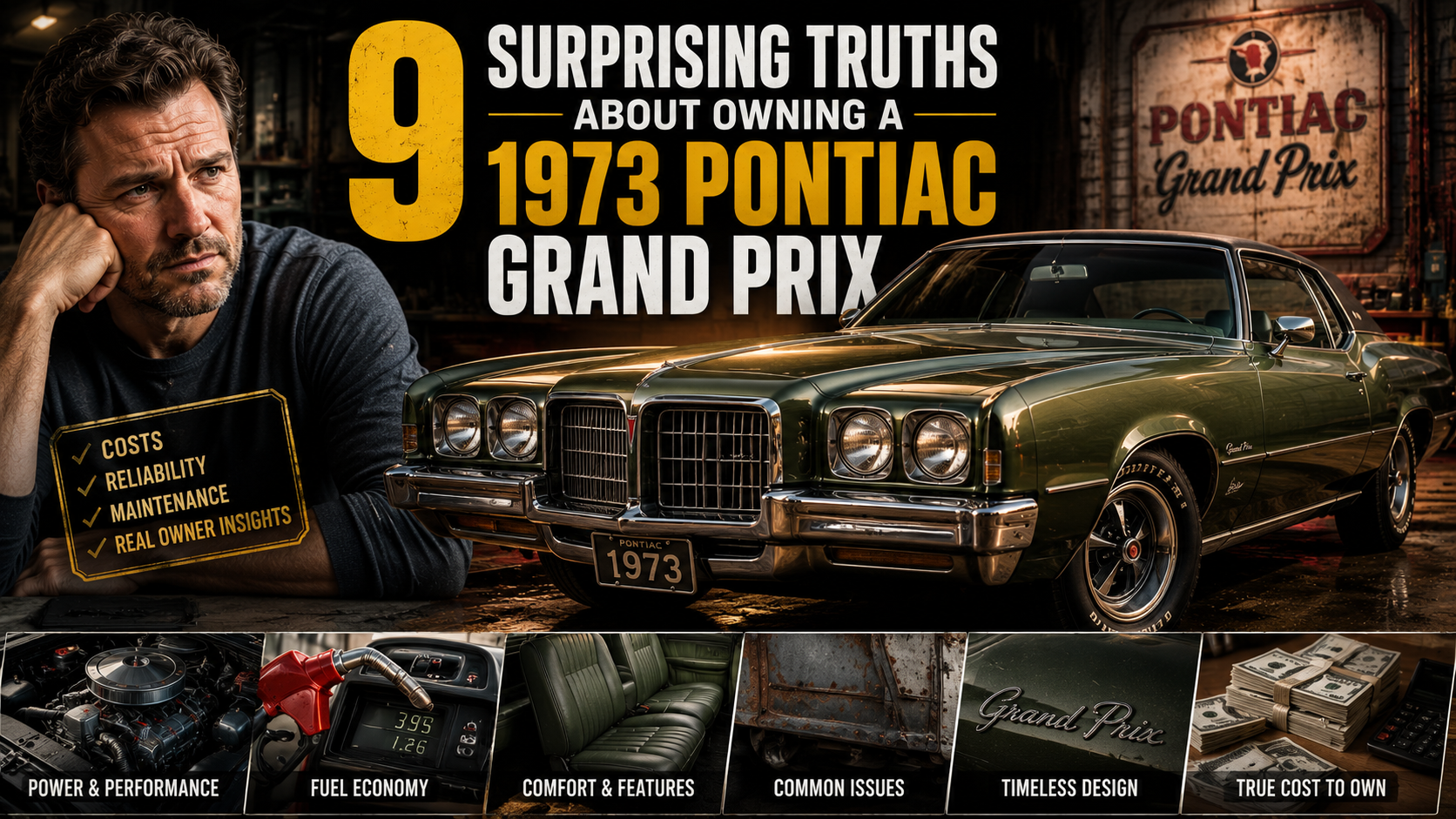
For classic car enthusiasts, few vehicles capture the spirit of 1970s American luxury and performance quite like the 1973 Pontiac Grand Prix. With its dramatic long hood, distinctive grille, plush interior, and powerful V8 options, the Grand Prix stood apart from ordinary personal luxury cars of its era.
At first glance, many people assume owning a 1973 Grand Prix is all about turning heads at car shows and enjoying weekend cruises. While that’s certainly part of the experience, long-term owners quickly discover there’s much more to living with one of Pontiac’s most iconic models.
The 1973 model arrived during a pivotal moment in automotive history. It debuted just before the oil crisis reshaped the industry and represented one of the last expressions of traditional American automotive excess before fuel economy became a major concern. As a result, the car occupies a unique place in classic car culture today.
Whether you’re considering buying one, restoring one, or simply curious about what ownership is really like, here are nine surprising truths about the 1973 Pontiac Grand Prix that every enthusiast should know.
1. It’s Much Bigger Than Most People Expect
Photos rarely prepare first-time buyers for the actual size of a 1973 Grand Prix.
By modern standards, the car feels enormous. The hood stretches seemingly forever in front of the driver, and the vehicle’s overall proportions reflect an era when American automakers prioritized presence and style over compact dimensions.
Many owners are surprised by how much space the car occupies in a garage.
Parking can also require some adjustment for drivers accustomed to modern vehicles equipped with backup cameras and parking sensors. The Grand Prix relies entirely on visibility and driver awareness.
Yet this large size is part of its appeal.
The expansive dimensions contribute to the commanding road presence that makes the car feel special every time it’s driven.
2. The Ride Quality Is Incredibly Comfortable
One of the first things new owners notice is how smooth the Grand Prix feels on the road.
Unlike many modern vehicles with firm suspension setups designed for handling performance, the Grand Prix was engineered with comfort as a priority.
The long wheelbase and substantial weight help absorb road imperfections remarkably well. Highway cruising feels relaxed and effortless, making the car ideal for long-distance drives.
Many owners compare the experience to driving a rolling living room.
This comfort-focused design reflects the personal luxury car philosophy that became increasingly popular during the 1970s.
Even decades later, the Grand Prix remains an impressive highway cruiser.
3. Fuel Consumption Can Be a Shock
One reality of ownership that often surprises newcomers is fuel economy—or the lack of it.
The 1973 Grand Prix was designed during a time when gasoline was relatively inexpensive and fuel efficiency wasn’t a primary concern for many buyers.
Large-displacement V8 engines delivered strong torque and smooth performance, but they also consumed fuel at a rate that feels astonishing by modern standards.
For enthusiasts who only drive occasionally, this may not be a major issue. However, anyone considering frequent use should understand that fuel stops will become a regular part of ownership.
The tradeoff, of course, is the unmistakable sound and character of a classic American V8.
Most owners quickly decide that the experience is worth the extra fuel expense.
4. People Constantly Want to Talk About It
Owning a 1973 Grand Prix often means becoming an unofficial ambassador for classic cars.
Unlike some collectible vehicles that only attract attention from dedicated enthusiasts, the Grand Prix tends to spark conversations from a wide variety of people.
Gas stations, parking lots, car shows, and traffic lights frequently become opportunities for interaction.
Many people have personal memories connected to these cars. Some remember parents or grandparents owning one. Others recall learning to drive in a similar vehicle.
These conversations become one of the most enjoyable aspects of ownership.
The car serves as a bridge between generations and often creates unexpected connections with strangers.
5. Replacement Parts Are More Available Than You Might Think
A common concern among prospective classic car owners is finding parts.
Fortunately, the 1973 Grand Prix benefits from Pontiac’s popularity and strong enthusiast support.
Many mechanical components remain available through restoration suppliers, specialty retailers, and collector networks.
Engine parts, suspension components, trim pieces, and maintenance items can often be sourced more easily than newcomers expect.
That doesn’t mean every part is easy to find. Certain interior components, rare trim items, and model-specific pieces may require patience and persistence.
However, compared to many obscure classic cars, the Grand Prix enjoys a healthy aftermarket community that helps keep these vehicles on the road.
6. The Interior Feels Surprisingly Luxurious
The term “personal luxury car” wasn’t just marketing language.
Pontiac invested heavily in creating a premium driving environment, and many aspects of the interior still feel impressive today.
The dashboard design, plush seating, woodgrain accents, and generous cabin space create an atmosphere that emphasizes comfort and style.
Owners often remark that the car feels more upscale than many people expect from a vehicle of its age.
The wide seats and spacious layout contribute to a relaxed driving experience that differs significantly from modern sports cars or economy vehicles.
The interior reflects a time when automakers focused on creating a sense of occasion every time someone got behind the wheel.
7. Driving It Feels Completely Different From Modern Cars
One of the most rewarding aspects of Grand Prix ownership is experiencing a fundamentally different style of driving.
Modern vehicles are packed with technology designed to isolate drivers from the road. Electronic steering systems, advanced traction control, driver-assistance features, and automated technologies shape the driving experience.
The 1973 Grand Prix offers something more mechanical and direct.
Drivers feel the weight of the steering, hear the engine clearly, and develop a stronger connection with the vehicle’s behavior.
This analog character appeals to enthusiasts who appreciate the simplicity and engagement of classic automobiles.
While it may require more attention and skill than a modern vehicle, many owners find the experience far more rewarding.
8. It Represents a Unique Moment in Automotive History
The 1973 model year occupies a fascinating place in American automotive history.
It arrived just before major industry changes altered vehicle design, performance standards, and consumer priorities.
The oil crisis, tightening emissions regulations, and shifting market demands would soon reshape the automotive landscape.
As a result, the 1973 Grand Prix captures the final years of an era defined by large engines, bold styling, and luxurious cruising.
Owning one is like owning a snapshot of a specific moment in time.
Every detail—from the body design to the engine options—reflects the values and preferences of American car buyers during a transformative period.
For automotive historians and collectors, this historical significance adds tremendous appeal.
9. It’s More Than a Car—It’s an Experience
Perhaps the biggest surprise of all is that ownership becomes about much more than transportation.
Most people don’t buy a 1973 Pontiac Grand Prix because they need a practical daily driver.
They buy it because of the emotions it creates.
The sound of the engine starting, the feeling of cruising down an open road, the reactions from onlookers, and the connection to automotive history all contribute to an experience that modern vehicles rarely replicate.
The Grand Prix encourages drivers to slow down and enjoy the journey.
It transforms routine drives into memorable events.
For many owners, that emotional connection becomes the car’s most valuable feature.
Why the 1973 Grand Prix Continues to Attract Enthusiasts
Classic cars come and go in popularity, yet the Grand Prix continues to maintain a dedicated following.
Part of its appeal comes from its distinctive styling. The long hood, formal roofline, and aggressive front-end design create a silhouette that remains instantly recognizable.
Another factor is accessibility.
Compared to some high-profile muscle cars from the same era, the Grand Prix often remains relatively affordable. This allows enthusiasts to enjoy classic American automotive culture without entering the highest price ranges of the collector market.
Its combination of luxury, performance, and historical significance makes it an attractive option for both new and experienced collectors.
The Challenges of Ownership
Of course, owning a nearly 50-year-old vehicle comes with responsibilities.
Regular maintenance is essential. Older vehicles require more attention than modern cars, and preventative care is critical to long-term reliability.
Weather exposure can also be a concern. Rust prevention, proper storage, and routine inspections play important roles in preserving the vehicle.
Insurance, restoration costs, and occasional parts searches should also be factored into ownership expectations.
Yet most enthusiasts view these challenges as part of the hobby rather than disadvantages.
The satisfaction of preserving and enjoying a classic automobile often outweighs the extra effort involved.
A Symbol of 1970s Automotive Confidence
The 1973 Pontiac Grand Prix represents a period when American automakers weren’t afraid to build bold, expressive vehicles.
Its styling makes a statement. Its size commands attention. Its V8 engine delivers unmistakable character.
These qualities help explain why the car continues to resonate with collectors decades after it first appeared in showrooms.
The Grand Prix wasn’t designed to blend in.
It was created to stand out, and it still accomplishes that goal remarkably well today.
Final Thoughts
Owning a 1973 Pontiac Grand Prix is filled with surprises.
From its enormous size and luxurious ride quality to its strong enthusiast community and historical significance, the car offers much more than many people initially expect.
It demands fuel, attention, and maintenance, but it rewards owners with an experience that modern vehicles simply cannot duplicate.
More than five decades after its debut, the Grand Prix remains a rolling reminder of an era when American cars prioritized style, comfort, presence, and personality above all else.
For classic car enthusiasts, that’s precisely what makes ownership so special.
The 1973 Pontiac Grand Prix isn’t merely a vehicle from the past—it’s a living piece of automotive history that continues to captivate drivers, collectors, and admirers wherever it goes.