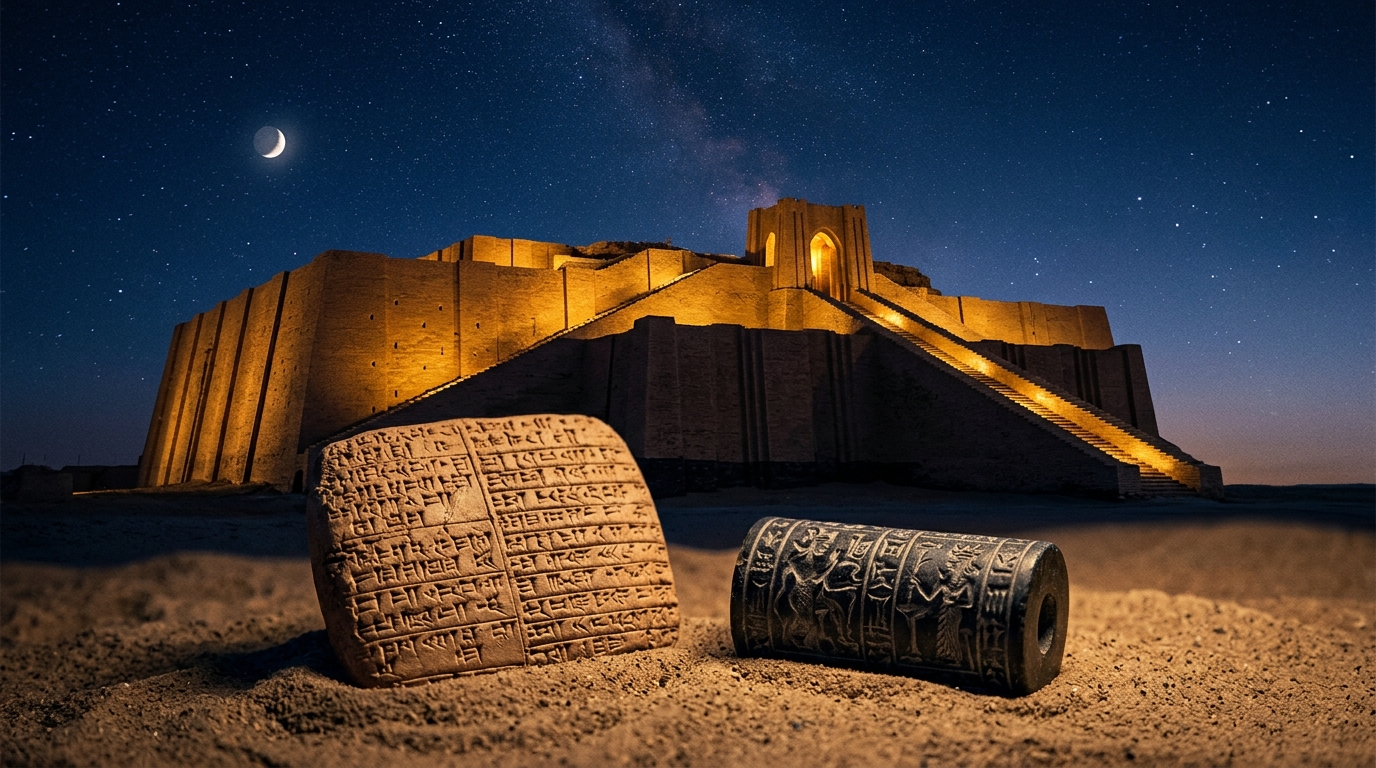
When people think about ancient civilizations, names like Egypt, Greece, and Rome often come to mind. Yet long before many of these famous societies flourished, another remarkable civilization was transforming human history in the fertile lands between the Tigris and Euphrates rivers. The Sumerians, who lived in southern Mesopotamia—modern-day Iraq—helped lay the foundations of urban life, government, writing, and technological innovation.
Although their civilization disappeared thousands of years ago, the influence of the Sumerians can still be felt today. Their achievements shaped the development of later societies and changed the course of human history in ways that continue to fascinate archaeologists and historians.
Here are fifteen fascinating facts about the Sumerians and their enduring legacy.
1. They Built Some of the World’s First Cities
The Sumerians were among the earliest people to establish large, organized urban centers.
Cities such as Ur, Uruk, and Eridu became thriving hubs of trade, religion, and government. These settlements marked a major turning point in human history as communities transitioned from small villages to complex cities with specialized roles and institutions.
In many ways, the Sumerians helped introduce the concept of urban civilization.
2. They Created One of the Earliest Writing Systems
One of the Sumerians’ greatest achievements was the development of cuneiform writing.
Using wedge-shaped symbols pressed into clay tablets, they recorded information ranging from business transactions and legal agreements to myths and religious texts.
Writing transformed the way humans preserved knowledge and communicated across generations.
3. They Lived in Mesopotamia, the “Cradle of Civilization”
The Sumerians flourished in a region known as Mesopotamia, meaning “land between rivers.”
The fertile environment between the Tigris and Euphrates rivers supported agriculture and allowed settlements to grow into prosperous cities. Because several important civilizations later emerged there, Mesopotamia is often called one of the birthplaces of civilization.
The Sumerians played a central role in this remarkable chapter of human history.
4. They Developed Sophisticated Irrigation Systems
Agriculture was essential to Sumerian society.
To make the most of their environment, they constructed canals and irrigation networks that directed water to fields and settlements. These systems helped increase food production and supported growing populations.
Their engineering abilities demonstrated an impressive understanding of environmental management.
5. They Invented the Wheel for Practical Uses
The wheel ranks among humanity’s most transformative inventions.
Evidence suggests that the Sumerians were among the earliest people to use wheeled vehicles and potter’s wheels. This innovation improved transportation, trade, and manufacturing processes.
The wheel remains one of the most influential technologies ever developed.
6. Their Society Was Highly Organized
Sumerian cities had complex social structures.
Farmers, merchants, priests, artisans, administrators, and rulers all performed specialized roles that contributed to the functioning of society. This level of organization represented an important step in the development of large-scale civilizations.
Their cities operated with a degree of sophistication that still impresses historians.
7. They Built Monumental Temples Called Ziggurats
Towering structures known as ziggurats dominated many Sumerian cities.
These stepped temple complexes served religious and ceremonial purposes and often became symbols of civic identity. Constructing such impressive buildings required planning, resources, and skilled labor.
The ziggurats stand as enduring reminders of Sumerian architectural ambition.
8. They Produced Some of Humanity’s Earliest Literature
The Sumerians did more than record economic information.
They also created myths, hymns, stories, and epic narratives. One of the world’s oldest literary works, the Epic of Gilgamesh, emerged from Mesopotamian traditions and explores themes such as friendship, mortality, and the search for meaning.
Their literary contributions continue to influence modern storytelling.
9. They Advanced Mathematics and Measurement
Managing agriculture, trade, and construction required practical mathematical knowledge.
The Sumerians developed numerical systems and methods of measurement that later civilizations refined and expanded. Their work contributed to the foundations of mathematics and record-keeping.
These innovations supported increasingly complex societies.
10. They Established Early Forms of Government
Each Sumerian city-state functioned as an independent political center.
Rulers and administrative systems coordinated public works, managed resources, and maintained order. Although very different from modern governments, these institutions represented early experiments in organized political administration.
Their ideas influenced later civilizations throughout the region.
11. Trade Connected Them With Distant Lands
The Sumerians were active traders.
Because southern Mesopotamia lacked certain natural resources, merchants exchanged goods with neighboring regions and distant communities. Trade networks brought valuable materials, ideas, and cultural influences into Sumerian society.
These connections demonstrate that international exchange has ancient roots.
12. Their Innovations Influenced Later Civilizations
The Sumerians did not exist in isolation.
Many of their ideas and achievements were adopted and expanded by later Mesopotamian societies, including the Akkadians and Babylonians. Writing systems, administrative practices, and technological innovations continued to evolve long after the Sumerian civilization declined.
Their influence spread far beyond their own time.
13. Archaeologists Are Still Making New Discoveries
Thousands of years after the Sumerians disappeared, researchers continue uncovering artifacts, tablets, and architectural remains.
Every new discovery provides additional insights into how these ancient people lived, worked, and understood the world around them.
The Sumerians remain one of archaeology’s most fascinating subjects.
14. They Changed the Course of Human History
Many features of modern civilization trace part of their origins to developments pioneered by the Sumerians.
Cities, writing, organized administration, technological innovation, and complex economies all evolved significantly during their era. Their contributions helped shape patterns of human society that continue today.
Their legacy extends across millennia.
15. Their Story Reminds Us of Humanity’s Capacity for Innovation
Perhaps the most remarkable aspect of the Sumerians is how much they accomplished with the resources available to them.
Thousands of years ago, they built cities, created systems of communication, engineered irrigation networks, and developed institutions that transformed human communities. Their achievements demonstrate the extraordinary creativity and adaptability that have long characterized our species.
The Sumerians remind us that innovation is not a modern phenomenon. It has been driving human progress since the earliest civilizations.
Final Thoughts
The Sumerians occupy a unique place in history because they helped shape many of the foundations upon which later societies were built. Their cities, inventions, writing systems, and cultural achievements marked some of humanity’s earliest steps toward complex civilization.
Even though their civilization vanished long ago, their legacy remains alive through the ideas and innovations that continue to influence the modern world. Every new archaeological discovery adds another layer to our understanding of these remarkable people and deepens our appreciation for one of history’s most influential civilizations.
In many ways, the story of the Sumerians is also the story of humanity itself—a story of creativity, cooperation, and the enduring desire to build, learn, and leave something meaningful for future generations.







