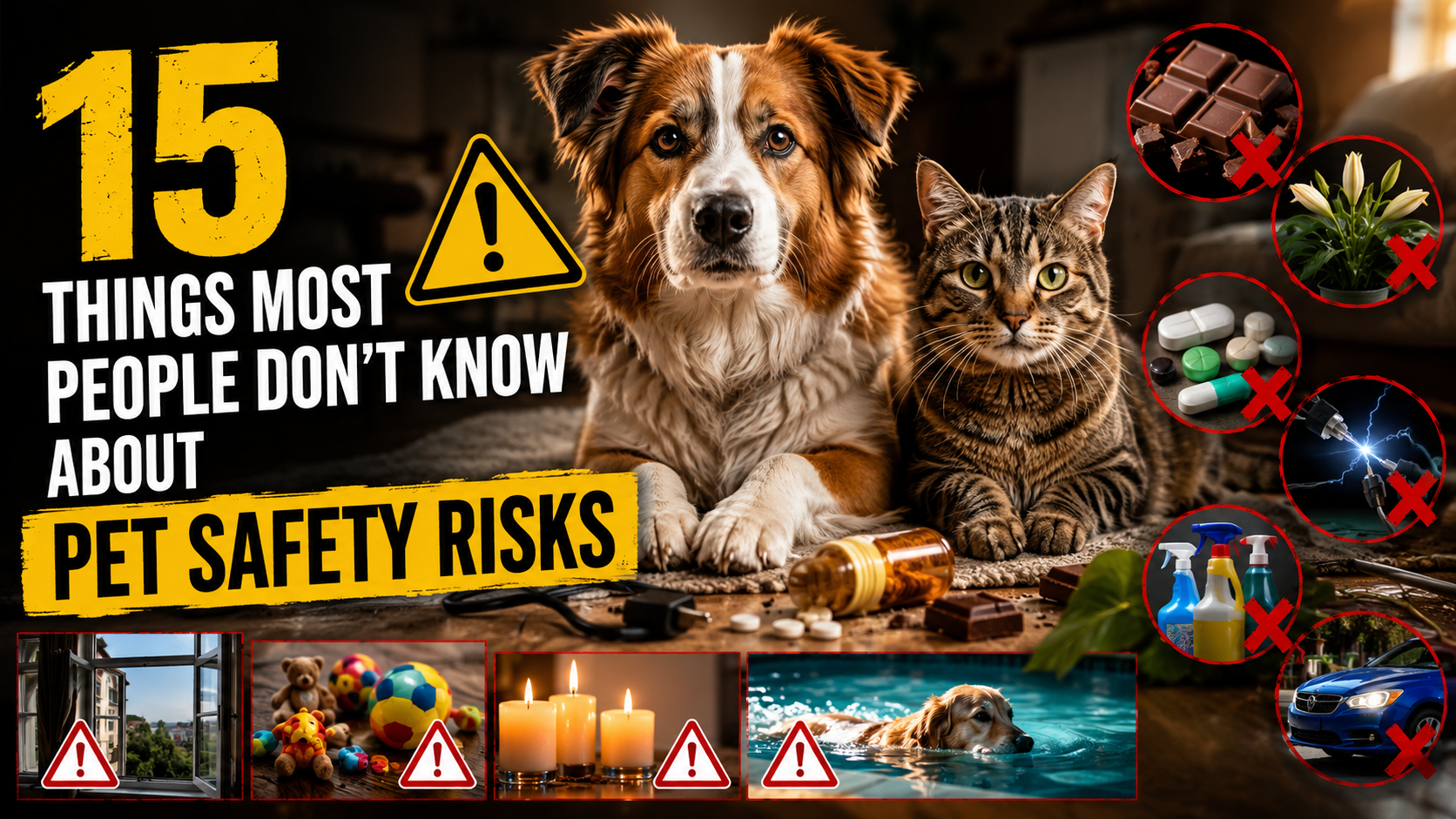
For many people, pets are much more than animals. They are companions, family members, and trusted friends who share our homes and daily lives. Because we spend so much time with them, it’s easy to assume they’re safe in familiar surroundings. However, many of the biggest dangers pets face aren’t found in the wilderness or on busy roads—they’re often hidden in ordinary homes, neighborhoods, and everyday routines.
Veterinarians and animal behavior experts regularly warn that many pet injuries and illnesses result from risks owners never considered. A harmless-looking household item, a common food, or even a routine activity can sometimes create unexpected hazards.
Understanding these risks doesn’t mean living in fear. Instead, it allows pet owners to make simple adjustments that can dramatically improve safety and quality of life for their furry companions.
Here are 15 pet safety risks that many people don’t know about—and what every responsible pet owner should understand.
1. Many Everyday Foods Can Be Dangerous
Most pet owners know that chocolate isn’t safe for dogs, but the list of risky foods extends much further.
Grapes, raisins, onions, garlic, macadamia nuts, alcohol, caffeine, and certain artificial sweeteners can all be harmful. One of the most dangerous sweeteners is xylitol, commonly found in sugar-free gum, candy, and some peanut butter products.
Even small amounts of certain foods can lead to serious health complications.
Before sharing table scraps or human snacks, it’s always worth checking whether the ingredient is safe for pets.
2. Open Windows Can Become Unexpected Traps
Fresh air is wonderful, but unsecured windows can pose significant risks.
Cats are especially vulnerable. Although they’re known for agility and balance, they can still slip, become startled, or misjudge distances.
Veterinarians even use the term “high-rise syndrome” to describe injuries caused by falls from windows and balconies.
Window screens should never be considered a reliable safety barrier unless specifically designed to prevent pet escapes.
3. Certain Houseplants Are Toxic
Indoor plants make homes more attractive, but some popular varieties can be dangerous to pets.
Lilies, for example, can be extremely toxic to cats. Other plants such as pothos, aloe vera, sago palms, and philodendrons may also cause serious reactions if consumed.
Curious pets often explore the world through chewing and sniffing.
Before bringing a new plant home, it’s wise to verify that it’s safe for animals.
A decorative addition should never come at the expense of a pet’s health.
4. Small Objects Can Cause Life-Threatening Blockages
Pets don’t always distinguish between toys and objects they shouldn’t swallow.
Coins, batteries, socks, hair ties, rubber bands, children’s toys, and small pieces of plastic frequently end up in veterinary emergency rooms.
When swallowed, these items can create dangerous intestinal blockages requiring surgery.
Puppies and young animals are particularly vulnerable because they explore through their mouths.
Keeping small items out of reach remains one of the simplest ways to prevent a serious emergency.
5. Extreme Temperatures Affect Pets Faster Than People Realize
Many owners underestimate how quickly animals can become overheated or dangerously cold.
A parked car is especially risky.
Even on mild days, temperatures inside a vehicle can rise rapidly, creating life-threatening conditions within minutes.
Heatstroke can occur surprisingly fast.
Cold weather presents challenges as well, particularly for small breeds, senior pets, and animals with short coats.
Providing proper shelter and avoiding prolonged exposure helps reduce these risks.
6. Some Cleaning Products Can Be Harmful
Many cleaning products are designed to eliminate germs, stains, and odors—but some contain chemicals that may be dangerous to pets.
Floor cleaners, bleach, disinfectants, and concentrated detergents can cause irritation or poisoning if inhaled, licked, or absorbed through paws.
Pets often walk across freshly cleaned surfaces and later groom themselves.
Using pet-safe products and allowing treated areas to dry thoroughly can help minimize accidental exposure.
7. Leashes Aren’t Always Enough
Many people assume that using a leash automatically guarantees safety.
While leashes are important, poorly fitted collars and harnesses can create problems.
A frightened animal may slip free, especially during loud events, thunderstorms, or unfamiliar situations.
Equipment should fit securely without restricting movement or breathing.
Regularly checking for wear and tear is equally important, as damaged gear can fail unexpectedly.
8. Holiday Decorations Create Hidden Hazards
The holiday season introduces a variety of unusual risks.
Decorative lights, tinsel, ornaments, ribbons, candles, and gift wrapping materials can all become tempting targets for curious pets.
Cats are especially attracted to dangling objects, while dogs often investigate unfamiliar items through chewing.
What appears harmless to humans may become a choking hazard or digestive emergency for animals.
Extra supervision during holidays can prevent many avoidable accidents.
9. Water Sources Can Be More Dangerous Than They Appear
Many people assume all pets naturally know how to swim.
In reality, swimming ability varies significantly between breeds, ages, and individual animals.
Pools, ponds, canals, and lakes can all present risks.
Some pets can enter the water but struggle to find a safe exit.
Teaching pets how to locate pool steps and providing supervision around water can reduce accidents.
Water safety isn’t only for people.
10. Stress Can Affect Physical Health
Pet safety isn’t only about preventing injuries.
Emotional well-being plays an important role in overall health.
Changes in routine, loud noises, separation anxiety, overcrowded environments, or sudden household disruptions can create significant stress.
Long-term stress may contribute to behavioral issues and physical health problems.
Providing consistency, enrichment, exercise, and positive interactions helps pets feel secure and comfortable.
A calm pet is often a healthier pet.
11. Overweight Pets Face Serious Health Risks
Many owners associate extra weight with being well-fed and happy.
Unfortunately, obesity can shorten a pet’s lifespan and increase the risk of numerous medical conditions.
Joint problems, heart disease, diabetes, breathing difficulties, and reduced mobility are all linked to excess weight.
Because weight gain often occurs gradually, many owners don’t notice the change until health issues emerge.
Regular veterinary checkups and proper nutrition play a key role in prevention.
12. Electrical Cords Attract Curious Animals
Puppies, kittens, rabbits, and other small animals frequently chew electrical cords.
The behavior may seem harmless initially, but damaged wires can result in burns, electrocution, or house fires.
Cord protectors, cable management systems, and pet-safe deterrents can significantly reduce risk.
Many accidents occur simply because owners underestimate how appealing cords appear to young animals.
Prevention is far easier than dealing with the consequences.
13. Not All Human Medications Are Safe
One of the most common causes of pet poisoning involves medications intended for humans.
Pain relievers, antidepressants, sleep aids, vitamins, and prescription drugs can all become dangerous if accidentally consumed.
Animals may find dropped pills or chew through containers.
Even medications considered safe for people can have severe effects on pets.
Storing medicine securely and cleaning up spills immediately helps prevent accidental ingestion.
14. Pet Tags and Microchips Save Lives
Many owners focus heavily on preventing escapes but overlook preparation for the possibility that one could occur.
Pets can become lost through open doors, damaged fences, natural disasters, or unexpected accidents.
Identification tags provide an immediate way for someone to contact the owner.
Microchips add an additional layer of protection because collars can fall off.
Together, they dramatically increase the likelihood of a safe reunion.
Preparation often matters as much as prevention.
15. Familiar Environments Can Create Complacency
Perhaps the most overlooked safety risk is assuming that familiar surroundings are automatically safe.
Many accidents occur at home because people become comfortable and stop noticing potential dangers.
A pet that has never chewed cords may suddenly develop the habit.
A normally calm animal may become frightened during a storm.
A secure gate may eventually wear down and fail.
Regularly reassessing your home environment helps identify risks before they become emergencies.
The safest pet owners remain observant, even in familiar settings.
Why Pet Safety Is About Awareness, Not Perfection
It’s impossible to eliminate every risk from a pet’s life.
Unexpected situations happen, and even the most responsible owners occasionally face challenges.
The goal isn’t perfection.
The goal is awareness.
Understanding potential hazards allows owners to make informed decisions that reduce preventable accidents.
Most safety improvements are surprisingly simple.
Storing dangerous items properly, supervising activities, maintaining identification, and creating a secure environment can dramatically lower risks.
Small changes often have a significant impact.
The Emotional Side of Pet Protection
People form deep emotional bonds with their pets.
Research consistently shows that companion animals provide comfort, reduce feelings of loneliness, and contribute positively to mental well-being.
Because these relationships are so meaningful, protecting pets becomes about more than physical safety.
It becomes an expression of care and responsibility.
Taking proactive steps to reduce risks helps ensure that pets can enjoy longer, healthier, and happier lives alongside the people who love them.
Final Thoughts
Pet safety extends far beyond food bowls, leashes, and routine veterinary visits. Many of the biggest risks animals face are hidden within ordinary daily life, from household chemicals and toxic plants to emotional stress and environmental hazards.
The good news is that most of these dangers can be reduced through awareness and preparation.
By understanding the risks that often go unnoticed, pet owners can make smarter decisions and create safer environments for their companions.
After all, pets rely on humans for protection. The more informed we become, the better equipped we are to give them the safe, healthy, and fulfilling lives they deserve.
Whether you share your home with a dog, cat, rabbit, bird, or another beloved companion, paying attention to these often-overlooked safety risks can make a lasting difference—one that may ultimately protect the animal who depends on you most.







