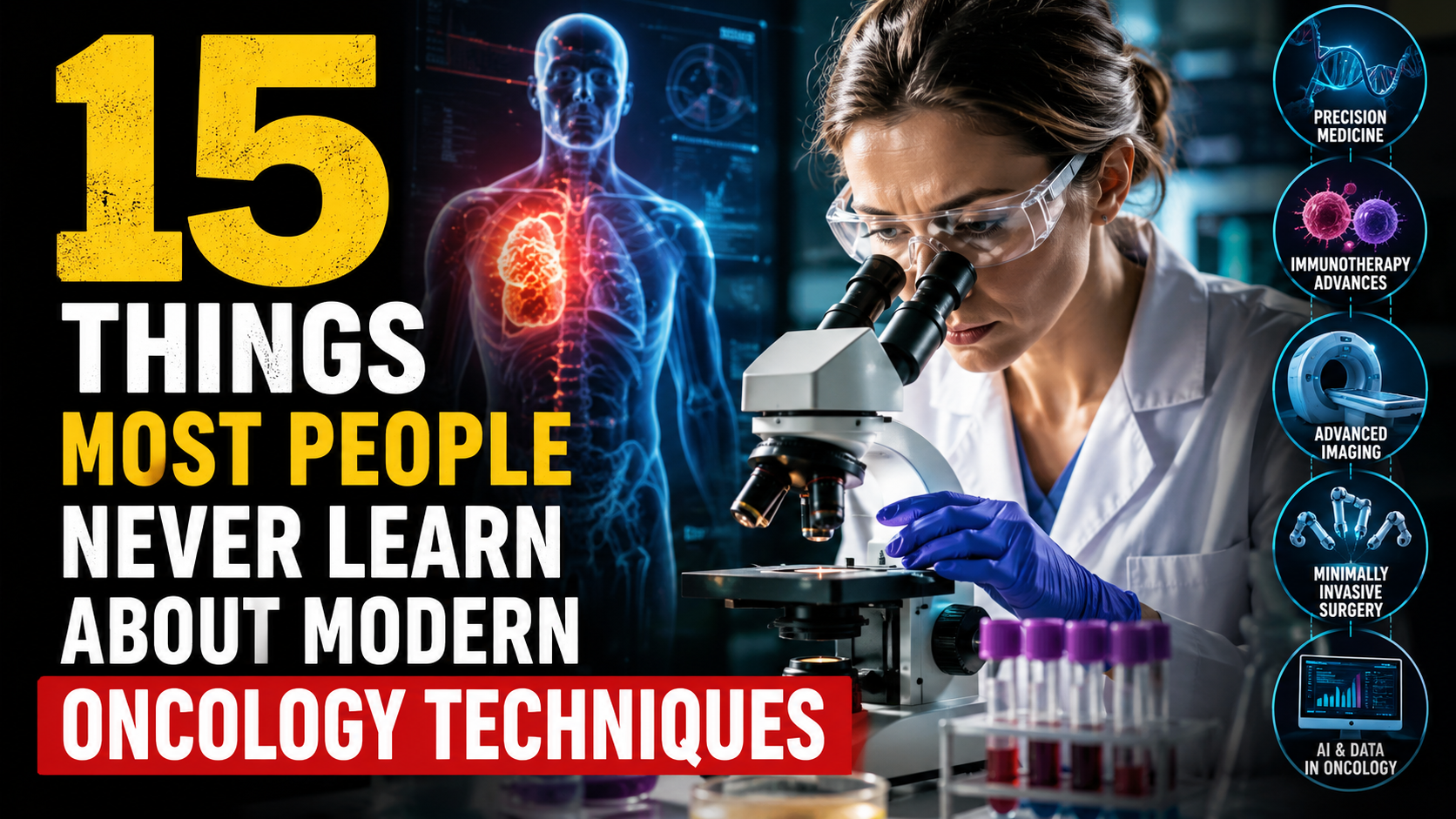
When most people think about cancer treatment, they often picture chemotherapy sessions, radiation machines, and surgical procedures. While those approaches remain important parts of cancer care, modern oncology has evolved far beyond what many people realize.
Over the last two decades, advances in genetics, imaging technology, immunology, artificial intelligence, and precision medicine have transformed how doctors diagnose, monitor, and treat cancer. Today’s oncology specialists have access to tools that previous generations of physicians could only imagine.
Many of these innovations happen behind the scenes, which is why the public rarely hears about them. Yet these developments are helping doctors personalize treatments, reduce side effects, improve accuracy, and offer new options to patients facing complex diagnoses.
Here are 15 fascinating things most people never learn about modern oncology techniques.
1. Cancer Treatment Is Becoming Increasingly Personalized
One of the biggest changes in modern oncology is the move away from one-size-fits-all treatment plans.
Doctors now recognize that two patients with the same type of cancer may have tumors that behave very differently at the genetic level. Because of this, treatment decisions often consider not only where the cancer is located but also its unique molecular characteristics.
Personalized medicine allows physicians to select therapies that are more likely to work for a specific patient while avoiding treatments that may provide little benefit.
This tailored approach has become one of the most important trends in cancer care.
2. Genetic Testing Plays a Major Role
Modern oncology frequently includes genetic and genomic testing.
Researchers have discovered that many cancers contain specific genetic mutations that influence how tumors grow and respond to treatment.
By analyzing these mutations, doctors can identify therapies designed to target particular biological pathways.
This information helps guide treatment decisions and can provide valuable insights into how a cancer may behave over time.
Genetic testing has become a powerful tool in precision medicine.
3. Immunotherapy Changed the Treatment Landscape
One of the most exciting developments in cancer treatment involves immunotherapy.
Instead of attacking tumors directly, immunotherapy helps the body’s immune system recognize and respond to cancer cells more effectively.
Certain cancer cells develop ways to avoid immune detection. Some immunotherapies work by removing these biological barriers, allowing immune cells to identify and attack tumors.
While immunotherapy is not appropriate for every patient or every cancer type, it has produced remarkable results in some situations and remains an active area of research.
4. Doctors Can See Tumors With Incredible Precision
Medical imaging has advanced dramatically.
Modern imaging technologies allow specialists to view tumors with extraordinary detail before, during, and after treatment.
These tools may include:
- MRI scans
- PET scans
- CT scans
- Ultrasound imaging
- Molecular imaging techniques
Improved imaging helps doctors locate tumors more accurately, monitor treatment responses, and plan procedures with greater precision.
This reduces uncertainty and supports better decision-making throughout the treatment process.
5. Some Treatments Target Specific Cancer Cells
Traditional chemotherapy affects rapidly dividing cells throughout the body.
Targeted therapies work differently.
These treatments focus on specific biological features that help cancer cells survive and multiply.
By concentrating on particular molecular targets, doctors may be able to interfere with tumor growth while minimizing some effects on healthy tissues.
Researchers continue developing new targeted therapies as understanding of cancer biology expands.
6. Artificial Intelligence Is Entering Oncology
Artificial intelligence is beginning to influence several areas of cancer care.
AI systems can help analyze imaging scans, identify patterns in large datasets, assist with treatment planning, and support research efforts.
These tools are not replacing physicians. Instead, they serve as advanced assistants that help healthcare teams process information more efficiently.
As technology improves, AI may continue to enhance diagnostic accuracy and personalized treatment strategies.
7. Cancer Care Often Involves Entire Teams
Many people assume cancer treatment is managed by a single doctor.
In reality, modern oncology often involves multidisciplinary teams working together.
A patient’s care team may include:
- Medical oncologists
- Radiation oncologists
- Surgeons
- Radiologists
- Pathologists
- Nurses
- Nutrition specialists
- Physical therapists
- Mental health professionals
This collaborative approach helps ensure that multiple perspectives contribute to treatment planning.
8. Liquid Biopsies Are Opening New Possibilities
Traditionally, obtaining information about a tumor often required tissue samples collected through biopsies.
Today, researchers are developing liquid biopsy technologies that analyze cancer-related material found in blood samples.
These tests may help monitor treatment responses, detect changes in tumor biology, and identify potential recurrence earlier.
Although the technology continues to evolve, liquid biopsies represent one of the most promising innovations in modern oncology.
9. Radiation Therapy Is More Precise Than Ever
Radiation therapy has undergone major improvements over the years.
Advanced systems now allow doctors to direct radiation more accurately toward tumors while reducing exposure to surrounding healthy tissues.
Techniques such as image-guided radiation therapy and intensity-modulated radiation therapy help improve precision.
As a result, many patients experience more targeted treatment than was possible in previous decades.
10. Minimally Invasive Procedures Are Expanding
Many cancer-related procedures no longer require large surgical incisions.
Modern oncology increasingly utilizes minimally invasive approaches, including:
- Robotic-assisted surgery
- Laparoscopic procedures
- Image-guided interventions
- Ablation techniques
These methods may reduce recovery times, minimize discomfort, and improve patient experiences in appropriate situations.
Technology continues expanding the range of procedures that can be performed with less disruption to the body.
11. Researchers Study Tumors at the Molecular Level
Cancer is no longer viewed solely as a disease of organs.
Scientists now examine tumors at the molecular and cellular levels to understand the biological mechanisms driving growth and spread.
This deeper understanding helps researchers identify new treatment targets and develop therapies designed to interfere with specific cancer processes.
The more scientists learn about tumor biology, the more opportunities emerge for innovation.
12. Clinical Trials Drive Many Breakthroughs
Nearly every major advance in oncology has benefited from clinical research.
Clinical trials allow researchers to evaluate new treatments, test innovative technologies, and compare emerging therapies with existing standards of care.
These studies play a critical role in expanding medical knowledge and improving future treatment options.
Without clinical trials, many of today’s most effective cancer therapies would never have become available.
13. Survivorship Is Now a Major Focus
Cancer care extends beyond active treatment.
As survival rates improve for many cancers, healthcare providers increasingly focus on survivorship and long-term wellness.
Survivorship programs may address:
- Physical recovery
- Emotional well-being
- Lifestyle modifications
- Ongoing monitoring
- Return-to-work planning
- Long-term health management
Modern oncology recognizes that quality of life remains important throughout every stage of the patient journey.
14. Researchers Are Exploring Combination Therapies
Many cancers respond best when multiple treatment approaches work together.
Researchers continue studying combinations of:
- Immunotherapy
- Radiation therapy
- Targeted therapies
- Chemotherapy
- Hormone therapy
The goal is to identify strategies that improve outcomes while maintaining safety and quality of life.
Combination therapies represent one of the most active areas of cancer research today.
15. The Future of Oncology May Be Even More Personalized
Perhaps the most exciting aspect of modern oncology is what lies ahead.
Researchers are investigating:
- Personalized cancer vaccines
- Advanced gene-based therapies
- Next-generation immunotherapies
- AI-assisted treatment planning
- Earlier detection technologies
- Highly individualized treatment strategies
These innovations aim to make cancer care more precise, effective, and patient-centered.
Although challenges remain, the pace of progress continues to accelerate.
Why Modern Oncology Looks So Different Today
Several scientific breakthroughs have contributed to oncology’s rapid evolution.
Advances in computing, molecular biology, imaging technology, genomics, and data analysis have given researchers unprecedented insight into how cancer develops and behaves.
These discoveries have transformed cancer treatment from a largely generalized approach into one increasingly guided by biological precision.
Instead of treating all cancers similarly, doctors now strive to understand what makes each tumor unique.
Common Misconceptions About Cancer Treatment
Despite major advances, many myths persist.
Myth 1: All Cancer Treatments Are the Same
Different cancers often require very different approaches.
Myth 2: Chemotherapy Is the Only Option
Many patients receive therapies that do not involve traditional chemotherapy.
Myth 3: Technology Replaces Human Judgment
Advanced tools support decision-making, but experienced healthcare professionals remain central to patient care.
Myth 4: Research Progress Is Slow
While medical breakthroughs require careful evaluation, oncology remains one of the fastest-moving areas of modern medicine.
The Human Side of Innovation
Although technology often receives attention, modern oncology remains deeply focused on people.
Every innovation ultimately aims to improve patient outcomes, reduce suffering, increase treatment accuracy, and support better quality of life.
Behind every new technique are patients, families, researchers, physicians, and healthcare teams working together to advance cancer care.
This human element remains at the heart of oncology’s ongoing evolution.
Final Thoughts
Modern oncology is far more sophisticated than many people realize. Today’s cancer specialists use advanced imaging, genetic testing, immunotherapy, targeted treatments, minimally invasive procedures, and multidisciplinary care teams to provide increasingly personalized treatment strategies.
While no single innovation has solved every challenge, the combination of scientific progress and technological advancement has dramatically expanded what is possible in cancer care. Researchers continue pushing boundaries, developing new tools, and refining existing techniques to improve outcomes for future patients.
Understanding these advances helps reveal an important truth: modern oncology is not just about treating cancer. It is about combining science, technology, and compassionate care to create better possibilities for people facing one of life’s most difficult health challenges.







