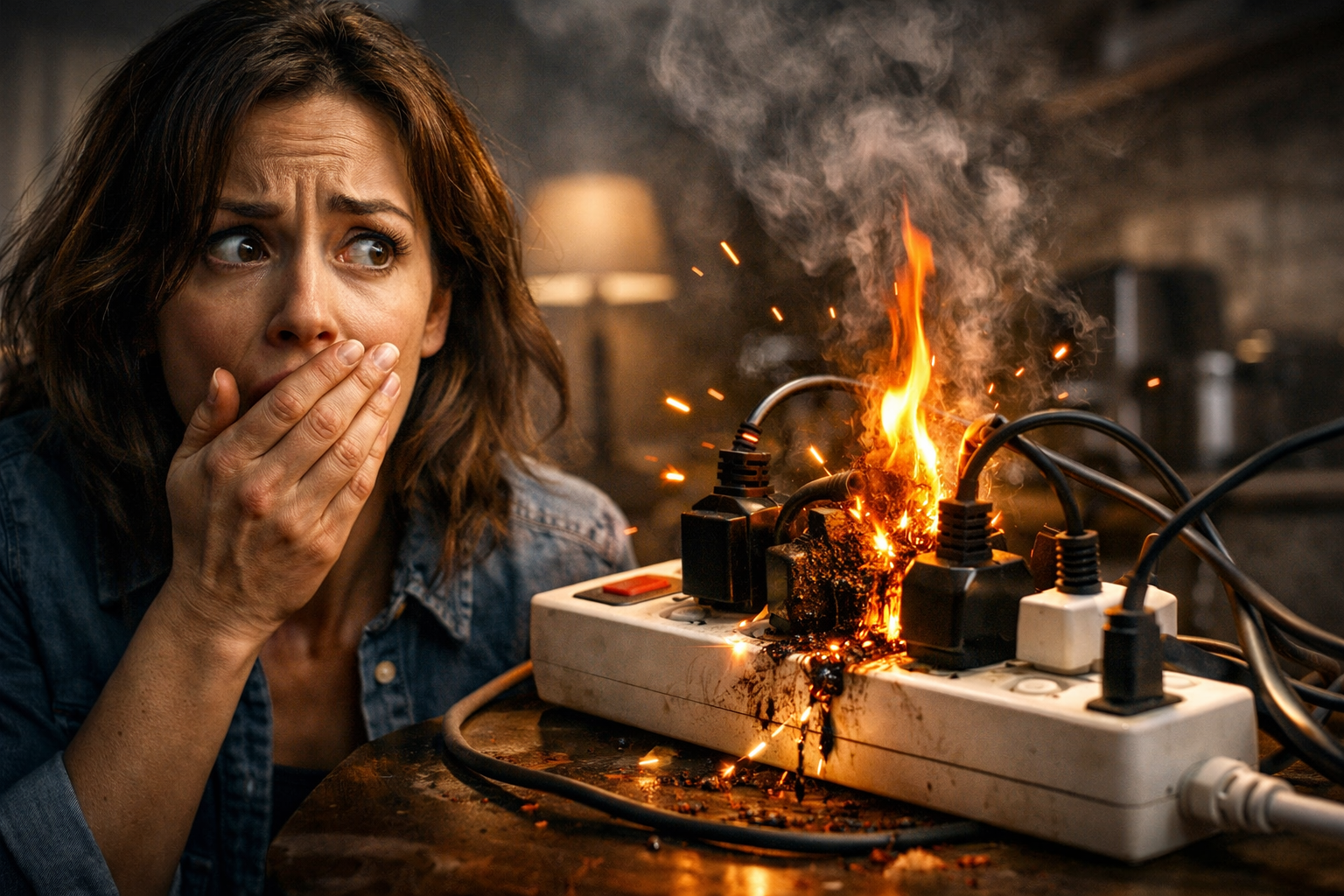
Power strips are incredibly convenient. They allow you to connect multiple devices when wall outlets are limited and help keep cords organized around your home or office.
However, not every appliance is safe to connect to a power strip.
Many household devices draw large amounts of electricity, and plugging them into a standard power strip can create serious safety hazards. Overloaded power strips can overheat, damage electronics, trip circuit breakers, or even start electrical fires.
Understanding which appliances require a dedicated wall outlet can help protect both your home and your family.
Here are 15 items that should be used with caution—or avoided entirely—when it comes to power strips.
Why Power Strip Safety Matters
Most standard residential power strips are rated for approximately 15 amps, or about 1,800 watts of power. Exceeding that limit can strain the strip’s internal wiring and create dangerous heat buildup.
High-powered appliances that generate heat, contain motors, or cycle on and off frequently are especially likely to overload a power strip.
Before plugging anything in, always check the wattage requirements of your appliance and the rating of your power strip.

1. Refrigerators
Refrigerators may appear to run quietly, but their compressors require significant power when cycling on and off throughout the day.
Because of these power surges, refrigerators should always be connected directly to a dedicated wall outlet. Using a power strip increases the risk of overheating and electrical failure.
2. Microwave Ovens
Microwaves consume a large amount of electricity in short bursts while heating food.
A standard power strip is generally not designed to handle this type of demand. For safety and reliable performance, microwaves should always be plugged directly into a wall outlet.
3. Coffee Makers
Brewing coffee requires heating elements that draw substantial power.
While a coffee maker may seem like a small appliance, its electrical demands can be surprisingly high. Connecting it directly to a wall outlet reduces the risk of overloading a power strip.
4. Toasters and Similar Cooking Appliances
Toasters, toaster ovens, waffle makers, electric skillets, and similar appliances generate intense heat through high-powered electrical elements.
Because of their energy requirements, they can quickly overload a power strip and should always be plugged into a dedicated outlet.
5. Slow Cookers
Slow cookers operate for extended periods, often unattended for several hours at a time.
Although they don’t consume as much electricity as some other kitchen appliances, their long operating cycles make direct wall connections the safer option.
6. Hair Dryers, Curling Irons, and Flat Irons
Hair styling tools generate significant heat and typically draw a large amount of current.
Bathrooms also introduce the added risk of moisture exposure. Whenever possible, use a properly installed GFCI (Ground Fault Circuit Interrupter) outlet rather than a power strip.
7. Portable Air Conditioners
Portable air conditioners contain compressors and cooling systems that require substantial electrical power.
Like refrigerators, they frequently cycle on and off, creating power surges that can overwhelm a standard power strip.
These units should always be connected directly to an appropriately rated outlet.
8. Sump Pumps
Sump pumps are often relied upon during emergencies such as basement flooding.
Because they operate in damp environments and may need to run continuously during heavy rainfall, they should never be connected to a standard indoor power strip.
A properly installed GFCI-protected outlet is the safest choice.
9. Air Compressors
Portable air compressors can draw large amounts of electricity when starting up.
These startup surges can place considerable strain on power strips and extension devices. Direct wall connections or properly rated heavy-duty circuits are generally recommended.
10. Another Power Strip
One of the most dangerous electrical mistakes is “daisy chaining” power strips together.
Connecting one power strip into another can quickly overload circuits and dramatically increase fire risk. Most electrical safety experts strongly discourage this practice.
If you need additional outlets, consider having more wall outlets professionally installed instead.
11. High-Powered Blenders and Juicers
Modern blenders and juicers often contain surprisingly powerful motors.
Some premium models can draw over 1,000 watts during operation. Combined with the possibility of liquids being present in the kitchen, using these appliances directly from a wall outlet is usually the safest option.
12. Washing Machines
Washing machines can require substantial amounts of electricity, especially during spin cycles and water heating phases.
Many models operate close to the maximum capacity of standard power strips. Because they often run unattended for extended periods, direct wall connections are strongly recommended.
13. Space Heaters
Space heaters are among the most common causes of electrical fires associated with power strips.
Many portable heaters consume 1,500 watts or more, leaving very little capacity for anything else on the circuit.
Manufacturers and fire safety organizations consistently recommend plugging space heaters directly into a wall outlet.
14. Heavy-Duty Power Tools
Not all power tools are equal.
Small tools may work safely with properly rated power strips, but larger equipment such as table saws, miter saws, air compressors, and heavy-duty workshop tools often require dedicated circuits or industrial-grade power distribution systems.
Always follow the manufacturer’s electrical recommendations.
15. Large Gaming Setups
Gaming consoles and computers themselves usually don’t pose a problem for quality surge protectors.
The issue arises when multiple devices are connected simultaneously, including:
- Gaming PCs
- Monitors
- Speakers
- LED lighting
- External drives
- Charging stations
The combined power draw can add up quickly. Always check the total wattage of your setup and use a high-quality surge-protected power strip designed for electronics.
Signs a Power Strip Is Overloaded
Watch for these warning signs:
- Warm or hot power strips
- Burning smells
- Discolored outlets
- Frequent breaker trips
- Flickering lights
- Buzzing sounds
- Loose plugs
If you notice any of these symptoms, unplug devices immediately and investigate the cause.
How to Use Power Strips Safely
To reduce electrical risks:
- Never exceed the strip’s wattage rating.
- Avoid daisy-chaining power strips.
- Keep power strips away from water.
- Replace damaged or worn strips immediately.
- Use surge protectors for sensitive electronics.
- Plug high-wattage appliances directly into wall outlets.
- Choose heavy-duty strips when appropriate.
The Bottom Line
Power strips are useful tools, but they aren’t designed to handle every appliance in your home.
High-powered devices such as refrigerators, microwaves, space heaters, air conditioners, washing machines, and cooking appliances should generally be connected directly to properly rated wall outlets. Doing so helps prevent overheating, protects your equipment, and reduces the risk of electrical fires.
When in doubt, check the manufacturer’s instructions and the power requirements of the appliance before plugging it into a power strip. A few extra precautions today can help prevent costly—and potentially dangerous—electrical problems later.
Safety Disclaimer: Electrical requirements vary by appliance, country, and home wiring system. Always follow manufacturer recommendations and consult a licensed electrician if you are unsure about the safe operation of any electrical device.