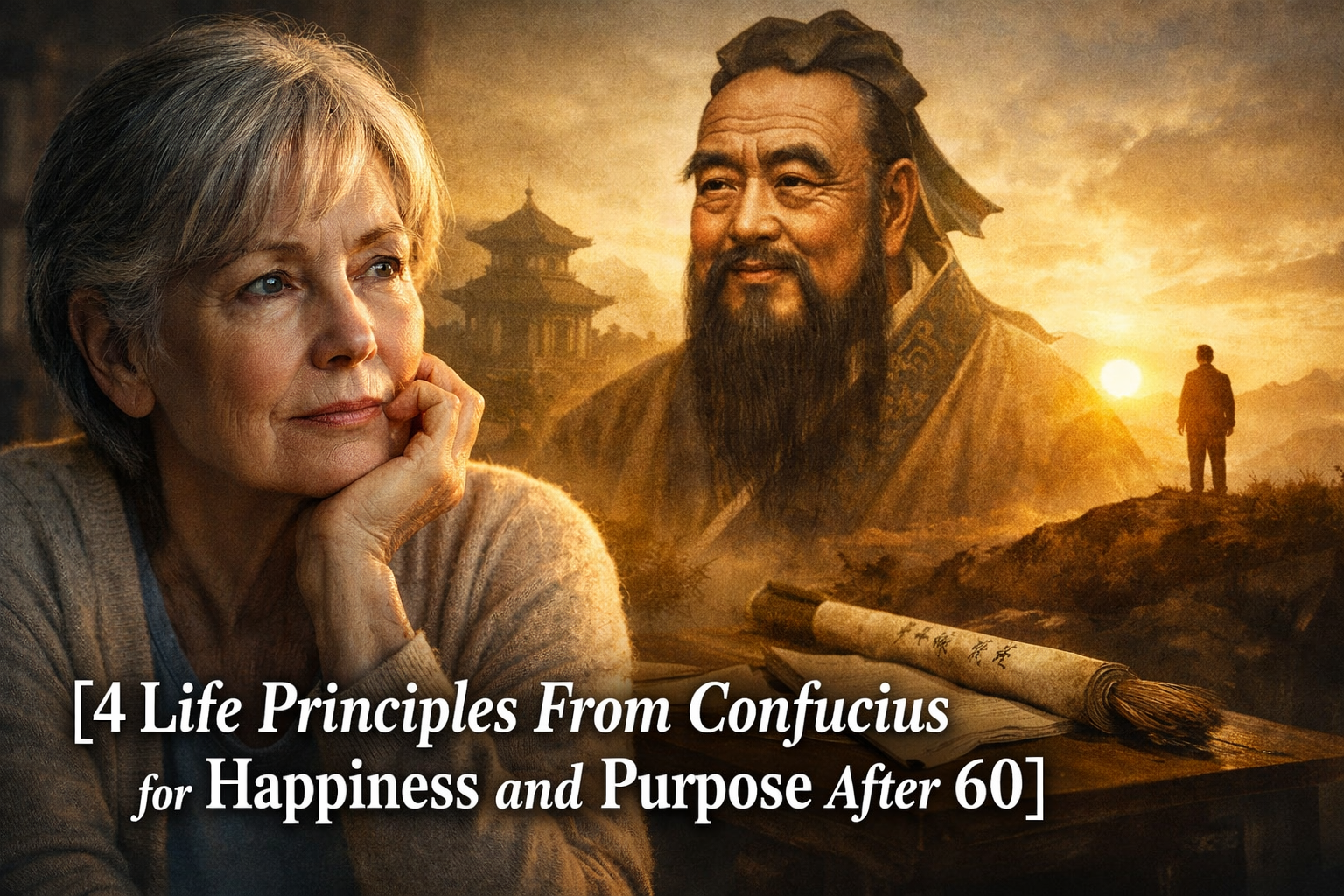
For many people, growing older is something to resist rather than embrace. Modern society often celebrates youth, productivity, and achievement while treating aging as something to fear. We are constantly encouraged to stay young, look younger, and delay the visible signs of getting older for as long as possible.
Yet more than two thousand years ago, the Chinese philosopher Confucius offered a very different perspective.
Rather than viewing aging as a period of decline, he saw it as the culmination of a lifetime of growth, learning, and self-development. In his philosophy, old age was not the end of relevance but the beginning of wisdom. The later years of life represented an opportunity to enjoy the rewards of character, virtue, and meaningful relationships cultivated over decades.
His teachings remain surprisingly relevant today. They remind us that a fulfilling old age is not something that happens by chance—it is something we build throughout our lives.
Aging as a Process of Growth, Not Decline

At the heart of Confucian philosophy is the idea of self-cultivation—the lifelong effort to become a better, wiser, and more compassionate human being.
Confucius believed that personal development never truly ends. Each stage of life offers unique opportunities for learning and growth.
One of his most famous reflections describes the milestones of his own life:
“At fifteen, I set my heart upon learning. At thirty, I stood firm. At forty, I had no doubts. At fifty, I understood Heaven’s will. At sixty, my ear was attuned to truth. At seventy, I could follow my heart’s desires without straying from what was right.”
This statement offers a powerful alternative to modern anxieties about aging. Instead of reaching one’s peak in youth, Confucius suggested that true freedom, wisdom, and inner harmony emerge later in life.
His vision of aging was not about losing abilities—it was about gaining understanding.
Here are four timeless lessons from Confucian thought that can help us approach aging with greater confidence and purpose.
1. Build Personal Dignity From the Inside Out

Many people tie their self-worth to external achievements.
Career titles, social status, income, physical appearance, and accomplishments often become the foundation of identity. The problem is that these things inevitably change over time.
Retirement arrives. Roles shift. Physical abilities evolve.
Confucius taught that genuine dignity comes from character rather than circumstances.
A person who has spent years developing honesty, integrity, discipline, and self-respect carries those qualities into every stage of life. Unlike external achievements, inner values cannot be taken away by age.
This means that aging gracefully begins long before old age arrives.
It involves:
- Acting with integrity even when nobody is watching
- Keeping promises to yourself and others
- Treating people with respect
- Taking responsibility for your actions
- Continuing to grow as a person
When self-worth is rooted in character instead of status, the passing years become far less threatening.
You no longer need external validation because your confidence comes from knowing who you are.
2. Make Peace With Time

One of the greatest sources of suffering is our complicated relationship with time.
Some people spend years longing for the past, wishing they could relive younger days. Others become consumed by worry about the future and what lies ahead.
Confucian wisdom encourages a different approach.
Rather than fighting the passage of time, it invites us to live fully within the present moment.
This doesn’t mean ignoring responsibilities or abandoning goals. Instead, it means learning to appreciate each stage of life for what it offers.
Youth brings energy and possibility.
Middle age often brings responsibility and accomplishment.
Later years bring perspective, reflection, and wisdom.
Each season has its own value.
Confucius emphasized the importance of finding meaning in daily life. Simple rituals, conversations, routines, and moments of gratitude become increasingly significant when we stop measuring life solely by major achievements.
People who learn to appreciate the present are often better equipped to enjoy aging because they are not constantly comparing today with yesterday.
They understand that life is not something that happened—it is something that is happening right now.
3. Invest in Relationships Before You Need Them

If modern culture encourages financial planning for retirement, Confucius would likely suggest another form of preparation: relationship building.
Human connection sits at the center of Confucian philosophy.
He believed that meaningful relationships are among life’s greatest sources of purpose and fulfillment.
Family bonds, friendships, mentorships, and community ties provide emotional support that becomes especially valuable as people age.
Unfortunately, many individuals spend decades prioritizing work, achievement, and material success while neglecting relationships.
Later in life, they discover that financial security alone cannot replace genuine human connection.
Strong relationships require ongoing investment.
That means:
- Making time for family
- Maintaining friendships
- Supporting others during difficult times
- Participating in community life
- Practicing empathy and kindness
The relationships we nurture today often become the source of comfort, joy, and belonging tomorrow.
In many ways, our social connections are one of the most valuable forms of wealth we can accumulate.
4. Find Meaning Beyond Yourself

One of the challenges many people face in later life is a loss of purpose.
After decades focused on careers, raising children, or achieving personal goals, some struggle to define their role once those responsibilities change.
Confucius believed that life’s deepest meaning comes from contributing to something larger than oneself.
He saw wisdom not as something to possess but something to pass on.
In this sense, aging brings a unique opportunity.
Older adults become storytellers, mentors, teachers, and guides.
Their experiences can help younger generations navigate life’s challenges more effectively.
Meaning can be found through:
- Mentoring younger people
- Sharing life lessons
- Volunteering
- Supporting family members
- Serving the community
- Preserving traditions and values
When people feel that their lives continue to have purpose, they often experience greater satisfaction and emotional well-being regardless of age.
Legacy is not simply what we leave behind.
It is what we give away while we are still here.
The Real Goal of Aging

Confucius challenged the idea that growing older is a process of decline.
Instead, he viewed it as a journey toward greater wisdom, freedom, and self-understanding.
His teachings suggest that a fulfilling old age is built on four essential foundations:
- Strong character
- Acceptance of life’s changing seasons
- Meaningful relationships
- A sense of purpose beyond oneself
These principles are not reserved for older adults. They can be practiced at any age.
Whether you are twenty-five or seventy-five, the work of becoming wiser, kinder, and more grounded never truly ends.
Final Thoughts
Perhaps the greatest lesson Confucius offers is that aging is not something to fear.
The passing years do not have to represent loss. They can represent growth.
A person who spends a lifetime cultivating integrity, nurturing relationships, embracing the present, and serving others may discover that their later years become some of the richest and most rewarding of all.
Instead of asking how to stay young forever, perhaps the better question is how to grow older well.
According to Confucius, the answer lies not in resisting time but in using it wisely.
The years will pass regardless. The challenge—and the opportunity—is deciding who we become along the way.