7 Warning Signs That May Signal a Future Heart Attack
Heart disease remains one of the leading causes of death worldwide, affecting millions of people every year. While heart attacks can sometimes occur without warning, many individuals experience symptoms days, weeks, or even months before a cardiac event takes place.
Recognizing these warning signs early can help you seek medical attention before a serious emergency develops. Although these symptoms don’t automatically mean a heart attack is imminent, they should never be ignored—especially if they appear suddenly, worsen over time, or occur in combination.
Here are seven potential warning signs that may indicate your heart is under stress.
1. Swelling in the Feet, Ankles, or Legs
Persistent swelling in the lower extremities can sometimes signal that your heart isn’t pumping blood as efficiently as it should.
When the heart struggles to circulate blood properly, fluid can accumulate in the legs, ankles, and feet. This condition, known as edema, is commonly associated with heart failure and other cardiovascular issues.
While swelling can also result from less serious causes such as standing for long periods or certain medications, unexplained or ongoing swelling should be evaluated by a healthcare professional.
2. Unusual Fatigue
Feeling tired after a long day is normal. However, extreme fatigue that seems disproportionate to your activity level may be a warning sign.
Many people who later experience heart problems report feeling unusually exhausted for weeks beforehand. Reduced blood flow caused by narrowed arteries can force the heart to work harder, leaving the body with less energy for daily activities.
If routine tasks suddenly leave you feeling drained, it may be worth discussing the symptom with your doctor.
3. Shortness of Breath
Difficulty breathing during normal activities—or even while resting—can sometimes indicate an underlying heart issue.
The heart and lungs work closely together to deliver oxygen-rich blood throughout the body. When the heart isn’t functioning efficiently, fluid can build up in the lungs, making it harder to breathe comfortably.
Shortness of breath should always be taken seriously, especially if it develops suddenly or is accompanied by chest discomfort, fatigue, or dizziness.
4. Unexpected Weakness
A sudden feeling of physical weakness can occur when blood circulation becomes less effective.
If muscles aren’t receiving enough oxygen and nutrients through the bloodstream, everyday movements may feel more difficult than usual. Some individuals notice reduced strength, poor balance, or feelings of instability.
Although weakness can stem from many different causes, persistent or unexplained symptoms deserve medical attention.
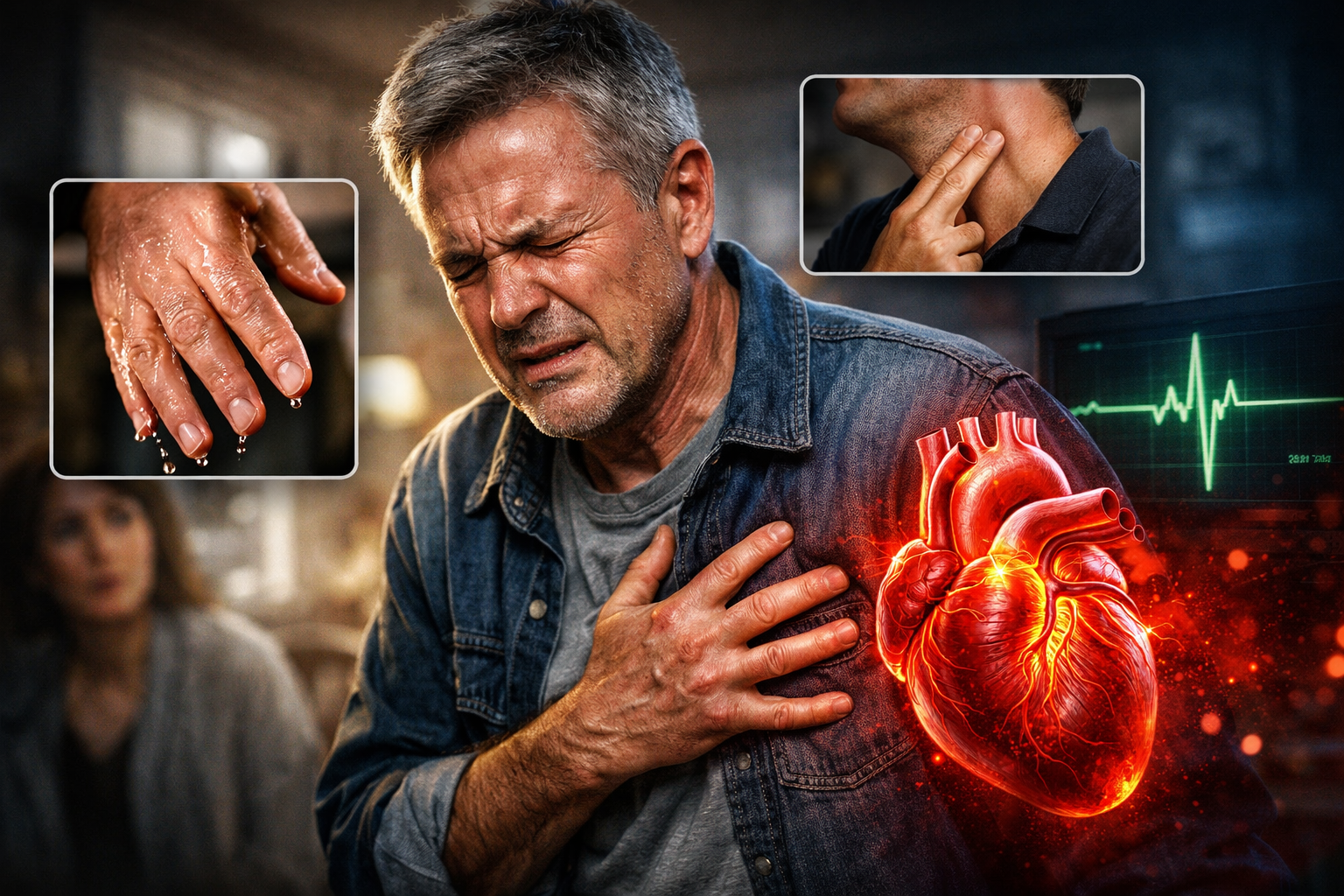
5. Dizziness and Cold Sweats
Episodes of dizziness, lightheadedness, or unexplained sweating can sometimes occur when blood flow to the brain decreases.
People often describe feeling clammy, faint, or unusually sweaty without an obvious reason. These symptoms may result from cardiovascular issues, low blood pressure, or other medical conditions.
When dizziness is accompanied by chest pain, shortness of breath, or nausea, immediate medical evaluation is recommended.
6. Chest Pain or Pressure
Chest discomfort remains one of the most recognizable warning signs of heart trouble.
Some people experience a sharp pain, while others describe a sensation of tightness, heaviness, squeezing, or pressure in the center of the chest. The discomfort may come and go or gradually worsen over time.
Importantly, not all heart attacks present with severe chest pain. Some people—particularly women, older adults, and individuals with diabetes—may experience subtler symptoms.
Any unexplained chest discomfort should be assessed by a healthcare professional as soon as possible.
7. Flu-Like Symptoms
Some individuals report feeling generally unwell in the days leading up to a heart attack.
Symptoms such as unusual fatigue, body aches, nausea, weakness, or a general feeling of sickness can sometimes be mistaken for the flu or a minor illness. While these symptoms alone don’t necessarily indicate a heart problem, they may be significant when combined with other warning signs.
Pay attention if you suddenly feel ill without a clear explanation, especially if you have risk factors for heart disease.
How to Protect Your Heart
While not every heart attack can be prevented, several lifestyle habits can significantly reduce your risk:
- Eat a balanced diet rich in fruits, vegetables, whole grains, and lean proteins.
- Exercise regularly.
- Maintain a healthy weight.
- Avoid smoking and excessive alcohol consumption.
- Manage stress effectively.
- Monitor blood pressure, cholesterol, and blood sugar levels.
- Attend regular medical checkups.
When to Seek Emergency Help
Call emergency services immediately if you or someone else experiences:
- Severe chest pain or pressure
- Shortness of breath
- Pain spreading to the arm, neck, jaw, back, or shoulder
- Sudden dizziness or fainting
- Nausea combined with chest discomfort
- Cold sweats and unexplained weakness
Prompt treatment can dramatically improve outcomes and may save a life.
Dr. Travis Stork on the Symptoms of Heart Attack:
Heart Attack Cough (Self Aid) Demonstration:
Important Disclaime
This article is intended for informational purposes only and should not be considered medical advice. Symptoms can vary widely from person to person, and many of the signs listed above can be caused by conditions unrelated to heart disease. Always consult a qualified healthcare professional regarding any concerns about your health or symptoms.