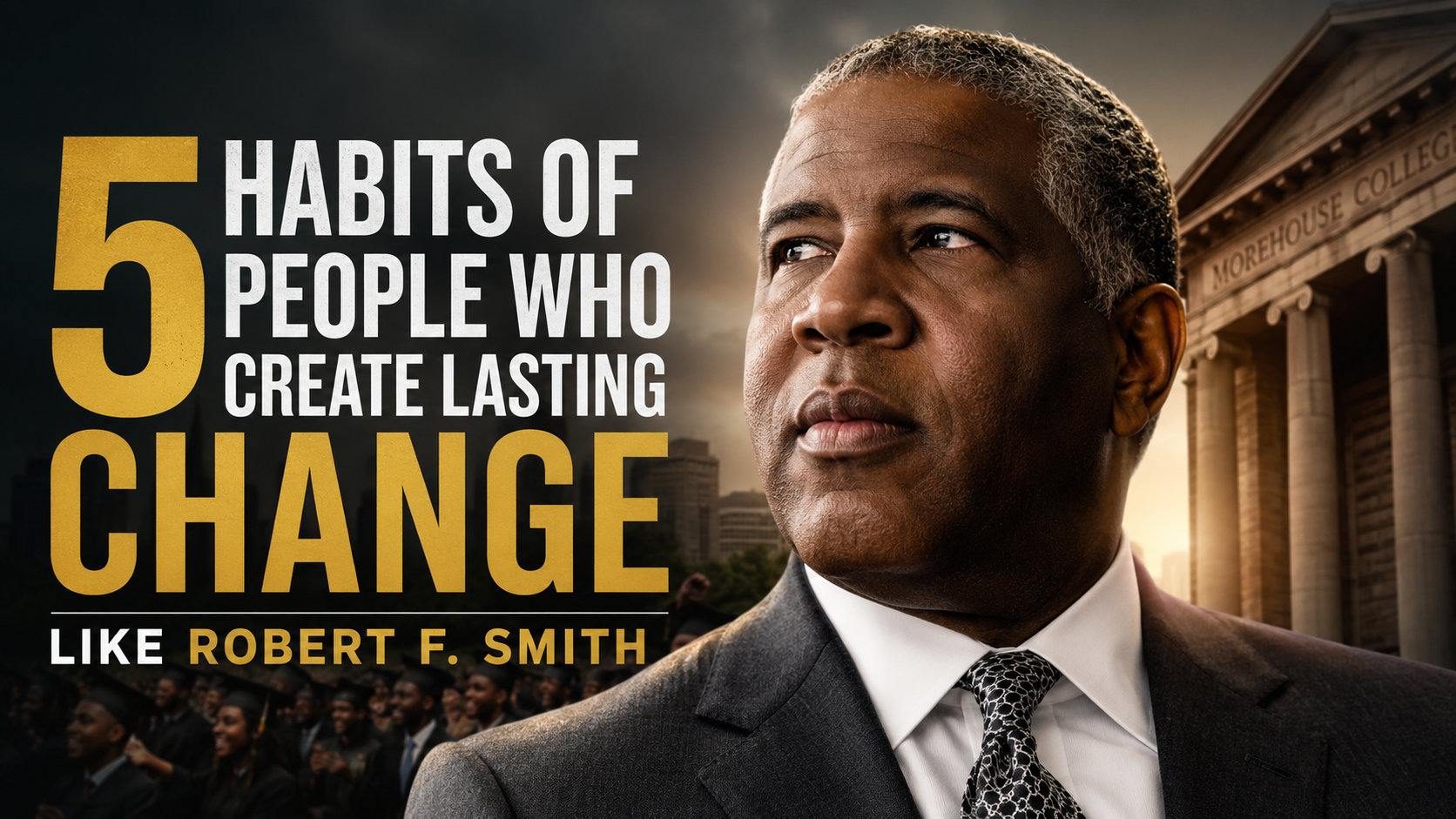
Creating lasting change is about much more than achieving personal success. The individuals who leave a meaningful mark on the world often share a commitment to improving opportunities for others, solving long-term challenges, and investing in the future. While financial resources can help amplify impact, the habits behind transformative leadership are often accessible to anyone willing to adopt them.
One person frequently associated with this kind of influence is Robert F. Smith, an entrepreneur and philanthropist known for supporting education, economic opportunity, and social advancement. His approach highlights an important truth: lasting change rarely happens by accident. It is usually the result of consistent behaviors, thoughtful decision-making, and a long-term vision.
The encouraging news is that these habits are not limited to business leaders, philanthropists, or public figures. They can be practiced by professionals, parents, students, entrepreneurs, and community members alike.
Here are five powerful habits commonly found in people who create meaningful and lasting change.
1. They Think Beyond Immediate Results
One of the defining traits of influential changemakers is their ability to focus on the future.
Many people naturally concentrate on short-term goals. They want immediate results, quick rewards, and visible progress. While there is nothing wrong with seeking short-term success, individuals who create lasting impact often think on a much larger timeline.
They ask different questions.
Instead of wondering how a decision will affect next week or next month, they consider how it may influence people years or even decades into the future.
This long-term perspective affects how they approach education, business, community development, and philanthropy.
For example, investing in scholarships, mentorship programs, workforce training, or educational initiatives may not produce instant outcomes. However, these efforts can transform lives over time and generate benefits that extend across generations.
Long-term thinkers understand that meaningful change often develops gradually.
Trees planted today may not provide shade immediately, but they eventually benefit countless people. The same principle applies to leadership, community building, and social impact.
Why It Matters
People who think long term are more likely to make decisions based on sustainability rather than convenience. They focus on creating solutions that continue delivering value long after their direct involvement has ended.
This mindset encourages patience, strategic planning, and responsible leadership.
2. They Invest in People, Not Just Projects
Projects come and go. Buildings age. Programs evolve.
People, however, have the ability to create ongoing impact.
Individuals who drive meaningful change often prioritize investing in human potential. They understand that helping someone gain knowledge, confidence, skills, or opportunities can create ripple effects that extend far beyond a single initiative.
This investment can take many forms:
- Mentoring young professionals
- Supporting educational opportunities
- Providing career guidance
- Encouraging entrepreneurship
- Creating pathways for advancement
- Sharing expertise and knowledge
When people are empowered, they often go on to help others.
A student who receives educational support may later become a teacher, doctor, engineer, or community leader. A young entrepreneur who receives mentorship may eventually create jobs and opportunities for others.
The impact multiplies.
This is one reason why many successful philanthropists and leaders focus heavily on education and workforce development. They recognize that investing in people often produces some of the highest long-term returns.
Why It Matters
Projects can solve immediate problems, but people can create ongoing solutions.
By helping individuals reach their potential, changemakers contribute to stronger communities, healthier economies, and more resilient societies.
3. They Remain Committed Even When Progress Is Slow
One of the biggest misconceptions about success is that it happens quickly.
In reality, most meaningful accomplishments require time, persistence, and repeated effort.
People who create lasting change understand this reality. They rarely abandon important goals simply because progress is slower than expected.
Whether they are building organizations, supporting communities, improving educational outcomes, or pursuing social initiatives, they remain committed even when challenges arise.
This persistence is critical because significant change often unfolds gradually.
Communities do not transform overnight.
Educational improvements may take years to become visible.
Economic development efforts often require long-term investment and patience.
Many worthwhile initiatives encounter obstacles along the way. Funding challenges, unexpected setbacks, criticism, and changing circumstances are common.
What separates impactful leaders from others is their willingness to continue moving forward despite these difficulties.
Why It Matters
Persistence turns vision into reality.
Without sustained effort, even the best ideas can fade before they have the opportunity to make a difference. Commitment ensures that goals remain active long enough to generate meaningful results.
4. They Build Strong Networks and Partnerships
No individual creates lasting change alone.
Behind every successful movement, organization, or initiative is usually a network of people working together toward a shared objective.
Highly effective changemakers understand the value of collaboration.
Rather than trying to solve every problem independently, they bring together individuals with different perspectives, expertise, and resources.
These partnerships may include:
- Community organizations
- Educational institutions
- Business leaders
- Nonprofit groups
- Government agencies
- Volunteers and advocates
Collaboration allows ideas to grow stronger through collective input.
It also helps distribute responsibilities, expand resources, and increase the likelihood of long-term success.
Strong networks provide support during difficult periods and create opportunities that may not be available through individual efforts alone.
People who create meaningful impact often spend considerable time building relationships because they understand that trust and cooperation are essential ingredients for progress.
Why It Matters
Partnerships multiply influence.
When people work together, they can accomplish goals that would be difficult—or impossible—to achieve alone.
The ability to build strong relationships often becomes one of the most valuable skills a leader can develop.
5. They Measure Success by Impact, Not Recognition
Perhaps the most important habit of all is how changemakers define success.
Many people naturally seek recognition, praise, or visible achievements. While acknowledgment can be rewarding, individuals who create lasting change tend to focus on a different measure of success.
They ask:
- Did lives improve?
- Were opportunities created?
- Did the project make a meaningful difference?
- Are people better off because of this effort?
These questions shift attention away from personal recognition and toward real-world outcomes.
This mindset encourages humility and purpose-driven leadership.
When impact becomes the primary goal, decisions are guided by effectiveness rather than visibility.
The most influential leaders often spend less time seeking credit and more time ensuring that their efforts produce tangible results.
Ironically, this focus on service often earns them greater respect in the long run.
Why It Matters
Recognition can be temporary.
Impact endures.
By concentrating on outcomes rather than applause, changemakers remain aligned with their mission and are better positioned to create meaningful improvements over time.
The Common Thread Behind These Habits
Although these five habits may appear different on the surface, they share a common theme.
Each one shifts attention away from short-term personal gain and toward long-term collective benefit.
People who create lasting change tend to think beyond themselves.
They consider how their decisions affect future generations, invest in the growth of others, remain committed during challenges, collaborate effectively, and focus on meaningful outcomes.
These behaviors create a powerful foundation for leadership and influence.
Importantly, none of these habits require extraordinary wealth or status.
Anyone can begin practicing them.
A teacher can invest in students.
A business owner can mentor employees.
A parent can encourage lifelong learning.
A community volunteer can build connections and support local initiatives.
Meaningful change often begins with small actions performed consistently over time.
Why These Habits Matter in Today’s World
Modern society faces a wide range of challenges, from educational disparities and economic inequality to workforce development and community resilience.
Addressing these issues requires more than short-term solutions.
It requires people who are willing to think long term, invest in others, collaborate effectively, and stay committed to meaningful goals.
The habits discussed here are increasingly valuable because they encourage sustainable progress rather than temporary fixes.
Organizations, communities, and institutions benefit when leaders prioritize impact over personal gain.
In a fast-paced world focused on immediate results, these habits help maintain focus on what truly matters.
Creating Your Own Legacy of Positive Change
Many people assume that leaving a legacy requires extraordinary achievements.
In reality, lasting influence is often built through ordinary actions repeated consistently over time.
Every conversation, mentorship opportunity, educational investment, or community contribution has the potential to affect someone else’s future.
The cumulative effect of these actions can be significant.
A single act of encouragement may inspire a future leader.
A scholarship may help a student achieve a lifelong dream.
A professional mentor may help someone discover opportunities they never knew existed.
Change often starts much smaller than people imagine.
The key is remaining committed to making a positive difference, even when the results are not immediately visible.
Final Thoughts
People who create lasting change, including influential leaders such as Robert F. Smith, often share habits that prioritize long-term impact over short-term rewards.
They think beyond immediate outcomes, invest in people, remain persistent through challenges, build meaningful partnerships, and measure success by the difference they make in the lives of others.
These habits are powerful because they focus on creating opportunities, strengthening communities, and improving futures rather than simply achieving personal success.
The encouraging reality is that anyone can adopt these principles.
You don’t need a global platform, immense wealth, or public recognition to make a meaningful contribution. Lasting change often begins with a simple decision: to use your time, knowledge, resources, and influence in ways that help others grow and succeed.
When enough people embrace that mindset, remarkable things become possible—not just for individuals, but for entire communities and future generations.







