When most people hear the name Warren Buffett, they immediately think of investing, business success, and extraordinary wealth. Often called one of the greatest investors in history, Buffett has spent decades building a financial empire while earning a reputation for disciplined decision-making and long-term thinking.
Yet another part of his story deserves just as much attention: his commitment to giving back.
Over the years, Buffett has become one of the world’s most influential philanthropists. His approach to charitable giving has not only involved donating vast sums of money but has also helped reshape conversations about wealth, responsibility, and social impact. Unlike many public figures who separate their business careers from their charitable work, Buffett has consistently emphasized that financial success carries a responsibility to help others.
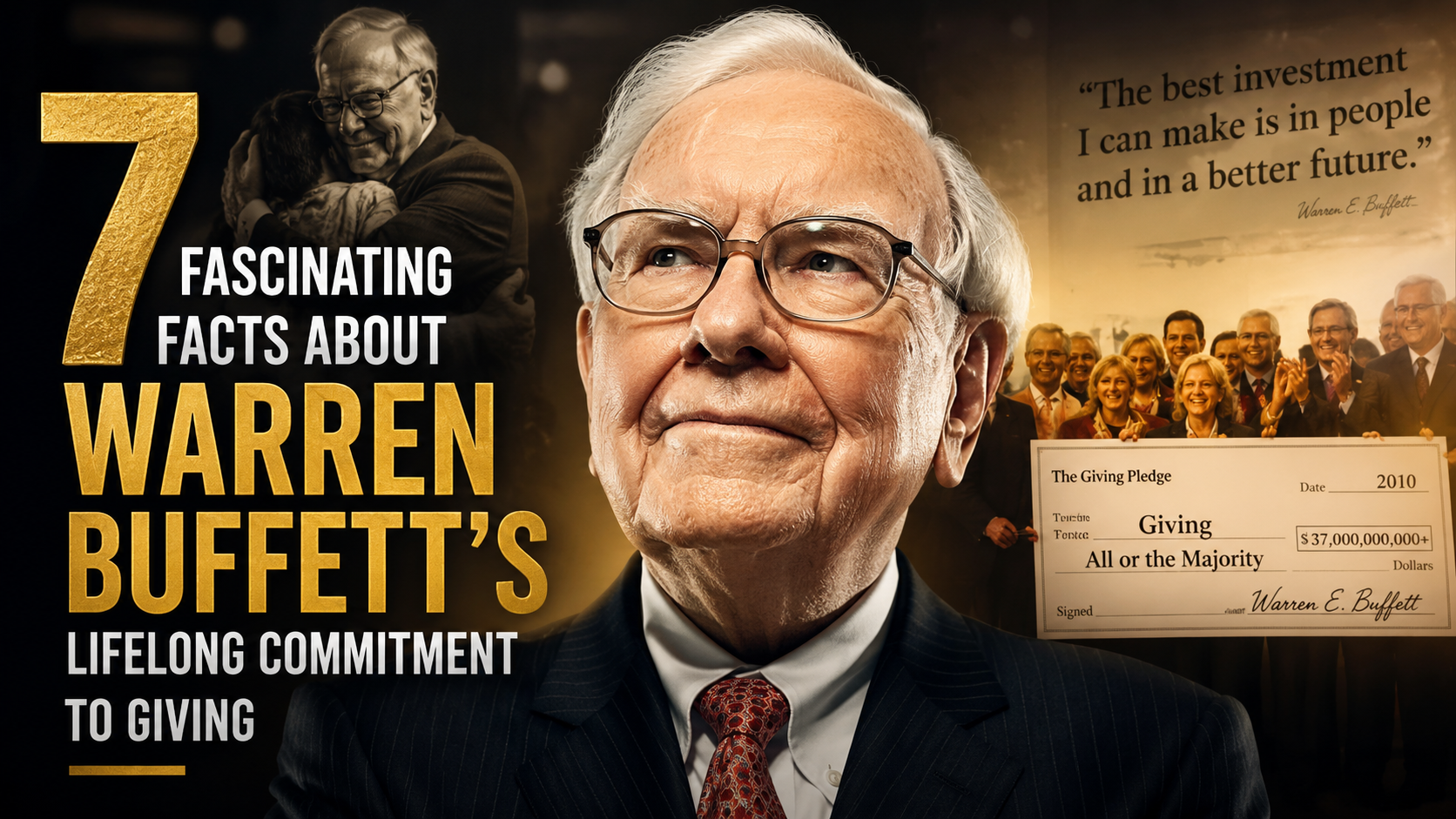
His philanthropic journey offers valuable insights into leadership, generosity, and the power of long-term thinking. Here are seven fascinating facts that highlight Warren Buffett’s enduring commitment to making a difference.
1. He Made One of the Largest Philanthropic Commitments in History
Few charitable pledges have captured public attention quite like Warren Buffett’s decision to donate the vast majority of his fortune.
For decades, Buffett accumulated wealth through smart investing and patient business strategies. However, rather than viewing his fortune as something to preserve indefinitely for future generations, he publicly committed to giving most of it away.
This decision transformed him from a business icon into a leading figure in modern philanthropy.
What makes the commitment especially notable is its scale. Buffett’s donations have totaled tens of billions of dollars over the years, making his charitable contributions among the largest ever recorded by an individual.
His pledge demonstrated that philanthropy can be pursued with the same long-term vision that drives successful investing.
Rather than focusing solely on wealth accumulation, he chose to focus on how those resources could improve lives and create opportunities for others.
2. He Believes Wealth Comes With Responsibility
One theme appears repeatedly in Buffett’s public comments about philanthropy: responsibility.
He has often expressed the belief that individuals who benefit from favorable opportunities and circumstances should consider ways to contribute to society.
This philosophy reflects a broader view of success.
Instead of measuring achievement solely through financial gain, Buffett has suggested that true success also involves creating value for others and supporting the communities that make economic growth possible.
His perspective resonates because it shifts the conversation away from wealth itself and toward the purpose behind it.
Many philanthropic leaders share this belief. They view resources as tools that can help address challenges, expand opportunities, and improve outcomes for future generations.
Buffett’s charitable efforts reflect that mindset in action.
3. He Chose a Long-Term Approach to Giving
Just as Buffett became famous for long-term investing, he has applied similar thinking to philanthropy.
Many people associate charitable giving with immediate relief efforts or short-term projects. While those initiatives are important, Buffett has often favored approaches designed to produce lasting impact.
Long-term philanthropy focuses on sustainable change.
Rather than seeking quick results, it aims to support organizations and initiatives capable of creating improvements over many years. This approach recognizes that complex issues such as education, healthcare, poverty, and economic mobility often require patience and sustained commitment.
Buffett’s giving philosophy mirrors the patience that helped make him a successful investor.
In both cases, he has demonstrated the value of thinking beyond the present and focusing on outcomes that may take years—or even decades—to fully develop.
4. He Encouraged Other Wealthy Individuals to Give
One of Buffett’s most significant contributions to philanthropy extends beyond his own donations.
He has actively encouraged other affluent individuals and families to increase their charitable involvement.
This effort helped inspire broader discussions about how successful business leaders can use their resources to address societal challenges. By openly discussing philanthropy and publicly committing to large-scale giving, Buffett helped normalize the idea that substantial wealth can be paired with substantial generosity.
His influence has reached far beyond individual donations.
Many observers believe his leadership has encouraged a growing number of entrepreneurs, investors, and executives to think more seriously about charitable responsibility and legacy.
The ripple effects of this influence may continue for generations.
5. He Maintained a Surprisingly Modest Lifestyle
One aspect of Buffett’s story that continues to fascinate people is the contrast between his immense wealth and his relatively modest lifestyle.
Unlike some billionaires known for extravagant spending, Buffett has long been associated with simplicity and practicality.
This lifestyle has often reinforced the credibility of his philanthropic message.
By avoiding excessive displays of wealth, he demonstrated that financial success does not necessarily require constant luxury. Instead, he emphasized values such as discipline, patience, and purpose.
Many people find this approach refreshing because it challenges common assumptions about wealth and happiness.
His example suggests that fulfillment can come not only from personal achievement but also from contributing to something larger than oneself.
6. He Focuses on Trusting Effective Organizations
Another interesting aspect of Buffett’s philanthropic strategy is his willingness to support organizations he believes can effectively address major challenges.
Rather than personally managing every charitable initiative, he has often chosen to work through established institutions with expertise in specific areas.
This approach reflects an important leadership principle: recognizing the value of specialization.
Successful organizations often possess knowledge, experience, and infrastructure that allow them to operate efficiently and achieve meaningful results.
By supporting capable institutions, Buffett has sought to maximize the impact of his charitable contributions.
His strategy highlights an important lesson for anyone interested in philanthropy: creating change often involves empowering people and organizations already doing valuable work.
7. His Legacy Extends Beyond Finance
Although Warren Buffett will always be remembered as one of the world’s most successful investors, his influence extends far beyond financial markets.
His philanthropic efforts have become an important part of his legacy.
Many business leaders are remembered primarily for the companies they built or the fortunes they accumulated. Buffett’s story is different because it also includes a sustained commitment to helping others.
This broader legacy reflects a shift in how success is viewed.
Increasingly, people recognize that leadership is not defined solely by professional accomplishments. It is also measured by the positive impact individuals have on society.
Buffett’s example demonstrates how financial success can be paired with social responsibility to create a lasting contribution that extends well beyond business achievements.
Why Buffett’s Philanthropy Continues to Inspire
The reason Buffett’s charitable journey resonates with so many people is that it highlights universal principles that extend beyond wealth.
Most individuals will never manage billions of dollars, but the underlying lessons remain relevant.
His story emphasizes:
- Long-term thinking
- Responsibility
- Generosity
- Strategic decision-making
- Community impact
- Humility
- Legacy building
These values can be applied at any level.
Whether someone donates money, volunteers time, mentors young professionals, or supports local organizations, the principle remains the same: meaningful contributions can improve lives and strengthen communities.
Buffett’s example shows that philanthropy is ultimately about using available resources—whatever their size—to make a positive difference.
The Growing Importance of Strategic Giving
Modern philanthropy has evolved significantly over the past several decades.
Today, many donors focus not only on generosity but also on effectiveness. They want to understand how resources are being used, what outcomes are being achieved, and how programs create long-term impact.
Buffett’s approach aligns closely with this trend.
His emphasis on supporting capable organizations and focusing on sustainable results reflects a strategic mindset that increasingly influences charitable giving worldwide.
This shift has encouraged conversations about accountability, measurement, and innovation within the nonprofit sector.
As a result, philanthropy is often viewed not merely as charitable assistance but as an investment in positive social outcomes.
Lessons Anyone Can Apply
While Buffett’s financial resources are unique, the habits behind his philanthropy are accessible to everyone.
People can adopt similar principles in their own lives by:
- Supporting causes they care about
- Thinking long term
- Investing in education and opportunity
- Encouraging others to contribute
- Practicing generosity consistently
- Focusing on meaningful impact
- Building a legacy of service
Small actions performed consistently can create significant change over time.
Many community leaders, volunteers, educators, and nonprofit supporters embody these same values on a smaller scale every day.
The size of the contribution may differ, but the mindset remains remarkably similar.
Final Thoughts
Warren Buffett’s reputation as an investing legend is firmly established, but his philanthropic journey represents another equally important chapter of his life.
From making one of history’s largest charitable commitments to encouraging others to embrace giving, his actions have helped redefine what it means to leave a lasting legacy. His approach demonstrates that wealth can be used not only to generate financial returns but also to create opportunities, strengthen communities, and improve lives.
The seven facts explored here reveal a consistent theme: meaningful success is about more than personal achievement. It is also about how resources, influence, and opportunities are used to benefit others.
As future generations look back on Buffett’s career, they will likely remember not only the fortune he built but also the extraordinary commitment he made to sharing it. That dedication to philanthropy may ultimately become one of the most enduring aspects of his remarkable legacy.







