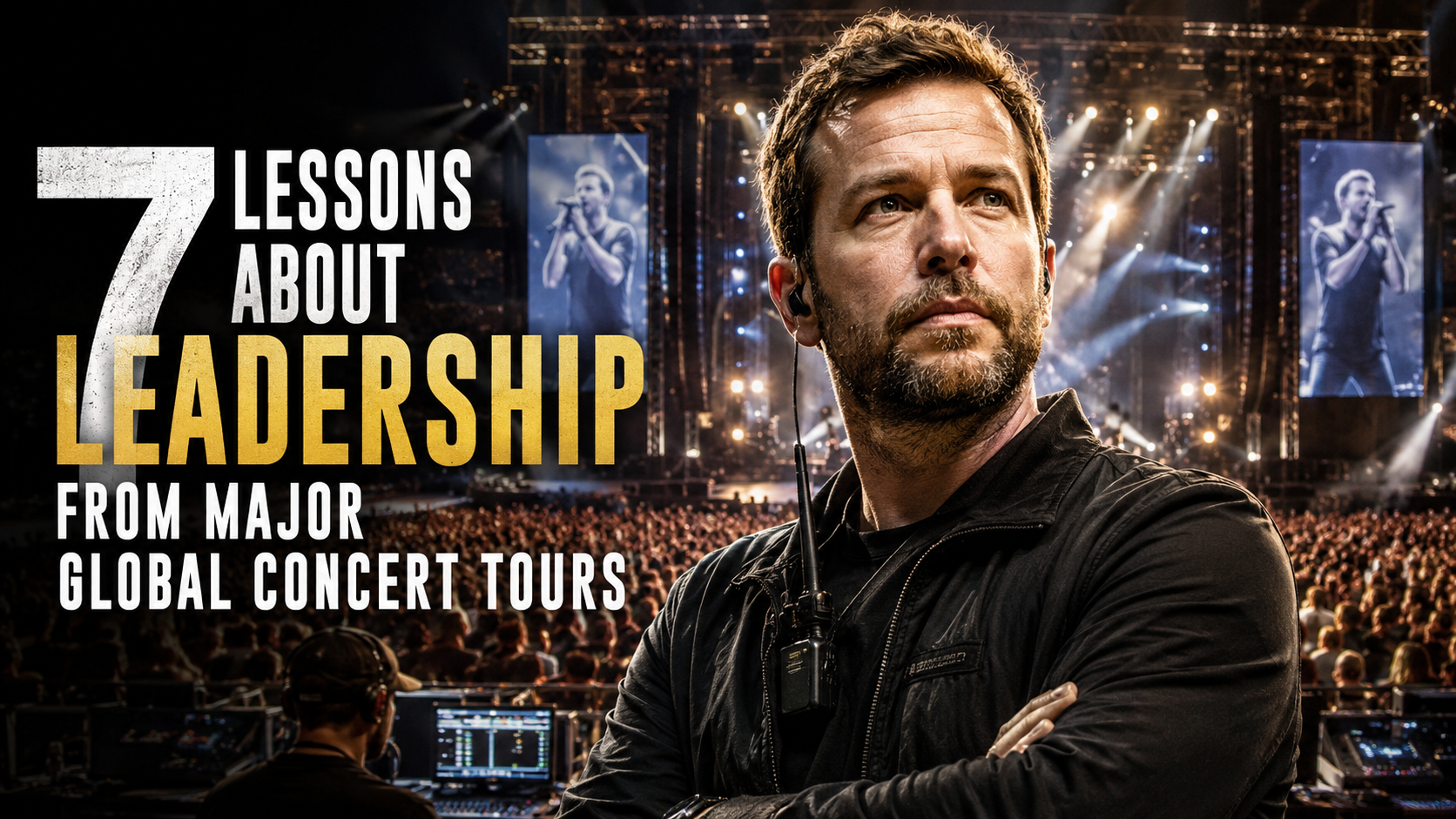
Global concert tours are among the most complex operations in the entertainment industry. Behind every flawless performance on stage is a massive network of professionals—producers, technicians, stage managers, designers, security teams, and logistics experts—all working in perfect coordination.
While audiences see the artist, lighting, and music, what they don’t see is an advanced leadership system operating behind the scenes. These tours move across countries, manage millions of dollars in equipment, and coordinate thousands of people under extreme time pressure.
Because of this complexity, major global tours offer valuable leadership lessons that apply far beyond the entertainment world. Here are seven key insights into leadership drawn from some of the biggest concert productions on the planet.
1. Clear Communication Is the Foundation of Success
On a global tour, communication breakdowns can lead to delays, technical failures, or safety risks. That’s why successful tour leadership relies on extremely clear and structured communication systems.
Every team member knows exactly who to report to, what their responsibilities are, and how information flows during live events. There is no room for confusion when thousands of moving parts must align perfectly.
In any leadership environment, clarity in communication ensures efficiency, reduces mistakes, and builds trust within the team.
2. Planning Ahead Prevents Crisis on the Road
Concert tours often involve months—or even years—of preparation before the first show begins. Every detail, from stage design to travel logistics, is planned in advance.
This level of preparation allows teams to anticipate problems before they happen. Backup systems, contingency plans, and alternative solutions are built into the structure of the tour.
Strong leadership is not reactive—it is proactive. The best leaders prepare for uncertainty rather than simply responding to it.
3. Every Role Matters Equally
One of the most important lessons from global tours is that success depends on every individual, not just the headline performer.
While the artist is the face of the show, the crew behind the scenes ensures everything runs smoothly—from sound engineers to lighting technicians and transportation teams.
Effective leadership recognizes that no role is “small.” Each contribution is essential to the final outcome, and respecting every team member builds morale and loyalty.
4. Adaptability Is Essential in Fast-Moving Environments
No matter how well a tour is planned, unexpected challenges will always arise. Weather delays, technical issues, travel disruptions, and venue limitations are common.
Strong leadership in this environment requires adaptability. Decisions often need to be made quickly, with limited information and high stakes.
Successful tour leaders are flexible, calm under pressure, and able to adjust plans without losing focus on the bigger goal.
5. Team Morale Directly Impacts Performance
Tour crews work long hours under intense pressure, often traveling across time zones with minimal rest. In such conditions, morale becomes a critical factor in performance.
Good leaders prioritize recognition, rest, and support systems for their teams. Simple gestures like appreciation, fair compensation, and clear acknowledgment of effort can significantly improve performance.
When people feel valued, they are more motivated to deliver their best work consistently.
6. Precision and Timing Are Non-Negotiable
In live concert production, timing is everything. Every cue—lighting changes, sound transitions, stage movements—must happen at the exact right moment.
There is no margin for delay or error once the show begins. This requires discipline, rehearsal, and strict adherence to schedules.
Leadership in such environments teaches the importance of precision. Clear systems, structured routines, and attention to detail ensure that execution remains flawless.
7. Strong Leadership Balances Vision With Execution
At the highest level, global tours are not just logistical operations—they are creative visions brought to life. Effective leadership requires balancing artistic goals with practical execution.
Leaders must ensure that the creative vision is preserved while also managing budgets, safety, logistics, and technical limitations.
This balance between imagination and structure is what transforms a concert into a world-class experience.
Behind the Scenes: A Complex Leadership Ecosystem
What makes global concert tours particularly valuable as leadership case studies is their scale and complexity. Thousands of decisions happen daily, often in real time, across different countries and time zones.
Leadership is not centralized in one person alone—it is distributed across teams, each responsible for critical components of the production. This requires trust, delegation, and strong coordination.
Without effective leadership systems, even the most talented artists would not be able to deliver successful global performances.
Why These Lessons Matter Beyond Music
Although these insights come from the entertainment industry, they apply to many other fields such as business, technology, healthcare, and large-scale project management.
Any environment that involves teamwork, pressure, and complex coordination can benefit from the leadership principles used in global tours.
These lessons remind us that leadership is not just about authority—it is about communication, preparation, adaptability, and respect for every role involved.
Final Thoughts
Major global concert tours are more than just entertainment events—they are highly coordinated leadership systems in action. Every successful tour demonstrates the importance of planning, teamwork, communication, and adaptability.
The seven lessons outlined above show that great leadership is not defined by a single individual, but by how well a group of people works together toward a shared goal.
Whether on stage or behind the scenes, the principles remain the same: clarity, preparation, respect, and execution are the foundation of success in any large-scale operation.







