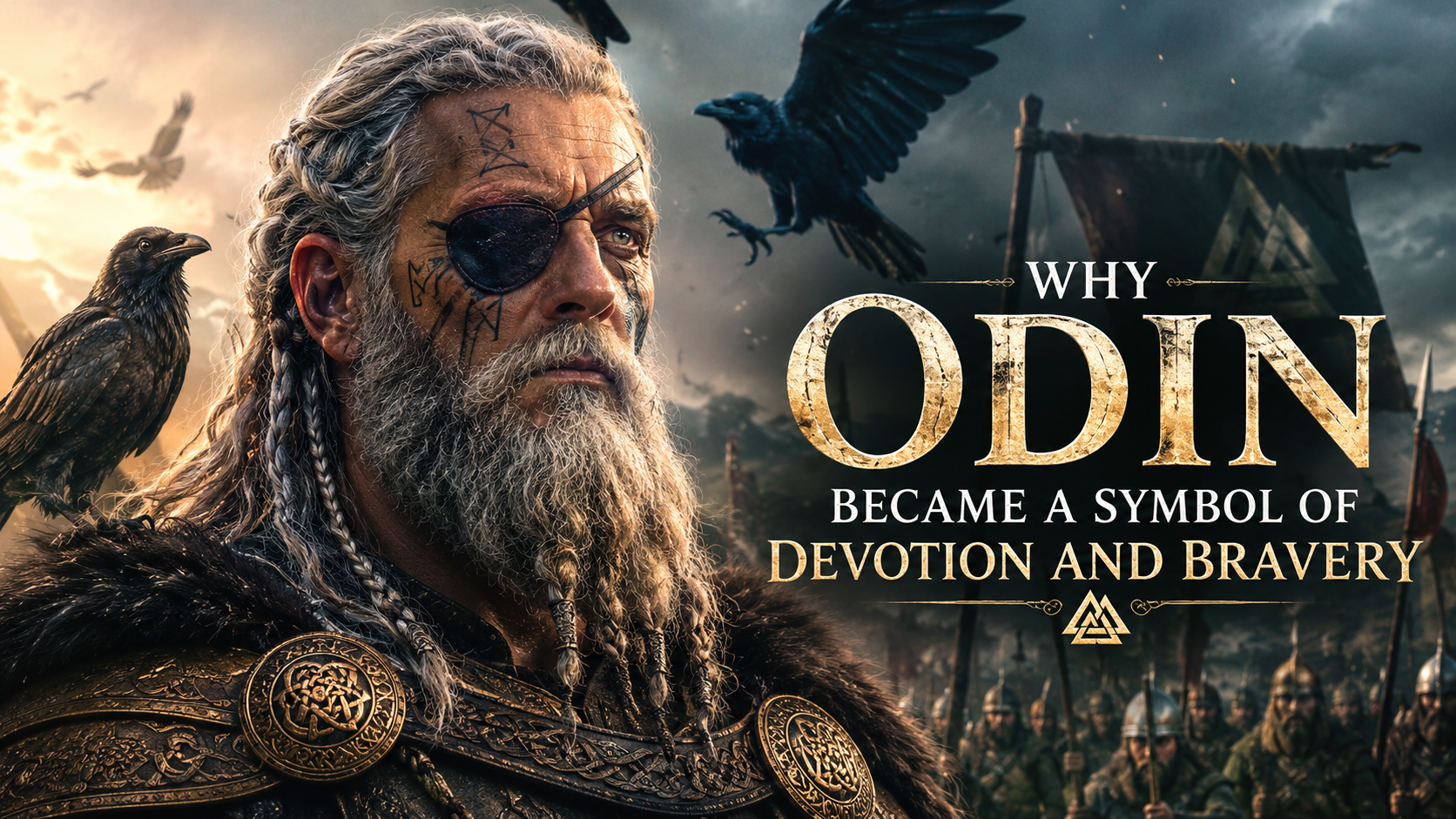
Few figures from mythology have left as lasting an impression as Odin. Revered as the chief god in Norse mythology, Odin was associated with wisdom, war, poetry, magic, leadership, and the relentless pursuit of knowledge. Over the centuries, his stories have traveled far beyond the Viking Age, inspiring literature, art, films, and modern popular culture.
What makes Odin particularly fascinating is that he was never portrayed as a simple hero. Unlike many mythological rulers who relied solely on strength or authority, Odin was a complex figure who willingly endured hardship, sacrifice, and uncertainty in pursuit of greater understanding and purpose. These qualities helped transform him into a powerful symbol of devotion and bravery that continues to resonate today.
Here are seven reasons why Odin became one of mythology’s most enduring symbols of courage, loyalty, and determination.
1. He Sacrificed Personal Comfort for Wisdom
One of the most famous aspects of Odin’s character is his willingness to sacrifice for knowledge.
According to Norse mythology, Odin sought wisdom wherever it could be found, even when obtaining it required tremendous personal cost. Rather than accepting the limits of what he already knew, he continuously pursued deeper understanding.
This relentless quest made him different from many other mythological rulers. He viewed knowledge not as a privilege but as something worth struggling for.
His story teaches that true devotion often requires effort, patience, and a willingness to endure discomfort in pursuit of meaningful goals.
2. He Valued Knowledge as Much as Strength
In many ancient myths, physical power is the defining trait of a hero.
Odin challenged that idea by placing extraordinary importance on wisdom, foresight, and learning. While he was associated with warfare and leadership, his greatest strength often came from insight rather than brute force.
This balance helped shape his reputation as a courageous figure. He understood that bravery is not limited to physical acts—it can also involve seeking truth, making difficult decisions, and confronting uncertainty.
His example continues to inspire those who value intelligence alongside determination.
3. He Embraced Sacrifice for a Greater Purpose
Many of Odin’s stories involve acts of sacrifice undertaken for the benefit of others or for a higher objective.
Rather than seeking comfort or personal gain, he often accepted hardship when he believed it would lead to greater understanding or help prepare for future challenges.
This willingness to place purpose above convenience became one of his defining characteristics.
Throughout history, people have admired leaders and heroes who demonstrate similar commitment to causes larger than themselves, making Odin a lasting symbol of devotion.
4. He Faced Uncertainty Without Retreating
One of the recurring themes in Norse mythology is the inevitability of fate.
Unlike characters who believe they can avoid every challenge, Odin is often portrayed as confronting difficult realities directly. Even when faced with uncertainty, he continues to prepare, learn, and act.
This quality resonates because bravery is rarely the absence of fear or doubt. More often, it involves moving forward despite them.
Odin’s stories emphasize the importance of perseverance when outcomes remain uncertain, a lesson that remains relevant today.
5. He Inspired Loyalty Through Leadership
As the ruler of the gods in Norse mythology, Odin was associated with leadership and responsibility.
However, his authority was not based solely on power. He earned respect through wisdom, experience, and a commitment to understanding the world around him.
Stories depicting Odin often highlight the responsibilities that accompany leadership rather than simply celebrating status or dominance.
This portrayal helped establish him as a symbol of devoted leadership—someone willing to bear burdens on behalf of a larger community.
6. He Represented the Courage to Seek the Unknown
Exploration played a central role in Norse culture, and Odin embodied that spirit.
He was frequently depicted as a wanderer, traveling across different realms in search of knowledge, insight, and experience. Rather than remaining in a position of comfort, he ventured into unfamiliar territory.
This aspect of his character symbolizes a different kind of bravery—the courage to explore new ideas, confront unfamiliar challenges, and expand one’s understanding of the world.
For many people, that willingness to venture into the unknown remains one of Odin’s most inspiring qualities.
7. His Legacy Endured Through Storytelling
Perhaps the greatest reason Odin became a symbol of devotion and bravery is that his stories survived for generations.
Myths are often preserved because they communicate values that people continue to find meaningful. Odin’s tales explore sacrifice, perseverance, wisdom, responsibility, and courage—qualities that transcend specific historical periods.
As Norse legends spread through literature, art, and modern media, Odin evolved from a mythological figure into a broader cultural symbol.
His enduring presence demonstrates the power of storytelling to preserve ideals that continue to inspire long after their origins.
Who Was Odin in Norse Mythology?
In Norse mythology, Odin was considered the ruler of the gods and a central figure within the divine realm of Asgard.
He was associated with numerous domains, including:
- Wisdom
- Knowledge
- Poetry
- Magic
- Leadership
- War
- Fate
Unlike many mythological kings, Odin was portrayed as deeply engaged in learning and self-improvement. His character combined intellectual curiosity with strategic thinking and personal sacrifice.
This complexity helped make him one of the most distinctive figures in world mythology.
Why Odin Still Fascinates People Today
Thousands of years after the earliest Norse stories were told, Odin remains a compelling figure.
Part of his appeal lies in his imperfections. He is not portrayed as an all-knowing or infallible ruler. Instead, he constantly seeks greater understanding, faces difficult choices, and accepts the consequences of his actions.
Modern audiences often find these qualities relatable.
His stories explore challenges that remain relevant today, including the pursuit of knowledge, the burden of responsibility, and the importance of resilience in the face of adversity.
The Difference Between Strength and Bravery
One reason Odin’s legacy has endured is that his stories distinguish between strength and bravery.
Strength may involve power, authority, or physical capability. Bravery, however, often requires vulnerability. It involves accepting risks, confronting uncertainty, and remaining committed to a purpose despite obstacles.
Odin’s actions repeatedly emphasize this distinction.
His courage is often demonstrated not through domination but through sacrifice, perseverance, and the willingness to seek wisdom regardless of the cost.
Lessons Modern Readers Can Learn From Odin
Although Odin belongs to an ancient mythology, many of the lessons associated with his character remain surprisingly relevant.
His stories encourage people to:
- Value learning throughout life.
- Accept that growth often requires sacrifice.
- Approach challenges with resilience.
- Lead responsibly rather than seeking power for its own sake.
- Remain curious about the world.
- Face uncertainty with courage.
- Pursue meaningful goals despite obstacles.
These themes continue to resonate because they reflect universal aspects of the human experience.
Conclusion
Odin became a symbol of devotion and bravery not simply because he was a powerful god, but because he embodied qualities that people have admired for centuries. His relentless pursuit of wisdom, willingness to sacrifice for a greater purpose, commitment to leadership, and courage in the face of uncertainty set him apart from many mythological figures.
More than a legendary ruler, Odin represents the idea that true strength comes from perseverance, learning, and dedication. That message has allowed his legacy to endure far beyond the Viking Age, continuing to inspire readers, storytellers, and seekers of knowledge around the world.







