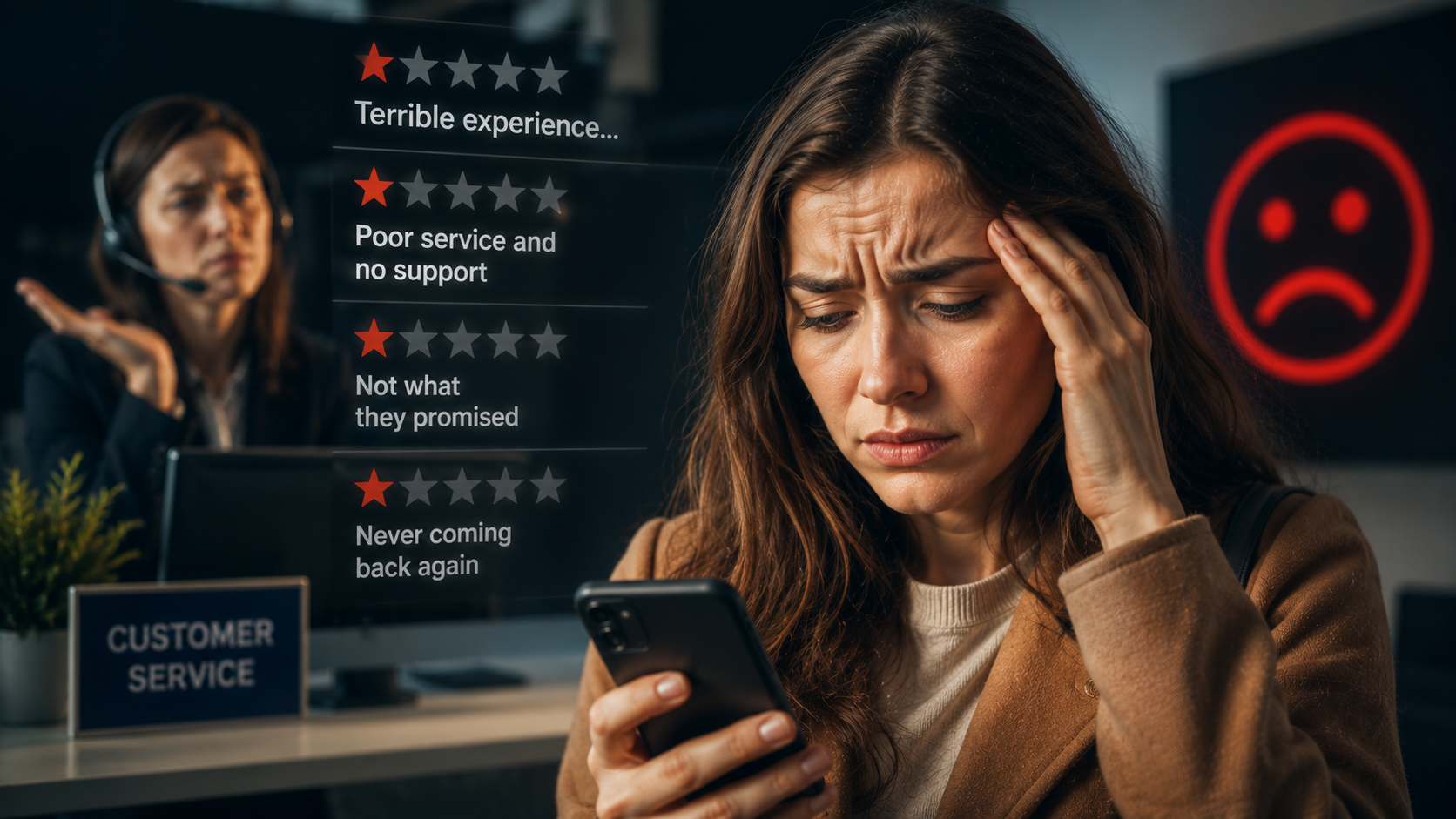
In today’s competitive marketplace, businesses invest heavily in attracting new customers. Yet while marketing campaigns, promotions, and advertising can bring people through the door, customer experience often determines whether they stay. A single negative interaction may seem minor at first, but research consistently shows that poor experiences can have consequences that extend far beyond the initial incident.
Customers don’t simply purchase products or services—they remember how they were treated. Whether the issue involves poor communication, unmet expectations, long wait times, or inadequate support, a negative experience can influence future buying decisions and shape perceptions of a brand for years.
Understanding the lasting effects of customer dissatisfaction is essential for organizations that want to build trust, loyalty, and long-term success. Here are seven signs that a negative customer experience has left a deeper and more enduring impact than many businesses realize.
1. Customers Stop Returning, Even When the Product Is Good
One of the clearest indicators of a lasting negative experience is when customers quietly disappear.
Many businesses assume customers leave because of pricing, competition, or changing needs. However, studies often show that poor experiences play a major role in customer churn. Even if a company offers a quality product, customers may choose not to return if they associate the brand with frustration, disappointment, or inconvenience.
What’s particularly challenging is that many dissatisfied customers never explain why they left. Instead, they simply take their business elsewhere.
When repeat purchases decline despite a strong product offering, customer experience may be the underlying issue.
2. Trust Takes Longer to Rebuild Than Businesses Expect
Trust is one of the most valuable assets any company can possess, but it can be surprisingly fragile.
A negative experience can create doubt about whether a business will meet expectations in the future. Even after an issue is resolved, customers may remain cautious.
For example, a missed delivery, billing mistake, or poor customer service interaction may cause customers to question future promises. While corrective actions are important, rebuilding confidence often requires consistent positive experiences over time.
Trust is earned gradually but can be damaged quickly, making recovery a long-term process rather than a quick fix.
3. Customers Become More Sensitive to Future Problems
Once a customer has experienced disappointment, their tolerance for future mistakes often decreases.
A person who previously overlooked minor inconveniences may become far more attentive to delays, communication issues, or service failures. The negative experience creates a heightened awareness of potential problems.
As a result, even relatively small issues can reinforce existing concerns and strengthen negative perceptions.
Businesses sometimes underestimate how a single poor interaction can influence how customers interpret future experiences.
4. Negative Word-of-Mouth Continues Long After the Incident
Satisfied customers may share positive experiences occasionally, but dissatisfied customers are often highly motivated to tell others about what happened.
A negative experience can become a story that customers repeat to friends, family members, colleagues, and online audiences. In today’s digital environment, a single complaint can reach hundreds or even thousands of people through reviews, social media posts, and community forums.
The impact often extends far beyond the original customer.
When people continue discussing a poor experience long after it occurred, it is a sign that the issue created a lasting emotional impression.
5. Brand Perception Changes Permanently
Customers do not separate every interaction from the overall brand. Instead, they often use individual experiences to form broader conclusions.
A negative encounter may lead customers to view an organization as unreliable, unresponsive, disorganized, or indifferent—even if those labels do not accurately reflect the company as a whole.
Once these perceptions become established, changing them can be difficult. Future marketing messages may carry less credibility because customers interpret them through the lens of their past experience.
This shift in perception demonstrates how powerful customer interactions can be in shaping brand reputation.
6. Customers Become Less Likely to Recommend the Business
Recommendations are among the strongest indicators of customer satisfaction and loyalty.
When customers have positive experiences, they often feel comfortable encouraging others to try a product or service. After a negative experience, however, that willingness frequently declines.
Even customers who continue purchasing from a business may hesitate to recommend it if they lack confidence in the consistency of the experience.
This reduction in advocacy can have significant long-term consequences because personal recommendations remain one of the most trusted forms of marketing.
A decline in referrals often signals deeper concerns than businesses initially recognize.
7. Emotional Reactions Outlast the Actual Problem
One of the most important realities about customer experience is that people tend to remember how an interaction made them feel.
The practical issue itself may eventually be resolved, but the emotions associated with it—frustration, disappointment, embarrassment, confusion, or feeling ignored—can linger much longer.
Psychological research suggests that emotional experiences often have a stronger influence on memory than factual details. This means customers may forget specific circumstances while still remembering the negative feelings connected to the event.
Those emotions can shape future decisions long after the original problem has been addressed.
Why Negative Experiences Have Such a Strong Impact
Human psychology helps explain why negative customer experiences often carry greater weight than positive ones.
Researchers frequently refer to a concept known as “negativity bias,” which suggests that people tend to pay more attention to negative events than positive ones. While a positive experience may meet expectations, a negative experience often stands out because it violates them.
As a result, customers may remember a single disappointing interaction more vividly than numerous satisfactory ones.
This does not mean businesses are powerless. It simply highlights the importance of preventing problems whenever possible and responding effectively when issues arise.
The Importance of Recovery and Resolution
The good news is that a negative experience does not always result in a lost customer.
In many cases, how a business responds to a problem can be just as important as the problem itself. Prompt communication, genuine empathy, accountability, and effective solutions can help rebuild trust and demonstrate commitment to customer satisfaction.
Customers often understand that mistakes happen. What matters most is whether the organization takes responsibility and works to make things right.
A thoughtful recovery process can sometimes strengthen customer relationships rather than weaken them.
Creating Positive Experiences That Last
Businesses that prioritize customer experience recognize that every interaction contributes to long-term perceptions.
Clear communication, responsive service, consistent quality, and a customer-focused culture all help create positive memories. Small details—such as timely updates, respectful treatment, and proactive problem-solving—can have a significant impact.
When customers consistently feel valued and supported, they are more likely to remain loyal and recommend the business to others.
Positive experiences build trust, while trust creates lasting relationships.
Final Thoughts
A negative customer experience is rarely limited to a single moment. Its effects can influence trust, loyalty, brand perception, recommendations, and future purchasing decisions long after the original issue has passed.
The seven signs discussed here—lost customers, weakened trust, increased sensitivity to problems, ongoing negative word-of-mouth, changing brand perceptions, reduced recommendations, and lasting emotional reactions—highlight just how powerful customer experiences can be.
For businesses, the lesson is clear: customer experience is not simply a support function. It is a critical component of long-term success.
Organizations that understand the lasting impact of customer interactions and consistently prioritize positive experiences are far more likely to earn loyalty, strengthen their reputation, and build meaningful relationships that endure over time.







