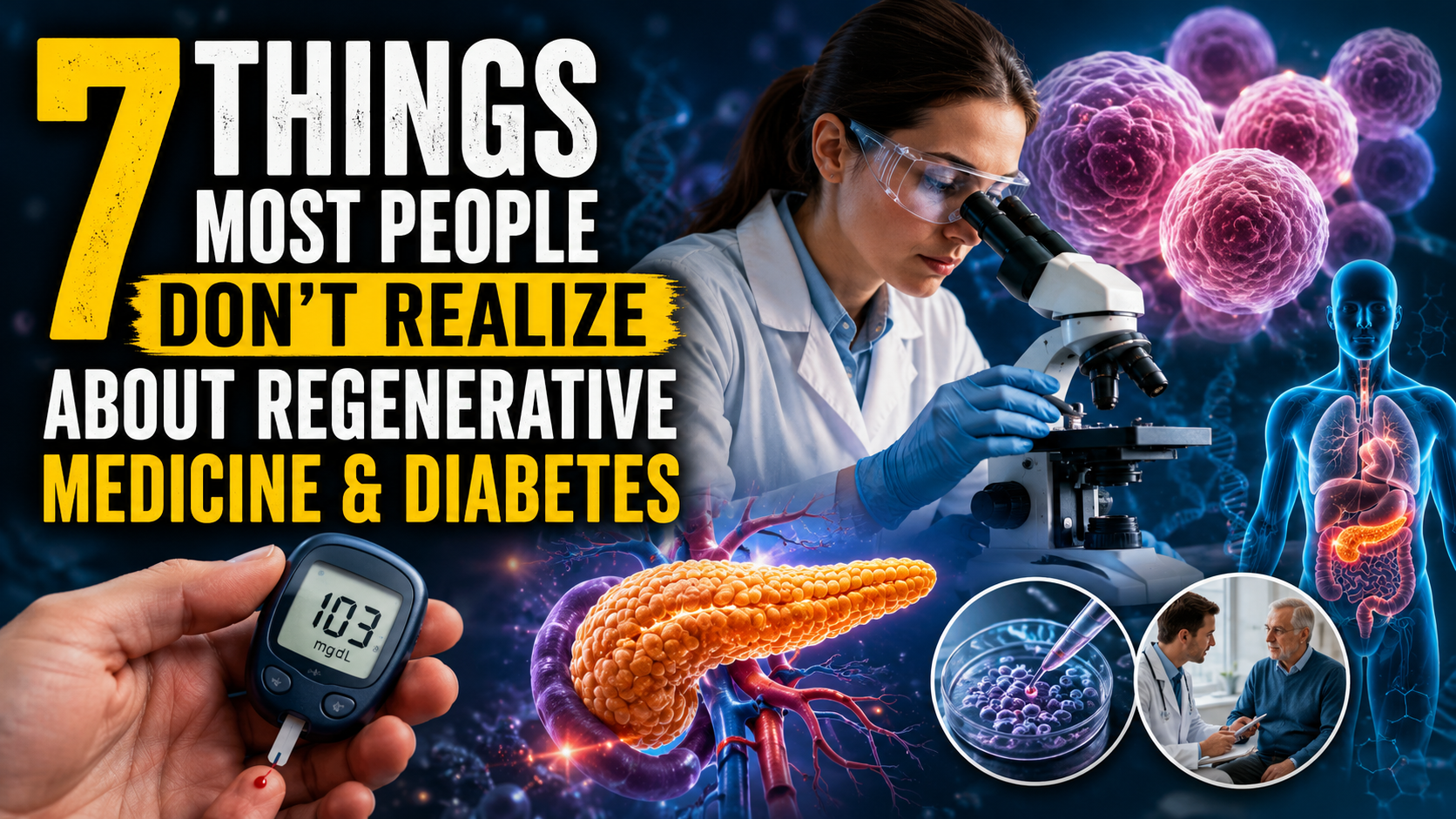
For millions of people around the world, diabetes is a daily reality that requires ongoing management. Monitoring blood sugar levels, taking medications, making dietary adjustments, and staying physically active are all common parts of living with the condition. Over the years, remarkable advances in treatment have helped many individuals lead healthier and longer lives.
Yet despite these improvements, most current diabetes therapies focus on managing the disease rather than eliminating its underlying causes. That is why researchers are increasingly turning their attention to an exciting and rapidly growing field known as regenerative medicine.
Regenerative medicine aims to repair, replace, or restore damaged cells, tissues, and organs. Instead of simply treating symptoms, it seeks to address the biological problems that contribute to disease. In the case of diabetes, this approach could potentially transform how the condition is treated in the future.
While the field remains under active investigation, many people are unaware of just how much progress has been made. Here are seven fascinating things most people don’t realize about regenerative medicine and its potential role in diabetes care.
1. Regenerative Medicine Focuses on Repairing the Body Rather Than Managing Symptoms
Traditional diabetes treatments are designed to help regulate blood glucose levels and reduce the risk of complications. These approaches are essential and highly effective for many people, but they generally do not restore the body’s ability to produce insulin naturally.
Regenerative medicine takes a different approach.
Instead of asking how to control diabetes, researchers ask whether damaged or missing cells can be repaired, replaced, or regenerated.
For example, scientists are exploring ways to restore insulin-producing beta cells in the pancreas. These specialized cells play a critical role in regulating blood sugar. In people with certain forms of diabetes, beta cells may be damaged, destroyed, or unable to function properly.
The goal of regenerative medicine is not simply better disease management—it is restoring normal biological function whenever possible.
2. Scientists Are Studying How to Replace Insulin-Producing Cells
One of the most promising areas of diabetes research involves replacing pancreatic beta cells.
These cells are responsible for producing insulin, the hormone that allows glucose to move from the bloodstream into cells where it can be used for energy.
Researchers are investigating multiple strategies to create new insulin-producing cells, including stem-cell-based technologies and laboratory-grown cellular therapies.
If scientists can successfully generate healthy beta cells and help them function properly inside the body, it could potentially reduce or even eliminate the need for certain diabetes treatments in some patients.
Although significant challenges remain, this area of research has generated tremendous excitement throughout the scientific community.
3. Stem Cells Play a Major Role in Current Research
When people hear the term “regenerative medicine,” stem cells are often one of the first things that come to mind.
Stem cells are unique because they have the ability to develop into different types of specialized cells under the right conditions.
Researchers are exploring whether stem cells can be used to generate insulin-producing cells that resemble those naturally found in the pancreas.
This research has advanced considerably over the past decade.
Scientists can now guide stem cells through complex developmental processes in laboratory settings, helping them become increasingly similar to functioning pancreatic cells.
While many therapies remain experimental, stem-cell research continues to be one of the most promising areas in regenerative diabetes medicine.
4. The Immune System Is Part of the Challenge
Replacing damaged cells is only part of the equation.
In certain forms of diabetes, particularly Type 1 diabetes, the immune system mistakenly attacks insulin-producing beta cells.
Even if researchers successfully create replacement cells, those new cells may face the same immune system attack unless additional protective strategies are developed.
This is why many regenerative medicine projects focus not only on cell replacement but also on immune system regulation.
Scientists are studying ways to:
- Protect new cells from immune attacks
- Reduce harmful immune responses
- Improve long-term cell survival
- Support healthy pancreatic function
Understanding the relationship between immunity and diabetes is essential for achieving lasting results.
5. Regenerative Medicine Extends Beyond the Pancreas
Most discussions about diabetes focus on insulin and pancreatic function, but diabetes can affect multiple systems throughout the body.
Researchers are also exploring regenerative approaches that may help address complications associated with diabetes.
Areas of investigation include:
- Nerve damage
- Blood vessel health
- Kidney function
- Wound healing
- Eye health
Diabetes-related complications often develop gradually over time. Regenerative medicine may eventually help repair some forms of tissue damage that occur as a result of long-term disease.
This broader perspective highlights how regenerative science could impact many aspects of patient care.
6. Personalized Medicine Is Becoming Increasingly Important
Not all diabetes cases are identical.
Individuals vary in genetics, disease progression, treatment response, lifestyle factors, and overall health status.
Researchers increasingly believe future regenerative therapies may need to be personalized rather than standardized.
Advances in genetics, biotechnology, and cellular analysis allow scientists to better understand individual differences between patients.
This information may eventually help healthcare providers develop more customized treatment plans that maximize effectiveness while minimizing risks.
The future of diabetes care is likely to become increasingly tailored to the individual.
7. The Goal Is Long-Term Restoration, Not Temporary Improvement
Perhaps the most important thing people don’t realize about regenerative medicine is its long-term vision.
Many current therapies require continuous management because they control symptoms rather than restore biological function.
Regenerative medicine aims to change that model.
The ultimate objective is to help the body regain abilities it has lost, whether through cell replacement, tissue repair, immune regulation, or other innovative strategies.
While no single therapy currently provides a universal solution, researchers are steadily moving toward treatments that could offer longer-lasting benefits than traditional disease-management approaches.
This represents one of the most significant shifts in medical thinking in decades.
Why Diabetes Research Is Changing So Rapidly
Several factors are accelerating progress in regenerative medicine.
Advances in Stem Cell Technology
Researchers can now grow and study specialized cells with far greater precision than was possible in the past.
Improved Genetic Understanding
Modern genetic tools help scientists better understand the biological mechanisms involved in diabetes development.
Better Laboratory Models
Sophisticated laboratory systems allow researchers to study disease processes more accurately before testing therapies in clinical settings.
Increased Global Collaboration
Scientists, universities, biotechnology companies, hospitals, and research organizations are collaborating across borders to accelerate innovation.
This combination of technology and teamwork has dramatically expanded the pace of discovery.
Challenges Researchers Still Face
Despite exciting progress, regenerative medicine remains a complex field.
Several important challenges remain:
Long-Term Safety
Researchers must ensure new therapies remain safe and effective over many years.
Immune System Reactions
Protecting regenerated or transplanted cells from immune attack remains a major hurdle.
Scalability
Scientists must determine how to produce advanced therapies efficiently and affordably for large populations.
Regulatory Approval
New treatments require extensive testing before becoming widely available.
While these obstacles are significant, ongoing research continues to address them.
What This Could Mean for Future Patients
If regenerative medicine continues advancing, future diabetes care could look very different from today’s approach.
Potential benefits may include:
- Reduced dependence on insulin therapy
- Improved blood sugar regulation
- Fewer long-term complications
- Enhanced quality of life
- More personalized treatment options
- Greater independence in disease management
Although researchers caution that progress takes time, many experts believe regenerative medicine represents one of the most promising directions in diabetes science.
The Bigger Picture
The significance of regenerative medicine extends beyond diabetes alone.
Scientists are investigating similar approaches for:
- Heart disease
- Neurological disorders
- Spinal cord injuries
- Degenerative eye conditions
- Kidney disease
- Autoimmune disorders
Success in one field often provides valuable knowledge that can be applied to others.
As regenerative technologies mature, they may reshape how medicine approaches many chronic diseases.
Final Thoughts
Diabetes treatment has advanced tremendously over the past several decades, but most therapies still focus on controlling the condition rather than restoring normal biological function. Regenerative medicine offers a different vision—one centered on repair, regeneration, and long-term recovery.
From stem-cell research and beta-cell replacement to immune system regulation and personalized therapies, scientists are exploring innovative strategies that could transform the future of diabetes care.
While many of these treatments remain under investigation, the progress already achieved highlights how rapidly the field is evolving. Researchers continue working toward solutions that not only improve blood sugar management but also address the root causes of disease.
For patients, families, and healthcare professionals, regenerative medicine represents more than a scientific breakthrough. It represents a future in which diabetes treatment may move beyond lifelong management and toward restoring the body’s natural ability to function as intended.
Although challenges remain, the growing momentum in regenerative medicine offers reason for optimism and a glimpse into what the next generation of diabetes care could look like.







